Proper filtration is key to successful laboratory analysis, but are you getting the most out of your filters? A small mistake in filter selection or usage can impact your results.[^1]
To use Cytiva Whatman microfiber filters[^2] like Grade GF/C[^3] properly, ensure they are pre-treated, placed correctly in your filtration setup, and used within their recommended applications. These filters excel in cell harvesting, air filtration, and total suspended solids analysis[^4].
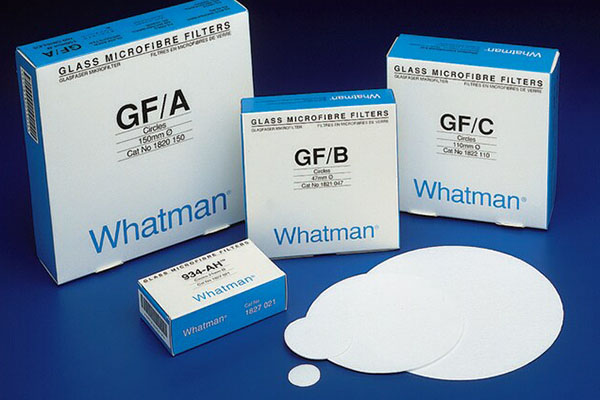
Grade GF/C filters[^5] are versatile and reliable. However, understanding their specific applications and usage methods can further optimize your lab's efficiency. Let's dig deeper into how you can harness their full potential.
What is special about Grade GF/C filters[^6]?
Laboratory filtration demands precision. If the filters are not up to the task, your results might lack reliability. The Grade GF/C glass microfiber filter is a trusted solution for demanding applications.
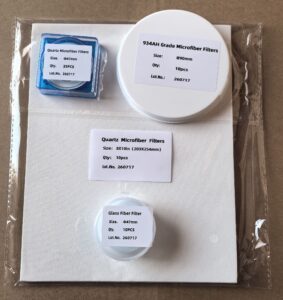
Grade GF/C filters are known for their excellent flow rate, fine particle retention of 1.2 μm[^7], and binder-free construction[^8]. This makes them ideal for applications like total suspended solids analysis, cell harvesting, and air filtration.
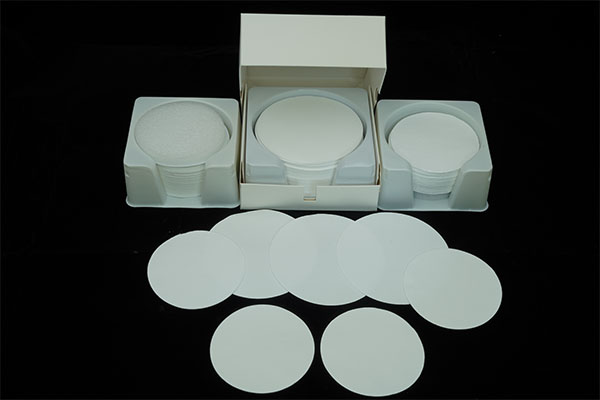
These filters are designed to handle challenging tasks such as gravimetric analysis of volatile materials. Their high loading capacity ensures they can process larger volumes without compromising accuracy. Below, I'll explain more about their unique features and their benefits.
Key Features and Benefits of Grade GF/C Filters
| Feature | Benefit |
|---|---|
| Fine particle retention (1.2 μm) | Ensures precise separation of fine particulate matter for accurate analysis. |
| Binder-free construction | Prevents interference with sensitive assays and ensures purity. |
| High loading capacity | Achieves efficient filtration for larger sample volumes. |
| Pre-treatment (GF/C RTU options) | Ready-to-use filters save time and meet EN 872 standards. |
These qualities make them a favorite among scientists for a variety of laboratory and industrial applications.
How should you prepare Grade GF/C filters for use?
Preparation is critical for successful filtration. Starting without proper pre-treatment can lead to inaccurate measurements.
To prepare Grade GF/C filters, clean them through washing, drying, cooling in a desiccator, and weighing[^9]. This process aligns with EN 872 standards for gravimetric analysis[^10].

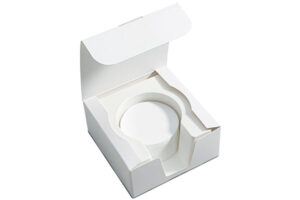
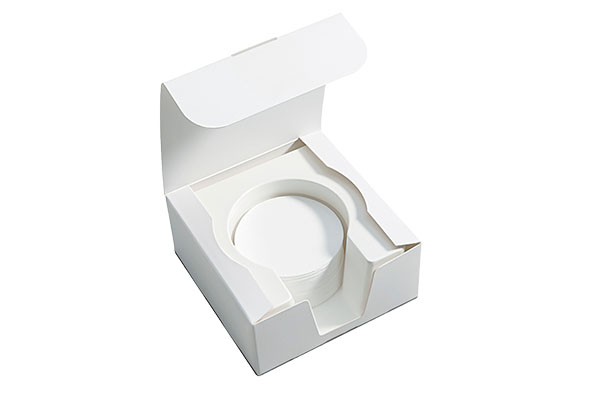
If you're short on time, you can use the GF/C RTU (Ready-To-Use) version. These filters come pre-treated and are packaged in individually barcoded aluminum pans, noting the filter weight[^11]. This saves time and ensures consistent results. Remember, maintaining a certified weight loss of less than 0.017 mg/cm²[^12] after preparation is crucial for accuracy.
Which applications benefit most from Grade GF/C filters?
Using the wrong filter for an application is a common mistake. Grade GF/C filters excel in specific scenarios, and knowing these can save time and resources.
Grade GF/C filters are perfect for cell harvesting, liquid scintillation counting, binding assays, air filtration, and environmental analysis[^13] (e.g., total suspended solids in water testing).
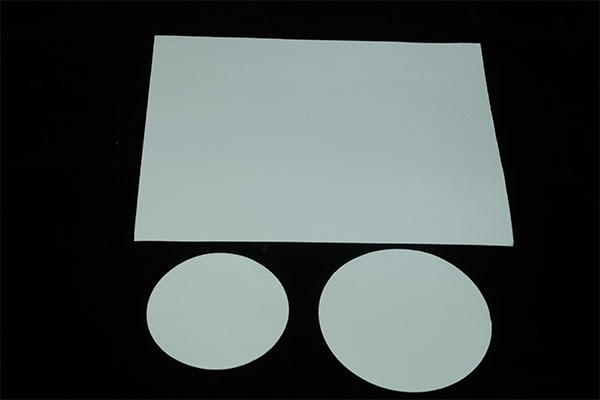
For instance, in industrial waste analysis or potable water testing[^14], their fine particle retention ensures accurate results. Their binder-free construction makes them suitable for sensitive assays, while their high loading capacity works well in high-volume tests. Whether you're analyzing air quality or conducting gravimetric analysis of volatile materials, these filters deliver trustworthy results.
Application-Specific Examples
| Application | How Grade GF/C Excels |
|---|---|
| Cell harvesting | High flow rate ensures efficient cell recovery. |
| Air filtration | Fine nominal retention captures particulate matter effectively. |
| Total suspended solids (TSS) analysis | Certified weight consistency ensures accurate gravimetric measurements. |
| Liquid scintillation counting | Binder-free design prevents assay interference.[^15] |
Each application benefits from this filter's robust and consistent performance.
What sets GF/C RTU apart from traditional GF/C filters?
Time constraints in a lab can hinder thorough preparation. This is where GF/C RTU filters come in, offering unparalleled convenience.
GF/C RTU filters are pre-treated and pre-weighed, making them ideal for labs looking to save time without sacrificing precision. Their ready-to-use design meets stringent EN 872 standards.
These filters are individually barcoded for easy identification. The pre-treatment ensures that you can focus on your analysis rather than preparation, while their certified weight loss of less than 0.017 mg/cm² guarantees accuracy. Using these filters can streamline your workflow and reduce human error.[^16]
Key Differences Between GF/C and GF/C RTU
| Aspect | Traditional GF/C | GF/C RTU |
|---|---|---|
| Pre-treatment required | Yes | No, comes pre-treated and ready-to-use. |
| Weight consistency check | Must be done manually | Certified and barcoded individually. |
| Time efficiency | Requires extra preparation time | Saves time with ready-to-use design. |
This added convenience makes GF/C RTU filters a great option for fast-paced lab environments.
Conclusion
Mastering the use of Cytiva Whatman microfiber filters like Grade GF/C can elevate your lab work. Their fine particle retention, high loading capacity, and binder-free design make them invaluable for demanding applications. Whether using traditional GF/C filters or the GF/C RTU version, these filters ensure precision, reliability, and efficiency in your analyses.
[^1]: "A review of the modern principles and applications of solid-phase ...", https://pmc.ncbi.nlm.nih.gov/articles/PMC9659506/. Analytical sample-preparation literature identifies filtration media, pore size, and handling as variables that can affect analyte recovery, contamination, and measurement uncertainty. Evidence role: expert_consensus; source type: paper. Supports: Mistakes in filter selection or usage can affect laboratory results.. Scope note: This supports the general analytical principle, not a specific quantified error rate for Grade GF/C filters.
[^2]: "[PDF] Method 160.2", https://www.uvm.edu/bwrl/lab_docs/protocols/106.2_TSS_by_gravimetry_(EPA_1971).pdf. Standard analytical methods for suspended-solids testing describe preparing glass-fiber filters by washing, drying, desiccating, and weighing them before filtration, supporting the article's guidance that glass microfiber filters require controlled preparation and appropriate use in gravimetric analysis. Evidence role: general_support; source type: government. Supports: To use Cytiva Whatman microfiber filters like Grade GF/C properly, ensure they are pre-treated, placed correctly in your filtration setup, and used within their recommended applications. These filters excel in cell harvesting, air filtration, and total suspended solids analysis.. Scope note: A neutral standards or government method can support the general preparation and TSS-use claim for glass microfiber/glass-fiber filters, but it may not independently verify Cytiva-specific Grade GF/C marketing claims or all listed applications such as cell harvesting.
[^3]: "Whatman ® glass microfiber filters, binder free, Grade GF/C", https://www.sigmaaldrich.com/US/en/product/aldrich/wha1822866?srsltid=AfmBOorXJe1Mdz5cxqwbV4BTZxG8NooYPuzjfBMO-dMVY_VuemRtrhLu. A technical specification or standards-based source should verify that Whatman Grade GF/C glass microfiber filters are binder-free, have a nominal particle retention of about 1.2 μm, and are commonly used for applications such as suspended-solids analysis, cell harvesting, and air monitoring. Evidence role: general_support; source type: institution. Supports: Grade GF/C filters are known for their excellent flow rate, fine particle retention of 1.2 μm, and binder-free construction, making them ideal for applications like total suspended solids analysis, cell harvesting, and air filtration.. Scope note: Product-specific properties may require a manufacturer datasheet, while application suitability can be corroborated by standards or institutional methods for glass-fiber filtration.
[^4]: "[PDF] Method 160.2", https://www.uvm.edu/bwrl/lab_docs/protocols/106.2_TSS_by_gravimetry_(EPA_1971).pdf. Standard gravimetric methods for total suspended solids commonly use pre-weighed glass-fiber filters to capture suspended material before drying and weighing. Evidence role: mechanism; source type: government. Supports: Glass microfiber filters such as GF/C are used in total suspended solids analysis.. Scope note: This supports the general use of glass-fiber filters in TSS analysis, not the exclusive use of Grade GF/C.
[^5]: "Whatman ® glass microfiber filters, binder free, Grade GF/C", https://www.sigmaaldrich.com/US/en/product/aldrich/wha1822866?srsltid=AfmBOooV-GySd8Gbxha43g1CkbRXp6WtyqU1ZKBfBptRt1iYMzOpGh_f. A product specification or standards-based source should document that Whatman Grade GF/C is a binder-free glass microfiber filter with approximately 1.2 μm particle retention and is used in applications such as suspended-solids analysis, cell harvesting, and air monitoring. Evidence role: general_support; source type: institution. Supports: Grade GF/C filters are known for their excellent flow rate, fine particle retention of 1.2 μm, and binder-free construction, making them ideal for applications like total suspended solids analysis, cell harvesting, and air filtration.. Scope note: For product-specific attributes such as nominal retention and binder-free construction, the strongest source may be the manufacturer's technical documentation rather than an independent source.
[^6]: "[PDF] Whatman filtration Product guide", https://macro.lsu.edu/HowTo/Whatman-filtration-product-guide.pdf. Cytiva's Whatman Grade GF/C product documentation identifies the filter as a binder-free glass microfiber filter with nominal particle retention of 1.2 μm and lists uses including cell harvesting, liquid scintillation counting, and particulate/air or water analysis. Evidence role: general_support; source type: other. Supports: Grade GF/C filters are known for their excellent flow rate, fine particle retention of 1.2 μm, and binder-free construction. This makes them ideal for applications like total suspended solids analysis, cell harvesting, and air filtration.. Scope note: A manufacturer datasheet is authoritative for product specifications, but independent method standards or peer-reviewed studies would be preferable for performance comparisons across applications.
[^7]: "[PDF] Whatman filtration Product guide", https://macro.lsu.edu/HowTo/Whatman-filtration-product-guide.pdf. Product specifications for Whatman Grade GF/C describe the filter as a glass microfiber medium with a nominal particle retention of approximately 1.2 µm. Evidence role: definition; source type: other. Supports: Grade GF/C filters have a nominal fine particle retention of 1.2 µm.. Scope note: The value is a manufacturer specification and should be treated as nominal rather than an independently measured universal cutoff.
[^8]: "Whatman™ Filter Paper Grade GF/C Microfiber Glass Filter, Binder ...", https://www.cytivalifesciences.com/en/us/products/items/whatman-filter-paper-grade-gf-c-microfiber-glass-filter-binder-free-p-09618. Technical descriptions of Whatman glass microfiber filters identify Grade GF/C as binder-free, supporting its use where binders could introduce extractables or assay background. Evidence role: definition; source type: other. Supports: Grade GF/C filters have binder-free construction.. Scope note: This verifies the construction claim but does not by itself prove suitability for every sensitive assay.
[^9]: "Method 160.2", https://www.uvm.edu/bwrl/lab_docs/protocols/106.2_TSS_by_gravimetry_(EPA_1971).pdf. Gravimetric suspended-solids methods describe preparing filters by rinsing or washing, drying to constant mass, cooling in a desiccator, and weighing before sample filtration. Evidence role: mechanism; source type: government. Supports: Preparation of filters for gravimetric analysis involves washing, drying, desiccator cooling, and weighing.. Scope note: The cited procedure is method-specific and may vary by standard, matrix, and laboratory quality system.
[^10]: "[PDF] SIST-EN-872-2005.pdf - iTeh Standards", https://cdn.standards.iteh.ai/samples/22918/a946770d44dc41dcb3c647f3fd7f8d9b/SIST-EN-872-2005.pdf. EN 872 specifies a gravimetric method for determining suspended solids in water by filtration through glass-fibre filters followed by drying and weighing. Evidence role: definition; source type: institution. Supports: EN 872 is a gravimetric standard relevant to suspended-solids analysis using glass-fibre filters.. Scope note: EN 872 concerns suspended solids in water; it does not cover all filtration applications listed in the article.
[^11]: "[PDF] Whatman filtration Product guide", https://macro.lsu.edu/HowTo/Whatman-filtration-product-guide.pdf. GF/C RTU product documentation states that the filters are supplied pre-treated and pre-weighed in individually barcoded pans with recorded filter masses. Evidence role: case_reference; source type: other. Supports: GF/C RTU filters are supplied in individually barcoded aluminum pans with the filter weight recorded.. Scope note: This is a product-specific documentation point and depends on the particular GF/C RTU format purchased.
[^12]: "[PDF] Whatman filtration Product guide", https://macro.lsu.edu/HowTo/Whatman-filtration-product-guide.pdf. GF/C RTU specifications report a certified weight-loss limit of less than 0.017 mg/cm² after preparation, supporting the stated mass-stability criterion. Evidence role: statistic; source type: other. Supports: GF/C RTU filters have a certified weight loss of less than 0.017 mg/cm² after preparation.. Scope note: The figure is a manufacturer-certified specification rather than an independently universal performance measurement.
[^13]: "[PDF] Whatman filtration Product guide", https://macro.lsu.edu/HowTo/Whatman-filtration-product-guide.pdf. Published product and laboratory-method references list glass microfiber filters, including Whatman GF/C-type media, for cell harvesting, radiometric or scintillation assays, binding assays, air particulate collection, and environmental suspended-solids work. Evidence role: general_support; source type: other. Supports: Grade GF/C filters are used in cell harvesting, liquid scintillation counting, binding assays, air filtration, and environmental analysis.. Scope note: The evidence may support these applications collectively from multiple sources rather than from a single neutral source covering every use case.
[^14]: "[PDF] TOTAL SUSPENDED SOLIDS (TSS) EPA Method 160.2 ...", https://19january2017snapshot.epa.gov/sites/production/files/2015-06/documents/160_2.pdf. Water-quality methods for suspended solids apply gravimetric filtration to wastewater, surface water, and drinking-water-related matrices, supporting the relevance of glass-fiber filtration to industrial and potable-water testing contexts. Evidence role: general_support; source type: government. Supports: Glass-fiber filtration is relevant to industrial waste analysis and potable water testing.. Scope note: This supports the testing context but does not prove that Grade GF/C is required for every industrial waste or potable-water protocol.
[^15]: "Impact of extractables/leachables from filters on stability of protein ...", https://pubmed.ncbi.nlm.nih.gov/21695696/. Laboratory filtration references note that binders and filter extractables can contribute contaminants or background signals, so binder-free glass microfiber media are used when low chemical interference is important. Evidence role: mechanism; source type: paper. Supports: Binder-free filter design can reduce assay interference.. Scope note: This supports the chemical rationale; it does not demonstrate absence of interference in every assay performed with GF/C.
[^16]: "Pre-analytical Practices in the Molecular Diagnostic Tests, A ... - PMC", https://pmc.ncbi.nlm.nih.gov/articles/PMC7691716/. Quality-management and laboratory-method literature describes pre-prepared or pre-weighed consumables as reducing manual preparation steps, which can lower opportunities for transcription, weighing, and handling errors. Evidence role: mechanism; source type: paper. Supports: Pre-treated and pre-weighed filters can streamline workflow and reduce opportunities for human error.. Scope note: This is contextual support for the workflow claim and may not quantify error reduction for GF/C RTU specifically.