
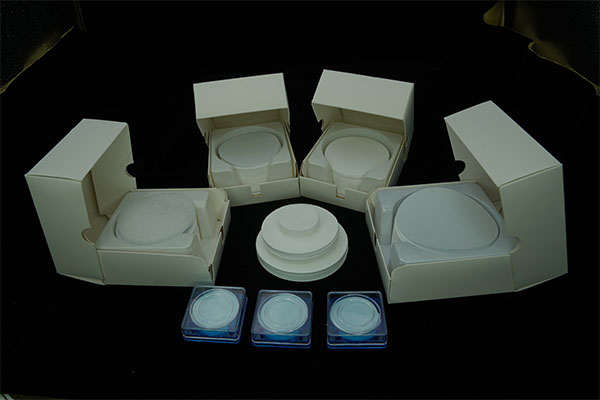
The costs of maintaining high-quality filtration in labs can be frustrating. Finding a reliable alternative to expensive brands like Millipore can become a daunting process.

Finding the right membrane filters for air-monitoring tasks and laboratory applications is crucial. In this blog, I will explain why our PTFE membrane filters perform exceptionally well and why distributors should take interest.
What makes PTFE membrane filters unique?
Laboratories and air monitoring stations often face challenges with filtration reliability. High-end brands dominate the market, yet their prices limit accessibility.
Hydrophobic PTFE membrane filters offer excellent compatibility for clarifying acids, bases, cryogenic fluids, and for isolating RNA.[^2] They are also perfect for air monitoring in AAQM stations.[^3]
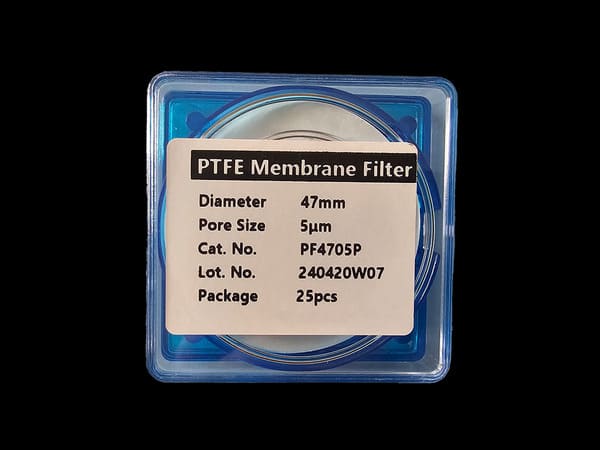
Our filters meet stringent application requirements while offering cost-effective alternatives to brands such as Millipore’s LSWP04700 model. With consistent quality and robust performance, these filters deliver results without compromising standards.
Dive deeper: How do they work?
PTFE membranes are hydrophobic by nature.[^4] This property makes them especially efficient in filtering liquid components that need clarification, as well as for isolating sensitive biological materials like RNA. Their structure is designed to repel water while allowing gas and specific solvents to pass through[^5], maintaining sample integrity[^6].
They are also a critical component in air monitoring applications[^7], especially in Ambient Air Quality Monitoring (AAQM) stations[^8]. Their ability to capture fine particulate matter[^9] makes them indispensable for environmental monitoring.
| Application | Use Case | Special Property |
|---|---|---|
| Clarifying liquids | Acids, bases, cryogenic fluids | Hydrophobic surface |
| RNA isolation | Biological laboratories | Preserves RNA quality[^10] |
| Air monitoring | AAQM stations | Capture fine particulate matter |
| Propellants | Industrial clarifications | Resistant to chemical contamination[^11] |
Why should you consider HuaEnv for PTFE membrane filters?
Environmental monitoring companies and laboratories often look for alternatives to expensive brands like Millipore or Sartorius. But alternatives must also meet high standards.
HuaEnv provides reliable PTFE filters for air & water monitoring. These filters maintain consistent quality, offering affordability without sacrificing performance.
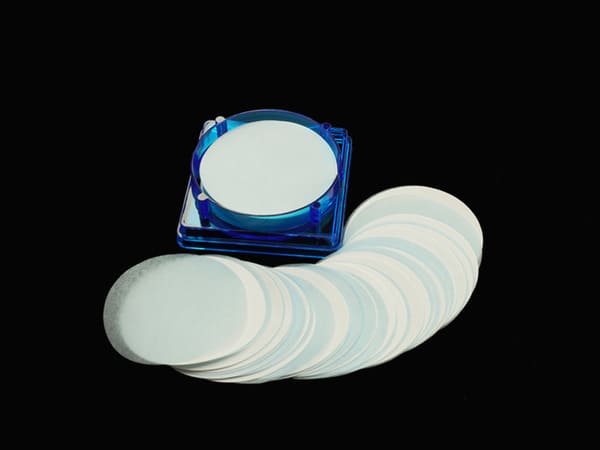
As a professional factory based in China, we specialize in manufacturing environment monitoring filters and laboratory consumables. Our PTFE membranes have been successfully utilized in global markets, ensuring quality for distributors and laboratories alike.
Dive deeper: Comparing HuaEnv filters with Millipore LSWP04700
Millipore’s LSWP04700 is often regarded as the benchmark for PTFE membrane filters.[^12] However, HuaEnv has developed products that match its performance, particularly in pore uniformity, hydrophobicity, and durability. Unlike Millipore, we offer smaller batch orders, and our pricing structure ensures accessibility for smaller laboratories.
| Feature | Millipore LSWP04700 | HuaEnv PTFE Filters |
|---|---|---|
| Pore Uniformity | High | High |
| Hydrophobicity | Excellent | Excellent |
| Durability | Long-lasting | Long-lasting |
| Order Flexibility | Bulk orders only | Small and bulk orders available |
| Cost Efficiency | Premium pricing | Affordable |
How can distributors benefit from HuaEnv?
Finding distribution opportunities can be challenging. Distributors often need products with proven reliability and competitive pricing. HuaEnv provides free samples to evaluate quality and suitability.
Partnering with HuaEnv ensures consistent supply, competitive pricing, and high-quality PTFE membrane filters tailored for laboratory and air-monitoring applications.

Our strategic focus includes collaborating with distributors worldwide. With our expertise in environment monitoring consumables, we guarantee reliability and scalability to meet growing demands.
Dive deeper: What is the process for working with HuaEnv?
Collaborating starts with sampling. We offer free samples for distributors to test product compatibility. Once quality matches expectations, orders can be placed in batches, starting small or scaling as demand grows. Our commitment is to ensure reliable production that aligns with your business goals.
| Collaboration Step | Description |
|---|---|
| Sample Provision | Free samples for initial quality check |
| Batch Orders | Flexible order sizes, starting small |
| Quality Assurance | Consistent testing and certification |
| Scalability | Reliable production for growing demand |
Conclusion
HuaEnv’s PTFE membrane filters provide laboratories and air-monitoring stations with cost-effective solutions that ensure reliability. Distributors worldwide can benefit from free samples and scalable collaboration opportunities.
[^1]: "[PDF] Review of Filters for Air Sampling and Chemical Analysis in Mining ...", https://stacks.cdc.gov/view/cdc/128464/cdc_128464_DS1.pdf. A technical or institutional source on PTFE membrane filtration supports that PTFE membranes are hydrophobic and chemically resistant, making them suitable for filtration involving aggressive chemicals and gas or aerosol sampling; however, the source may not verify every listed application for a 5.0 μm pore size specifically. Evidence role: general_support; source type: institution. Supports: PTFE membrane filters with a 5.0 μm pore size are hydrophobic and used for chemical clarification and air-monitoring applications.. Scope note: Likely supports PTFE membrane properties and common uses broadly, but not all listed applications or this exact product specification.
[^2]: "Deproteination of Nucleic Acids by Filtration Through a Hydrophobic ...", https://pubmed.ncbi.nlm.nih.gov/1715179/. A peer-reviewed or institutional filtration reference can support that PTFE membranes have broad chemical compatibility and hydrophobic behavior useful in nonaqueous or chemically aggressive filtration; however, compatibility for RNA isolation should be verified separately because biological protocols may use specific membrane chemistries. Evidence role: expert_consensus; source type: paper. Supports: Hydrophobic PTFE membrane filters are chemically compatible with acids and bases and may be used in specialized laboratory filtration workflows.. Scope note: The source may substantiate chemical compatibility better than RNA-isolation suitability.
[^3]: "Review of Filters for Air Sampling and Chemical Analysis in Mining ...", https://pmc.ncbi.nlm.nih.gov/articles/PMC10174218/. Government or standards documentation on ambient air monitoring can support that membrane filters, including PTFE filters, are used for collecting particulate matter in air-monitoring systems; however, such sources would not establish that any specific filter is “perfect” for AAQM stations. Evidence role: general_support; source type: government. Supports: PTFE membrane filters are used in ambient air-quality monitoring for particulate collection.. Scope note: Supports suitability or common use, not the promotional claim of being “perfect.”
[^4]: "Polytetrafluoroethylene", https://en.wikipedia.org/wiki/Polytetrafluoroethylene. An encyclopedia or materials-science source can support that polytetrafluoroethylene has low surface energy and is hydrophobic, which explains the water-repellent behavior of PTFE membranes. Evidence role: definition; source type: encyclopedia. Supports: PTFE membranes are intrinsically hydrophobic because of the surface properties of PTFE..
[^5]: "A super liquid-repellent hierarchical porous membrane for ... - PMC", https://pmc.ncbi.nlm.nih.gov/articles/PMC10613234/. A membrane-science source can support that hydrophobic PTFE membranes resist water penetration unless sufficient pressure is applied while allowing airflow and compatible nonaqueous fluids or solvents to pass; however, permeability depends on pore size, pressure, membrane thickness, and solvent compatibility. Evidence role: mechanism; source type: paper. Supports: Hydrophobic PTFE membranes repel water and can permit gases or compatible solvents to pass through.. Scope note: The mechanism is conditional on operating pressure, membrane structure, and the solvent used.
[^6]: "Impact of Extractables/Leachables from Filter Materials on ... - PubMed", https://pubmed.ncbi.nlm.nih.gov/36002610/. A laboratory filtration or analytical-methods source can support that chemically inert, low-extractable filter materials help reduce sample contamination during filtration; however, this provides contextual support rather than direct proof that the article’s specific filters maintain sample integrity. Evidence role: mechanism; source type: paper. Supports: Using chemically inert filtration media can help preserve sample integrity by reducing contamination or chemical interaction.. Scope note: Contextual support only; direct proof would require product-specific extractables, leachables, or validation data.
[^7]: "[PDF] Standard Operating Procedure for Particulate Matter (PM ...", https://www3.epa.gov/ttnamti1/files/ambient/pm25/spec/RTIGravMassSOPFINAL.pdf. Ambient air-monitoring methods from environmental agencies support that filters are a core sampling medium for collecting particulate matter for gravimetric or chemical analysis; however, the source may describe filters generally rather than PTFE membranes exclusively. Evidence role: general_support; source type: government. Supports: Filters are important components in air-monitoring applications for particulate matter collection and analysis.. Scope note: May support the importance of filters in air monitoring generally, not the indispensability of a particular PTFE filter.
[^8]: "Air Monitoring - Texas Commission on Environmental Quality", https://www.tceq.texas.gov/airquality/monops. A government or international air-quality source can define ambient air-quality monitoring stations as systems used to measure pollutants in outdoor air, including particulate matter; however, this would define AAQM context rather than evaluate a specific filter product. Evidence role: definition; source type: government. Supports: AAQM stations are used to monitor outdoor air pollutants such as particulate matter.. Scope note: Defines the monitoring context but does not prove product performance.
[^9]: "Recent Advances in Membrane-Based Air Filtration Technologies ...", https://pmc.ncbi.nlm.nih.gov/articles/PMC12737178/. Environmental monitoring standards and methods support that membrane filters are used to collect airborne particulate matter for subsequent weighing or chemical analysis; however, collection efficiency depends on sampler design, flow rate, particle size, and filter specifications. Evidence role: mechanism; source type: government. Supports: Membrane filters can capture airborne particulate matter in air-monitoring workflows.. Scope note: Does not establish the capture efficiency of the specific filter unless paired with test data.
[^10]: "Analysis of current and alternative phenol based RNA extraction ...", https://pmc.ncbi.nlm.nih.gov/articles/PMC2729743/. A molecular-biology protocol or peer-reviewed source can support that RNA workflows require materials and procedures that minimize RNase contamination and degradation; however, such evidence would not prove that PTFE membranes specifically preserve RNA quality without product-specific validation. Evidence role: general_support; source type: education. Supports: RNA isolation workflows require conditions and materials that protect RNA from degradation.. Scope note: Supports the need to preserve RNA quality in workflows, not necessarily the effectiveness of PTFE filters for that purpose.
[^11]: "Polytetrafluoroethylene - Wikipedia", https://en.wikipedia.org/wiki/Polytetrafluoroethylene. A materials-science or chemical-compatibility source can support that PTFE is chemically inert and resistant to many corrosive substances, which can reduce chemical interaction with filtered materials; however, “chemical contamination” must be defined by the specific application and contaminants tested. Evidence role: mechanism; source type: research. Supports: PTFE’s chemical inertness supports its use where resistance to chemical interaction is required.. Scope note: General chemical resistance does not automatically demonstrate contamination control in propellant processing.
[^12]: "MILLIPORE LSWP04700 | 47mm White Plain Mitex™ 5μm PTFE ...", https://www.midlandsci.com/MILLIPORE_LSWP04700. Manufacturer documentation or widely used laboratory catalog references can verify the specifications and established availability of Millipore LSWP04700 as a hydrophobic PTFE membrane filter; however, a catalog source would not independently prove that it is the market benchmark. Evidence role: case_reference; source type: other. Supports: Millipore LSWP04700 is an established hydrophobic PTFE membrane-filter product used as a comparison point.. Scope note: Can verify the product and specifications, but the “benchmark” characterization may remain interpretive unless supported by comparative studies or standards usage.

