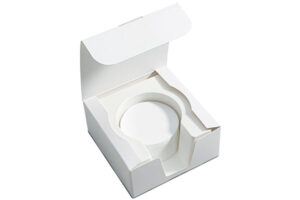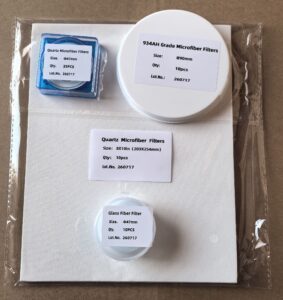

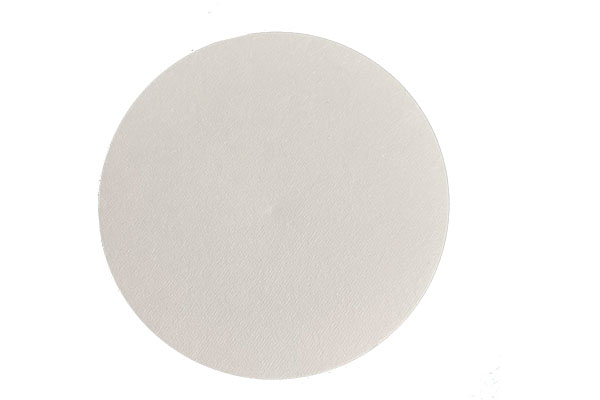
Glass fiber filters are a cornerstone in laboratory filtration, providing a reliable solution for precise particle retention and prefiltration needs. They are known for their high filtration efficiency and chemical resistance[^1], making them suitable for a wide range of applications.
Glass fiber filters are made from borosilicate glass fibers[^2] and can retain particles as fine as 0.7 microns without the use of binders[^3], which often interfere with filtration processes. These filters are commonly used for air monitoring, water quality testing[^4], and as prefilters to extend the life of primary filters[^5].
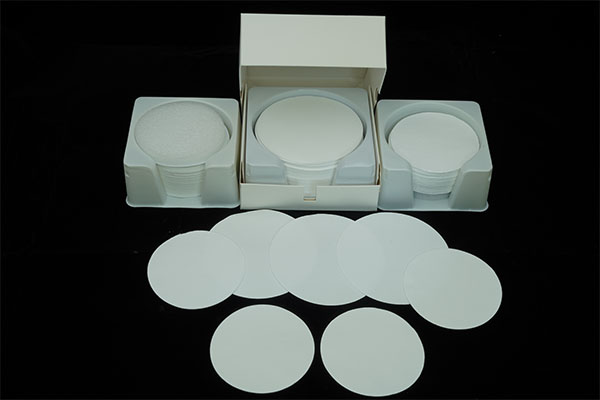
Glass fiber filters come in various grades and specifications, tailored to specific applications. Understanding their capabilities can help you make informed choices for your laboratory needs.
Why Are Glass Fiber Filters Ideal for Prefiltration?
Prefiltration is often an overlooked but critical step in filtration workflows. Skipping this step can reduce the efficiency of your primary filters and increase operational costs.[^6]
Glass fiber filters are ideal for prefiltration due to their high loading capacity and ability to remove large particles effectively[^7]. This extends the lifespan of finer filters and improves overall system performance.
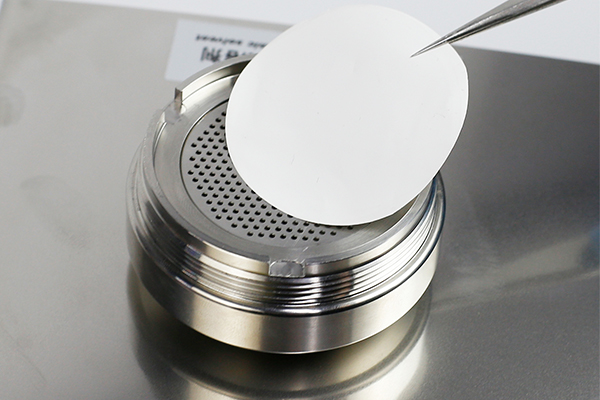
When used as prefilters, glass fiber filters act as a protective barrier, capturing coarse particles and preventing clogging in downstream filtration processes[^8]. This ensures smoother and more cost-effective workflows.
Applications and Grades of Glass Fiber Filters
Glass fiber filters are categorized into various grades, each designed for specific applications. Here's a breakdown of popular grades:
| Filter Grade | Pore Size (Microns) | Application | Common Specifications |
|---|---|---|---|
| GF/A | 1.6 | General-purpose/Prefiltration | 1820-025, 1820-047, 1820-090, 1820-110 |
| GF/B | 1.0 | High-load prefiltration | 1821-025, 1821-047, 1821-090 |
| GF/C | 1.2 | Water suspended solids, prefiltration | 1822-025, 1822-047, 1822-090 |
| GF/D | 2.7 | High-load primary prefiltration | 1823-025, 1823-047, 1823-090, 1823-110 |
| GF/F | 0.7 | Fine particle/protein prefiltration | 1825-025, 1825-047, 1825-090 |
| 934-AH | 1.5 | Air/water monitoring, general prefiltration | 1827-025, 1827-047, 1827-090, 1827-110 |
Each grade offers unique advantages, from handling high particle loads to retaining fine particulates.
Why Choose GF/A for General-Purpose Filtration?
Filtration needs vary, but general-purpose applications often require a versatile solution. GF/A is a go-to grade for many laboratories.
GF/A filters, with a pore size of 1.6 microns[^9], are effective for general-purpose filtrations and as prefilters, offering a balanced approach to particle retention and throughput.
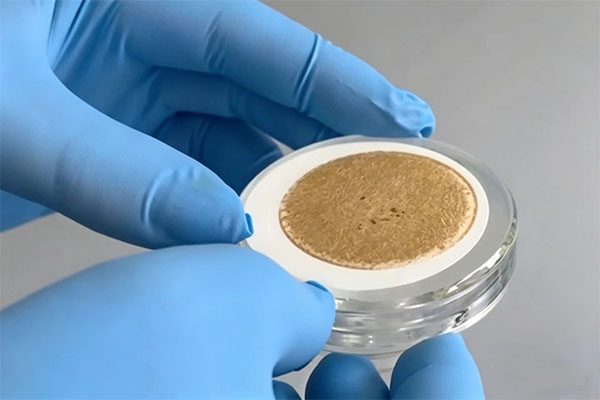
The consistency and reliability of GF/A filters make them suitable for air monitoring and routine water quality tests, ensuring dependable results every time.
Dive Deeper into GF/A Applications
GF/A filters are often used in industries that require robust filtration without sacrificing efficiency. For example:
- Air Monitoring: Capturing particulate matter like PM10 and PM2.5.
- Water Quality Testing: Removing suspended solids before detailed analysis.
- General Laboratory Workflows: Pre-filtering samples to ensure the integrity of downstream processes.
By investing in GF/A filters, laboratories can streamline their filtration steps while maintaining high-quality standards.
What Makes GF/B the Choice for High-Load Applications?
High-load applications demand filters that can handle increased particle volume without losing efficiency. This is where GF/B stands out.
GF/B filters, with a pore size of 1.0 microns[^10], are designed for high-load prefiltration, capable of managing large particle quantities effectively while maintaining robustness.
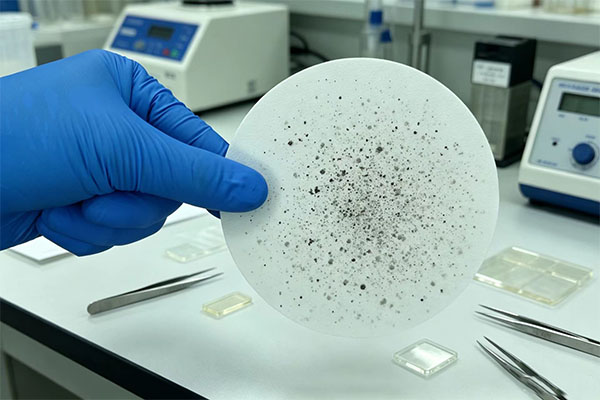
Whether you are working with viscous liquids or high-particulate solutions, GF/B filters excel at providing consistent performance over extended use.
Dive Deeper into GF/B Use Cases
GF/B filters are indispensable in scenarios where particle load is high, such as:
- Environmental Monitoring: Sampling from heavily polluted water bodies.
- Industrial Applications: Filtering chemical solutions with high solid content.
- Food and Beverage Quality Control: Removing large particles from liquid samples before fine filtration.
Their ability to handle high loads without frequent replacements makes GF/B filters a cost-effective choice for demanding tasks.
How Do GF/F Filters Handle Fine Particles and Proteins?
When dealing with fine particles or sensitive biomolecules like proteins, precision is crucial. GF/F filters are specifically engineered for this purpose.
GF/F filters have a pore size of 0.7 microns[^11], allowing them to effectively retain fine particles and proteins, making them ideal for critical prefiltration steps.
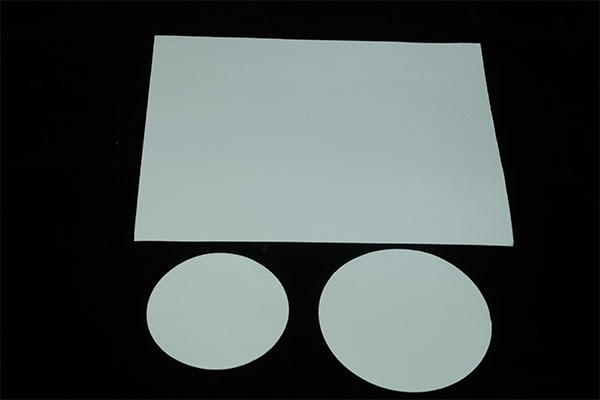
These filters are often used in life sciences and environmental studies, where capturing fine particulates is essential for accurate analysis.
Dive Deeper into GF/F Applications
GF/F filters find applications in fields where precision is non-negotiable:
- Life Sciences: Preparing samples for molecular biology experiments.
- Air Quality Monitoring: Measuring fine particulate matter in the environment.
- Water Testing: Retaining fine suspended solids for accurate contamination analysis.
The exceptional performance of GF/F filters ensures reliable results, even in highly sensitive applications.
Conclusion
Glass fiber filters are versatile tools that enhance the efficiency and reliability of filtration workflows. With specialized grades like GF/A, GF/B, and GF/F, these filters can meet diverse laboratory needs. Their robustness, high particle retention, and adaptability make them indispensable for industries ranging from environmental monitoring to life sciences.
[^1]: "Glass fiber filters – High performance filtration", https://huaenv.com/glass-fiber-filters-high-performance-filtration/. A materials or filtration reference describes borosilicate glass-fiber media as chemically resistant in many laboratory conditions and suitable for efficient depth filtration of particulates. Evidence role: general_support; source type: education. Supports: Glass fiber filters are known for high filtration efficiency and chemical resistance.. Scope note: Support is general to borosilicate glass and glass-fiber media; it does not establish identical performance for every filter grade or chemical exposure.
[^2]: "Grade TSS Borosilicate Glass Fiber - Sterlitech Corporation", https://www.sterlitech.com/grade-tss-borosilicate-glass-fiber.html?srsltid=AfmBOopCyYiNoV40IkfQ7BQ8St4UPbBYEn5WtGdxEYcazrmYu9of2D3O. A technical reference on glass microfiber filters identifies the medium as borosilicate glass fibers, supporting the material-composition statement. Evidence role: definition; source type: other. Supports: Glass fiber filters are made from borosilicate glass fibers.. Scope note: Composition may vary by product line; the source should match binder-free laboratory glass microfiber filters rather than unrelated glass-fiber materials.
[^3]: "Whatman™ Grade GF/F Glass Microfiber Filters, Binder Free - Cytiva", https://www.cytivalifesciences.com/en/us/products/items/whatman-grade-gf-f-glass-microfiber-filters-binder-free-p-00425. A grade specification for binder-free glass microfiber filters reports a nominal particle retention of 0.7 µm for fine-retention grades such as GF/F. Evidence role: definition; source type: other. Supports: Some binder-free glass fiber filters can retain particles as fine as 0.7 microns.. Scope note: The 0.7 µm value is typically a nominal retention rating, not an absolute pore-size cutoff under all flow conditions.
[^4]: "[PDF] Method 160.2", https://www.uvm.edu/bwrl/lab_docs/protocols/106.2_TSS_by_gravimetry_(EPA_1971).pdf. Government analytical methods for particulate air sampling and suspended-solids testing use filter media, including glass-fiber filters, documenting these as established environmental monitoring applications. Evidence role: case_reference; source type: government. Supports: Glass fiber filters are commonly used for air monitoring and water quality testing.. Scope note: Such methods show recognized uses, but they do not prove that glass fiber filters are used in all air- or water-testing protocols.
[^5]: "Characterization of Sterilizing‐Grade Membranes/Prefilters ... - PMC", https://pmc.ncbi.nlm.nih.gov/articles/PMC12699132/. Filtration references describe prefiltration as a step that removes coarse or high-load particles before final filtration, thereby reducing fouling of downstream membrane filters. Evidence role: mechanism; source type: education. Supports: Glass fiber filters can be used as prefilters to extend the life of primary filters.. Scope note: The source would support the mechanism qualitatively; actual lifetime extension depends on sample matrix, flow rate, and filter configuration.
[^6]: "Cost factors and chemical pretreatment effects in the membrane ...", https://pubmed.ncbi.nlm.nih.gov/11317898/. Technical filtration literature links inadequate prefiltration with increased membrane fouling, shorter filter life, higher pressure drop, and more frequent filter replacement. Evidence role: mechanism; source type: paper. Supports: Skipping prefiltration can reduce primary-filter efficiency and increase operating costs.. Scope note: Cost effects are usually inferred from replacement frequency and process downtime rather than measured for every laboratory workflow.
[^7]: "Filtration Mechanism of Fine Particle - PMC - NIH", https://pmc.ncbi.nlm.nih.gov/articles/PMC7498895/. Depth-filtration literature explains that fibrous media can hold particles throughout the filter matrix rather than only at the surface, supporting higher dirt-loading capacity and coarse-particle capture. Evidence role: mechanism; source type: paper. Supports: Glass fiber filters are suitable for prefiltration because of high loading capacity and effective removal of large particles.. Scope note: The principle applies to depth filters generally; the magnitude of loading capacity is grade- and sample-specific.
[^8]: "The First Line of Defense: Why the Air Box Pre-Filter Matters", https://airboxfilter.com/the-first-line-of-defense-why-the-air-box-pre-filter-matters?srsltid=AfmBOopsbwkyOsjZnrbeKlA-kVF4d8k8K-WCmIRmxz4SHsTF6qmz0fWw. Filtration guidance describes prefilters as upstream filters that trap larger particulates and reduce clogging or fouling of subsequent finer filters. Evidence role: mechanism; source type: institution. Supports: Glass fiber prefilters capture coarse particles and help prevent downstream clogging.. Scope note: This supports the general mechanism, not a quantified clogging reduction for a particular glass-fiber grade.
[^9]: "Whatman™ Grade GF/A glass microfiber filters, binder free - Cytiva", https://www.cytivalifesciences.com/en/us/products/items/whatman-grade-gf-a-glass-microfiber-filters-binder-free-p-00426. A GF/A grade specification lists a nominal particle retention of about 1.6 µm, supporting the stated size rating for this filter grade. Evidence role: definition; source type: other. Supports: GF/A filters have a pore size or nominal particle-retention rating of 1.6 microns.. Scope note: The value is a nominal retention rating and should not be presented as an absolute pore-size measurement.
[^10]: "Whatman ® glass microfiber grade GF/B filter discs 1 μm pore size", https://www.sigmaaldrich.com/US/en/product/aldrich/wha1821055?srsltid=AfmBOor8K-bwJNAMjqC0rBAb7bD-8WBp4uxSbnrgYhdwJTBMw9cSMbOU. A GF/B grade specification reports a nominal particle retention of about 1.0 µm, supporting the stated rating for the grade. Evidence role: definition; source type: other. Supports: GF/B filters have a pore size or nominal particle-retention rating of 1.0 microns.. Scope note: The rating is nominal and may not correspond to an absolute pore diameter or universal retention threshold.
[^11]: "Whatman ® circles ,borosilicate glass grade GF/F filter discs 0.7 μm ...", https://www.sigmaaldrich.com/US/en/product/aldrich/wha1825070?srsltid=AfmBOopoa9MUXzhlOuDEydoxkxnQGgMDlMsnaBs6dfhmgGM_5FaYIOZg. A GF/F grade specification identifies a nominal particle retention of about 0.7 µm, supporting the article's stated fine-retention rating. Evidence role: definition; source type: other. Supports: GF/F filters have a nominal particle-retention rating of 0.7 microns.. Scope note: This is a nominal retention rating; actual capture depends on particle type, loading, flow, and test method.