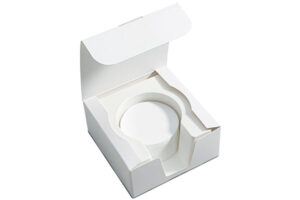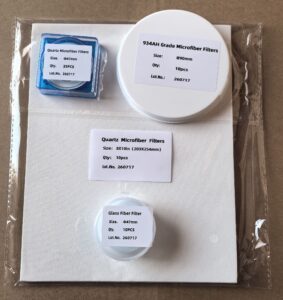
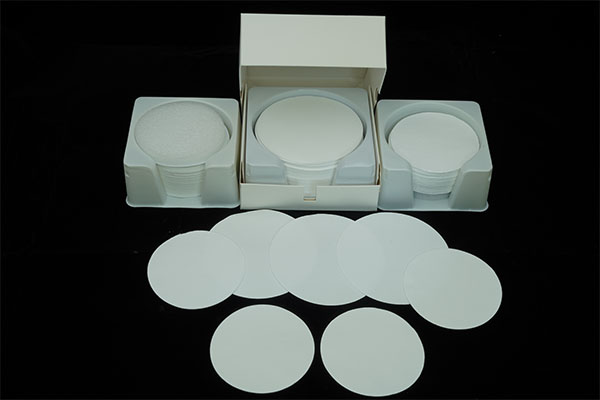
Glass microfiber filters are essential lab tools. They balance fine particle retention with fast flow rates. Their versatility makes them ideal for suspended solids collection across potable water and varied waste samples[^1].
A Grade GF/C filter is a glass microfiber filter with a 1.2µm pore size[^2]. Its unique design combines fine particle retention and good flow rates[^3] for efficient filtration in diverse applications.
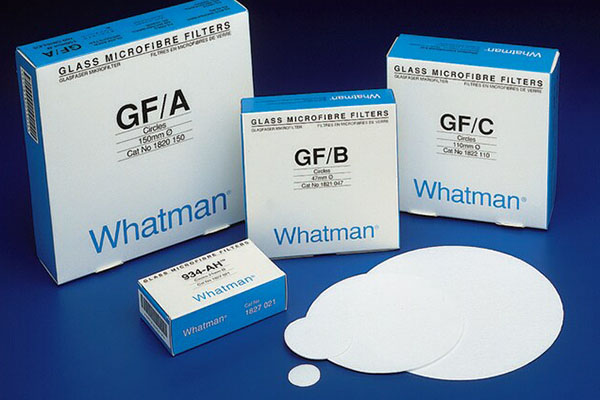
Glass microfiber filters serve critical needs. Their reliability in tests like suspended solids detection in water highlights their importance. But what makes GFC filters unique, and how do they work for various industries? Let’s explore.
What sets GFC filters apart from other filters?
Leading paragraph: Efficient filtration can be challenging when balancing fine particle retention and flow rate. Many filters compromise one for the other, but GF/C filters manage both efficiently. How is this achieved?
GFC filters feature dense, high-quality glass microfiber with 1.2µm pores, ensuring effective filtration of fine particles without compromising flow rate. This makes them ideal for water quality and environmental testing[^4].
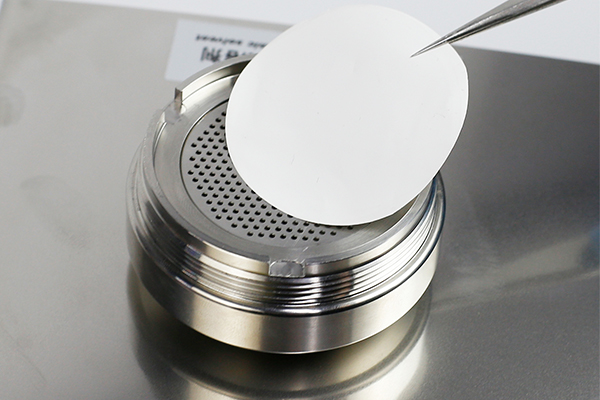
Dive deeper: GF/C filters are widely trusted for their pre-filtration capacities in laboratory processes[^5]. Their ability to separate suspended solids makes them perfect for water samples. Additionally, the glass microfiber material is chemically inert[^6], resisting reactions with substances being tested.
These filters are commonly used in potable water testing, detecting natural and industrial waste levels, and countless environmental applications. Their popularity stems from their ability to handle high volumes while maintaining consistency[^7].
Here’s a structured comparison:
| Feature | GF/C Filters | Other Filters |
|---|---|---|
| Pore Size | 1.2µm | Varies |
| Material | Glass microfiber | Mixed fibers |
| Efficiency | High retention, good flow | Often low retention or slow flow |
| Chemical Resistance | Excellent | Varies |
How are GFC filters used in water testing?
Testing water quality requires precision. Fine particle detection can make or break the analysis. GFC filters excel in this area, especially for industries monitoring waste.
In water testing, GF/C filters collect suspended solids from samples[^8], ensuring accurate analysis for environmental monitoring or industrial waste treatment.

Dive deeper: Suspended solids testing involves filtering water samples through GF/C filters. By trapping particles, these filters make it easier to measure concentration levels[^9]. For example, they are vital in potable water testing where clarity and purity are essential.
Industries also use GF/C filters for environmental monitoring, helping detect pollution in natural water sources[^10]. Their ability to handle large sample volumes efficiently ensures reliable data.
Additionally, these filters are used for pre-filtration in chromatography processes[^11], contributing to better results by removing unwanted debris before sample separation.
How does Huaenv meet the demand for high-quality GFC filters?
Manufacturing high-quality filters requires precision and commitment. Huaenv delivers both, ensuring labs worldwide have reliable tools. Here’s why Huaenv stands out.
Huaenv produces GF/C and other glass fiber filters, offering high-quality alternatives to brands like Whatman and Ahlstrom, with competitive pricing and excellent performance.
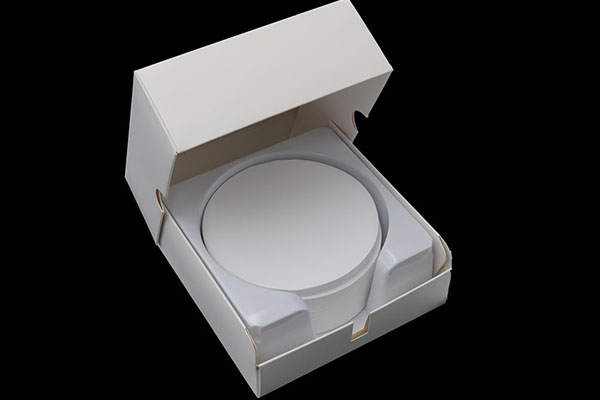
Dive deeper: Huaenv specializes in glass microfiber filters, including GF/A, GF/B, GF/C, GF/D, GF/F, 934-AH, and EPM2000 grades. Our filters are designed to replace high-cost international brands without compromising on performance.
Benefits of choosing Huaenv:
- Custom solutions: We adapt designs to fit unique lab needs.
- Sample trials: Free samples allow labs to test compatibility.
- Competitive pricing: We help distributors access affordable filters that rival established brands.
- Applications: Pre-filtration, suspended solids testing, air dust collection, chromatography preparation, and smoke/air particulate sampling.
Huaenv is committed to quality. Our filters undergo rigorous testing, ensuring they meet standards for water and environmental monitoring.
Why choose GFC filters for your lab?
Every lab faces challenges. Choosing the wrong filter can lead to wasted resources and inaccurate results. GF/C filters provide a reliable solution for many lab tasks.
GF/C filters offer an ideal balance of particle retention, flow rate, and chemical stability, making them essential for water, air, and environmental applications.
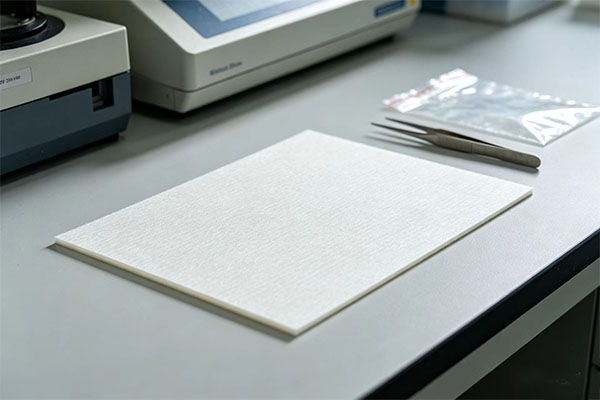
Dive deeper: GF/C filters aren’t just for water testing. Industries worldwide use them for air particulate collection[^12], ensuring environmental safety. Their high-temperature resistance also makes them suitable for smoke and gas filtration.
Compared to cellulose or PTFE filters, GF/C filters deliver unmatched versatility. Labs looking for pre-filtration tools for chromatography find these filters indispensable. Additionally, their inert nature ensures compatibility with a wide range of solutions.
Here’s a breakdown:
| Application | Typical Filters | GF/C Filters Benefits |
|---|---|---|
| Suspended solids detection | Cellulose | Better retention and efficiency |
| Air particulate collection | PTFE | Reliable chemical resistance |
| Pre-filtration for chromatography | Mixed fiber | Consistent results |
| Smoke and gas filtration | Various | High-temperature resistance |
Conclusion
GF/C filters balance efficient filtration and versatility. Huaenv’s commitment to quality ensures labs globally trust our filters for reliable results. Choose GF/C filters for your lab’s needs, and explore Huaenv for premium filtration solutions.
[^1]: "[PDF] Total Suspended Solids by Gravimetric Determination", https://www.cefns.nau.edu/~teb/ambl/sop/SOP_AMBL_105D_TotalSuspendedSolids.pdf. Government or standard-method documentation for total suspended solids describes collecting nonfilterable residue from water and wastewater samples on glass-fiber filters, supporting the stated use in suspended-solids analysis. Evidence role: case_reference; source type: government. Supports: Glass microfiber filters are used for suspended solids collection in potable water and waste samples.. Scope note: Method documents may specify filter preparation and performance requirements rather than naming GF/C exclusively. [^2]: "Whatman Glass Microfiber Grade GF/C Filter Discs 1.2 μm Pore Size", https://huaenv.com/whatman-glass-microfiber-grade-gf-c-filter-discs-1-2-%CE%BCm-pore-size-what-makes-them-unique/. A technical specification source identifies Grade GF/C glass microfiber filters as having a nominal particle-retention rating of about 1.2 µm, supporting the stated grade characteristic. Evidence role: definition; source type: other. Supports: A Grade GF/C filter is a glass microfiber filter with a 1.2µm pore size.. Scope note: The value is typically a nominal retention rating rather than a precisely uniform physical pore diameter. [^3]: "Glass microfiber filters for laboratory analytical: Why are they ...", https://huaenv.com/glass-microfiber-filters-for-laboratory-analytical-why-are-they-indispensable/. A filtration reference or technical specification describes glass microfiber depth filters as combining fine particle retention with relatively high flow due to their porous fiber matrix, supporting the stated performance tradeoff. Evidence role: mechanism; source type: research. Supports: GF/C filters combine fine particle retention and good flow rates for efficient filtration.. Scope note: Such sources usually support the general mechanism and product class, not the performance of every GF/C filter from every manufacturer. [^4]: "ASTM: D5907: Matter, Filterable and Nonfilterable, in Water", https://www.nemi.gov/methods/method_summary/5451/. Water-quality method guidance uses filtration through glass-fiber filters in suspended-solids and particulate analyses, supporting the contextual claim that these filters are used in environmental testing. Evidence role: general_support; source type: government. Supports: GF/C filters are used in water quality and environmental testing.. Scope note: The source would support common analytical use, not prove that GF/C is always the ideal filter for all water-quality tests. [^5]: "[PDF] Rapid Method for Acid Digestion of Glass-Fiber - EPA", https://www.epa.gov/sites/default/files/2015-06/documents/air_filter_dissolution_by_acid_digestion_epa_402-r-12-009_10-22-12.pdf. Laboratory filtration literature describes glass-fiber depth filters as prefilters that remove particulates before finer membrane filtration or instrumental analysis, supporting the stated pre-filtration role. Evidence role: mechanism; source type: education. Supports: GF/C filters are widely used as prefilters in laboratory processes.. Scope note: The support is for the general laboratory use of glass-fiber filters; the exact capacity varies with sample load, diameter, and grade. [^6]: "[PDF] Materials Compatability", https://scs.illinois.edu/system/files/inline-files/MaterialsCompatability.pdf. Materials references describe borosilicate glass and glass-fiber filter media as chemically resistant and relatively inert toward many laboratory solutions, supporting the claim of broad chemical compatibility. Evidence role: mechanism; source type: education. Supports: Glass microfiber filter material is chemically inert enough for many laboratory filtration applications.. Scope note: Chemical inertness is not absolute; strong acids, bases, hydrofluoric acid, and high-temperature conditions can affect glass materials. [^7]: "Study on the Filtration Performance of the Baghouse Filters for Ultra ...", https://pmc.ncbi.nlm.nih.gov/articles/PMC6351911/. Filtration references explain that glass-fiber depth filters have high loading capacity because particles are retained throughout a fibrous matrix rather than only on a surface, supporting the high-volume handling claim. Evidence role: mechanism; source type: research. Supports: Glass microfiber filters can handle relatively high sample volumes while maintaining filtration performance.. Scope note: The evidence would support the mechanism and typical behavior, not guarantee consistent results for every sample matrix. [^8]: "EPA-NERL: 160.2: Non-filterable Residue by Drying Oven", https://www.nemi.gov/methods/method_summary/5213/. Standard suspended-solids methods determine nonfilterable residue by passing a measured water sample through a prepared glass-fiber filter and weighing retained solids, supporting the collection function described. Evidence role: mechanism; source type: government. Supports: In water testing, GF/C or similar glass-fiber filters collect suspended solids from samples.. Scope note: Method requirements may specify filter characteristics and preparation rather than the GF/C trade grade by name. [^9]: "[PDF] Comparability of Suspended-Sediment Concentration and Total ...", https://water.usgs.gov/osw/pubs/WRIR00-4191.pdf. Official suspended-solids methods calculate concentration from the dry mass retained on a filter divided by the sample volume, supporting the claim that filtration enables concentration measurement. Evidence role: mechanism; source type: government. Supports: Trapping particles on a filter enables measurement of suspended-solids concentration levels.. Scope note: This supports gravimetric suspended-solids concentration measurement, not all possible particulate or contaminant analyses. [^10]: "Turbidity", https://www.epa.gov/system/files/documents/2021-07/parameter-factsheet_turbidity.pdf. Water-quality guidance treats suspended solids and turbidity as indicators of erosion, runoff, wastewater discharge, and other pollution pressures, supporting the environmental-monitoring context. Evidence role: general_support; source type: government. Supports: Suspended-solids monitoring can help detect pollution in natural water sources.. Scope note: Suspended solids can indicate pollution but do not identify all pollutant types or sources without additional analysis. [^11]: "Gel-Filtration Chromatography - PMC", https://pmc.ncbi.nlm.nih.gov/articles/PMC7121854/. Chromatography guidance recommends removing particulates from samples and mobile phases before injection to reduce clogging and protect analytical columns, supporting the use of filtration as a preparatory step. Evidence role: mechanism; source type: education. Supports: Filters are used for pre-filtration in chromatography processes to remove debris before separation.. Scope note: The source would support filtration before chromatography generally; the optimal filter material depends on analyte compatibility and method requirements. [^12]: "[PDF] Method IO-3.1 - Selection, Preparation and Extraction of Filter Material", https://www.epa.gov/sites/default/files/2019-11/documents/mthd-3-1.pdf. Air-monitoring methods and particulate-matter sampling guidance describe collecting airborne particles on filters, including glass-fiber or quartz-fiber media in specific methods, supporting the general air-sampling application. Evidence role: case_reference; source type: government. Supports: Glass microfiber filters can be used for air particulate collection.. Scope note: Different air-monitoring methods specify different filter media, so the evidence may support glass-fiber filtration in selected applications rather than universal use of GF/C.