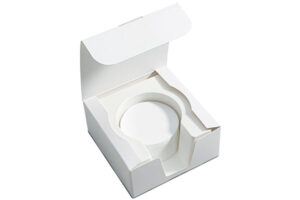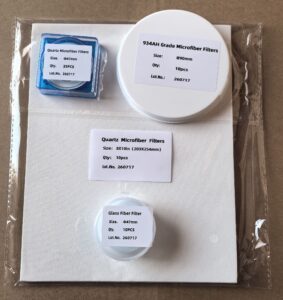

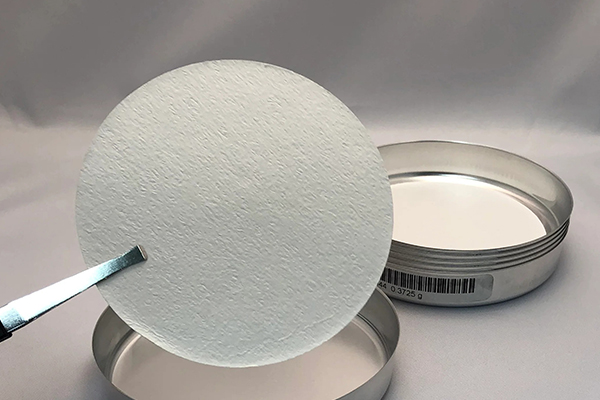
When it comes to filtration, finding the right material can be confusing. Have you ever wondered what makes GF/D filters special and why they are so widely used?
A GF/D filter is a thick, fine-grade glass fiber filter with high loading capacity[^1], ideal for prefiltration, water sample testing, air particulate sampling, solution clarification, and more.
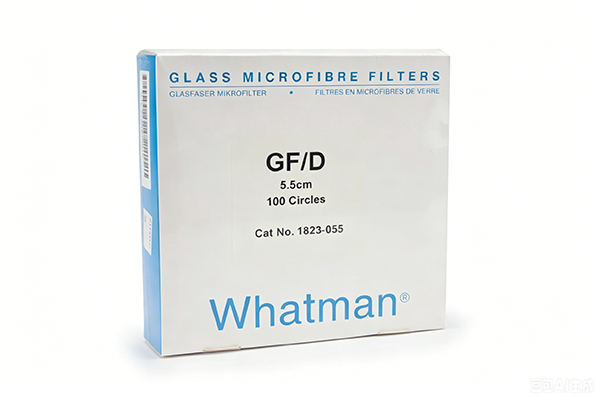
GF/D filters are versatile and effective. From acting as a prefilter in combination with GF/B to being used for various environmental and lab testing applications, their ability to adapt to different needs makes them invaluable. Let’s dive deeper into their characteristics and uses.
Why is the thickness of GF/D filters important?
Thickness might seem like a minor detail, but it plays a significant role. A thicker filter often translates to better performance in high-loading scenarios.
The thickness of GF/D filters allows them to handle large volumes of suspended particles[^2], making them ideal for prefiltration and testing applications where clogging must be minimized[^3].
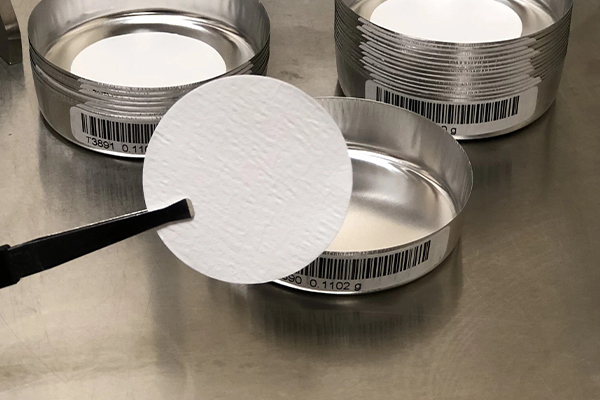
The thick structure of GF/D filters ensures they can hold more particles without becoming clogged. This is especially important in applications such as water sample filtration or air particulate sampling. When used as a prefilter before finer filters like GF/B[^4], they extend the life of finer filters by trapping larger particles first. This dual-layer approach reduces filtration costs and improves efficiency.
How do GF/D filters compare to other glass fiber filters?
Filters like GF/A, GF/B, and GF/C may seem similar, but each has its strengths. GF/D filters stand out for specific reasons.
GF/D filters are thicker than GF/C[^5] and coarser than GF/B[^6], making them a balanced choice for high-capacity filtration while maintaining moderate precision.
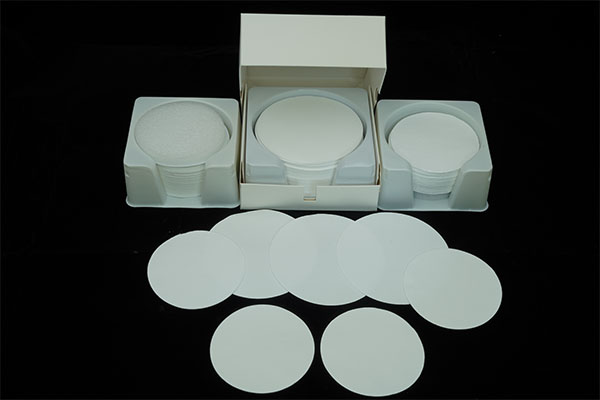
Here’s a quick comparison:
| Filter Grade | Thickness | Application Focus |
|---|---|---|
| GF/A | Thin | Fine particle filtration |
| GF/B | Moderate | Prefiltration |
| GF/C | Medium | General-purpose filtration |
| GF/D | Thick | High loading, prefiltration |
GF/D filters are ideal for scenarios requiring both durability and efficiency. In critical processes like air monitoring or solution clarification, their balance of thickness and fine structure ensures dependable results.
What are the applications of GF/D filters?
Filters are only as good as their applications. GF/D filters shine in a wide variety of uses, making them a vital tool in labs and industries.
GF/D filters are used in prefiltration, water sample analysis[^7], air particulate sampling, solution clarification, chromatography, and environmental testing.
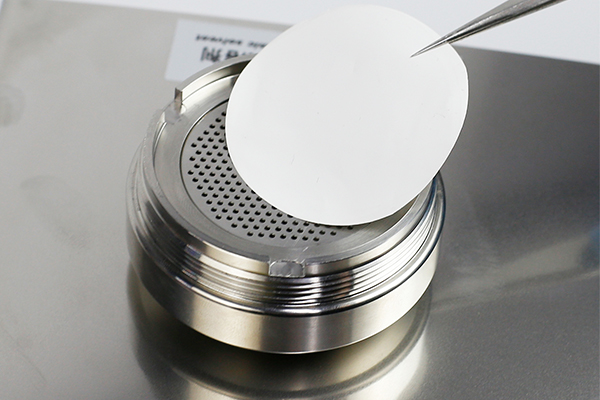
Here’s how GF/D filters are commonly used:
- Prefiltration: As the first line of defense, they trap larger particles, protecting finer filters.
- Water Sample Analysis: They help measure suspended solids in water[^8], aiding in environmental monitoring.
- Air Particulate Sampling[^9]: Ideal for testing dust and particles in the air.
- Solution Clarification: Removes insoluble particles, ensuring clear solutions.
- Chromatography Preparation: Prepares samples by removing particulates that can clog instruments[^10].
- Atmospheric Testing: Collects smoke and atmospheric particles for further analysis.
Their versatility is unmatched, making them a go-to choice for industries ranging from environmental monitoring to life sciences.
Why choose HuaEnv for GF/D filters?
When selecting a supplier, quality, variety, and support matter. HuaEnv excels in all three areas.
HuaEnv is a leading manufacturer of glass fiber filters in China, offering high-quality alternatives to brands like Whatman and Ahlstrom, with free samples for distributors.
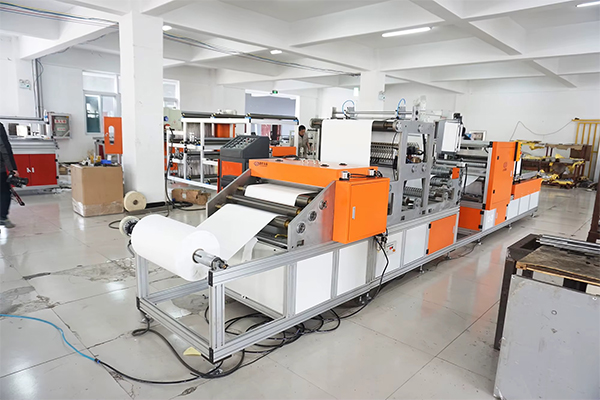
Here’s why HuaEnv stands out:
- Product Range: Manufacturing a wide array of glass fiber filters, including GF/A, GF/B, GF/C, GF/D, GF/F, 934-AH, and EPM2000.
- Customization: Tailored sizes to fit most filter holders, ensuring compatibility.
- Cost-Effective: Competitive pricing compared to international brands without compromising quality.
- Sample Availability: Free samples for distributors to test before committing.
- Expertise: Over 15 years of experience in OEM/ODM manufacturing for laboratory consumables.
By choosing HuaEnv, customers not only save costs but also gain a reliable partner for their filtration needs.
Conclusion
GF/D filters are thick, fine-grade glass fiber filters designed for high loading capacity and versatile applications. Whether used for prefiltration or environmental testing, their reliability is unmatched. With HuaEnv’s expertise and competitive pricing, you can achieve high performance without breaking the bank.
[^1]: "Filtration Characteristics of Glass Fiber Filter at Elevated Temperatures", https://nepis.epa.gov/Exe/ZyPURL.cgi?Dockey=91015XO6.TXT. Technical specification tables for glass microfiber filter grades identify GF/D as a relatively thick glass-fiber depth filter intended for high particle loading applications. Evidence role: definition; source type: other. Supports: A GF/D filter is a thick, fine-grade glass fiber filter with high loading capacity.. Scope note: GF/D grade specifications are usually published by filter manufacturers, so the evidence supports the grade characterization rather than an independent performance guarantee.
[^2]: "CIVL 1101 - Introduction to Water Filtration", https://www.ce.memphis.edu/1101/notes/filtration/filtration-1.html. Depth-filtration references explain that thicker fibrous media can retain particles throughout the filter matrix, increasing dirt-holding capacity compared with surface-only capture. Evidence role: mechanism; source type: paper. Supports: The thickness of GF/D filters allows them to handle large volumes of suspended particles.. Scope note: This supports the filtration mechanism generally; a GF/D-specific source is still needed to quantify the exact loading capacity of a given product.
[^3]: "Media clogging effects on hydraulic aspects and water quality", https://pubmed.ncbi.nlm.nih.gov/35362183/. Filtration engineering literature describes prefilters and depth filters as methods for delaying clogging by capturing larger particles before they reach finer downstream media. Evidence role: mechanism; source type: paper. Supports: GF/D filters are useful in applications where clogging must be minimized.. Scope note: The source would support the general anti-clogging mechanism, not necessarily the exact clogging performance of every GF/D filter.
[^4]: "Multi-Stage Filtration System - NASA Technology Transfer Program", https://technology.nasa.gov/patent/lew-tops-93. Technical guidance on multistage filtration notes that coarser upstream filters are commonly used as prefilters to remove larger particles before finer filters, extending downstream filter service life. Evidence role: mechanism; source type: institution. Supports: GF/D filters can be used as a prefilter before finer filters such as GF/B.. Scope note: This supports the staged-filtration principle; the exact pairing of GF/D with GF/B should be verified against manufacturer grade-retention specifications.
[^5]: "Whatman Grade GF/C Glass Microfiber Filters: Are there alternatives?", https://huaenv.com/whatman-grade-gf-c-glass-microfiber-filters-are-there-alternatives/. Glass microfiber grade comparison tables list nominal thickness values for GF/C and GF/D filters, allowing the relative thickness of the two grades to be verified. Evidence role: definition; source type: other. Supports: GF/D filters are thicker than GF/C filters.. Scope note: The comparison depends on the manufacturer’s grade definitions and nominal tolerances, so values may vary slightly by supplier.
[^6]: "[PDF] Whatman filtration Product guide", https://macro.lsu.edu/howto/Whatman-filtration-product-guide.pdf. Glass microfiber filter specification tables report nominal particle-retention ratings for GF/B and GF/D grades, which are necessary to verify whether GF/D is finer or coarser than GF/B. Evidence role: definition; source type: other. Supports: GF/D filters are finer than GF/B.. Scope note: This citation should be checked carefully because some manufacturer tables may not support the wording as written; the article may need revision if the cited retention ratings contradict it.
[^7]: "EPA-NERL: 160.2: Non-filterable Residue by Drying Oven", https://www.nemi.gov/methods/method_summary/5213/. Standard methods for suspended-solids testing commonly specify glass-fiber filters for collecting residue from water samples, supporting the use of glass-fiber media in water analysis. Evidence role: case_reference; source type: government. Supports: GF/D filters are used in water sample analysis.. Scope note: This supports glass-fiber filters in water testing generally; it may not specify GF/D unless the method or laboratory protocol names that grade.
[^8]: "EPA-NERL: 160.2: Non-filterable Residue by Drying Oven", https://www.nemi.gov/methods/method_summary/5213/. Government and standard-method procedures for total suspended solids determine residue retained on a glass-fiber filter after filtration of a measured water sample. Evidence role: case_reference; source type: government. Supports: Glass-fiber filters help measure suspended solids in water.. Scope note: The procedure supports the role of glass-fiber filters in suspended-solids measurement, but not necessarily that GF/D is the required grade for all TSS methods.
[^9]: "[PDF] Method IO-3.1 - Selection, Preparation and Extraction of Filter Material", https://www.epa.gov/sites/default/files/2019-11/documents/mthd-3-1.pdf. Air-monitoring methods and aerosol sampling references document the use of fibrous filter media, including glass-fiber filters, to collect particulate matter from air for gravimetric or chemical analysis. Evidence role: case_reference; source type: government. Supports: GF/D filters are used for air particulate sampling.. Scope note: This supports glass-fiber filtration in air sampling generally; suitability of GF/D depends on target particle size, flow rate, and analytical method.
[^10]: "The Importance of Filtration in Optimizing (U)HPLC and LC-MS ...", https://www.sigmaaldrich.com/US/en/technical-documents/technical-article/analytical-chemistry/small-molecule-hplc/hplc-filtration-performance-optimizing?srsltid=AfmBOopVFAt205wHOocusPsbfBkim1GtzSobGUS-s_bwp_TW6Cd7FSL9. Chromatography sample-preparation guidance explains that particulate matter in samples can block frits, columns, or inlet filters, making prefiltration or clarification a common preventive step. Evidence role: mechanism; source type: education. Supports: Chromatography preparation removes particulates that can clog instruments.. Scope note: This supports the reason for filtering chromatography samples; it does not prove that GF/D is the best filter grade for every chromatographic method.