When it comes to laboratory filtration, Whatman stands as a trusted leader in the market[^1]. But is there a reliable alternative? The answer is yes.
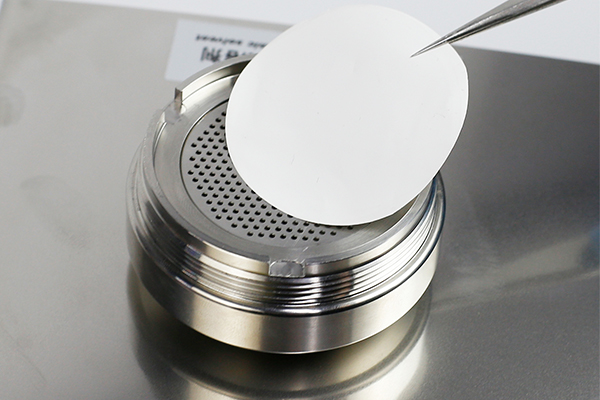
Whatman Grade GF/C glass microfiber filters are known for their good flow rate and loading capacity, making them ideal for total suspended solids analysis in potable and wastewater testing[^2]. They retain particles down to 1.2 µm.[^3]
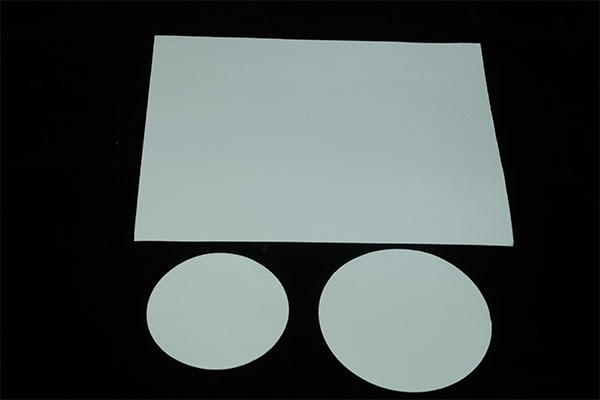
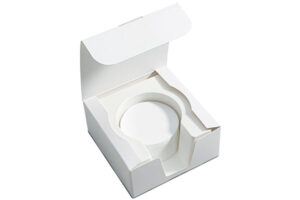
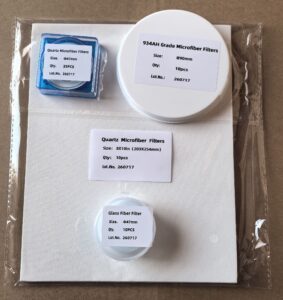
If you’re looking for high-quality substitutes, HuaEnv offers glass microfiber filters that match the performance and specifications of Whatman Grade GF/C[^4]. Let’s dive into the details to explore how these filters compare and why HuaEnv could be your go-to alternative.
What makes Whatman Grade GF/C filters so effective?
When considering laboratory filtration, precision is key. Whatman Grade GF/C filters excel in applications requiring high flow rates and reliable particle retention.
The Grade GF/C filters are binder-free, have a nominal particle retention of 1.2 µm, and withstand temperatures up to 550 °C[^5]. This makes them versatile for both potable water and wastewater analysis.
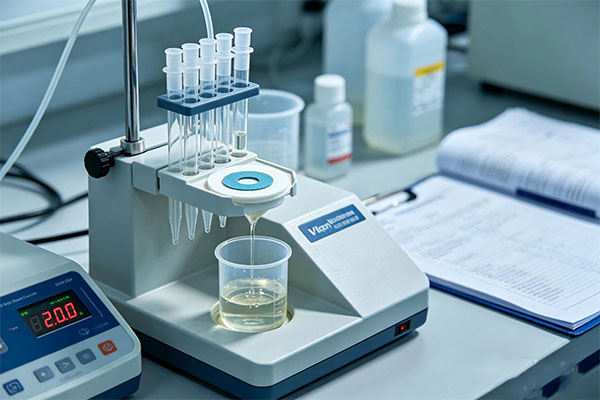
HuaEnv filters offer similar attributes, including a high flow rate and excellent particle retention. These alternatives provide a seamless transition for laboratories seeking cost-effective yet high-quality solutions.
How do HuaEnv filters measure up?
For those in need of substitutes, HuaEnv delivers precision-engineered filters that align with Whatman standards. The features speak for themselves.
HuaEnv filters match the nominal thickness (260 µm), basis weight (53 g/m²), and excellent water flow rate (105 ml/min)[^6], ensuring superior performance in suspended solids analysis.
Dive deeper into the market benefits:
| Specification | Whatman GF/C | HuaEnv Glass Filters |
|---|---|---|
| Particle Retention | 1.2 µm | 1.2 µm |
| Nominal Thickness | 260 µm | 260 µm |
| Max Recommended Temperature | 550 °C | 550 °C |
| Nominal Basis Weight | 53 g/m² | 53 g/m² |
| Typical Water Flow Rate | 105 ml/min | 105 ml/min |
| Binder Type | Binder-Free | Binder-Free |
Both filters are available in customizable sizes and shapes, such as circles and sheets[^7].
Why choose HuaEnv?
When you evaluate alternatives, cost efficiency and flexibility often come into play. HuaEnv offers these advantages while maintaining strict quality standards.
HuaEnv provides free samples, allowing users to test the filters before committing. This ensures that they meet the specific requirements of your lab.
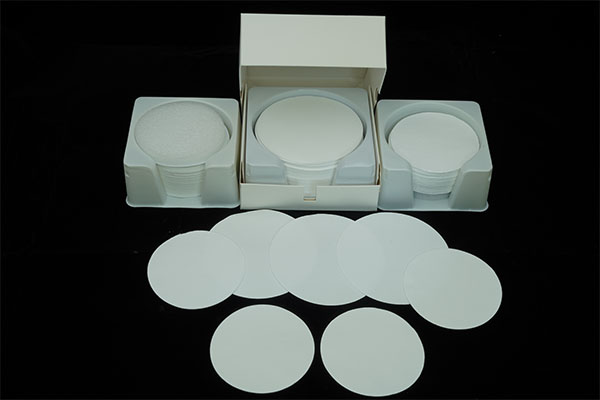
HuaEnv also specializes in providing custom-shaped filters tailored for unique applications. This flexibility makes HuaEnv an attractive choice for laboratories with specialized needs.
The importance of compatibility in water testing?
In suspended solids analysis, filter compatibility with testing protocols is essential. Whatman filters are widely recognized for their reliability in suspended solids testing, and HuaEnv aims to deliver the same consistency.
HuaEnv filters are suitable for potable and wastewater testing, maintaining integrity under high-temperature conditions up to 550 °C[^8].
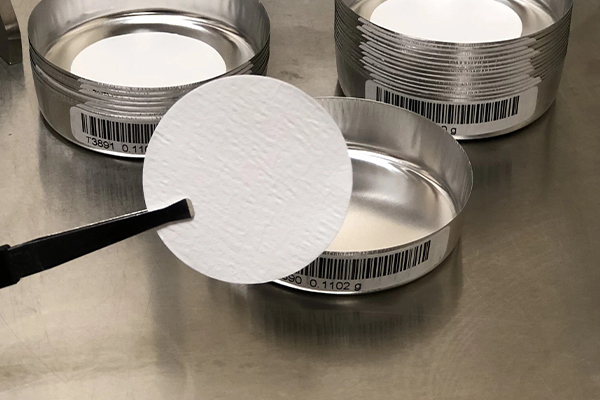
Choosing HuaEnv ensures your filter specifications align with industry standards while offering a cost-effective solution for your lab.
Can you save without compromising quality?
Laboratory budgets often strain under the high price tags of premium brands like Whatman. HuaEnv filters offer an excellent cost-saving alternative without cutting corners on quality.
HuaEnv’s filters maintain integrity in critical applications, ensuring consistent results in suspended solids analysis and high flow-rate testing.
Beyond cost savings, HuaEnv’s flexible manufacturing allows for tailored solutions, meeting specific dimensions and application needs with ease.
Conclusion
Whatman Grade GF/C glass microfiber filters are industry benchmarks, but HuaEnv provides equally reliable alternatives. Offering customizable shapes, free samples, and consistent quality, HuaEnv stands ready to meet the demands of your lab filtration needs.
[^1]: "Whatman PLC - Wikipedia", https://en.wikipedia.org/wiki/Whatman_PLC. A historical or encyclopedic source on Whatman filter papers can document the brand’s long-standing role in laboratory filtration, supporting the characterization of Whatman as an established supplier. Evidence role: historical_context; source type: encyclopedia. Supports: Whatman stands as a trusted leader in the laboratory filtration market.. Scope note: Such a source would support historical prominence, not directly measure current market leadership or customer trust.
[^2]: "[PDF] Method 160.2", https://www.uvm.edu/bwrl/lab_docs/protocols/106.2_TSS_by_gravimetry_(EPA_1971).pdf. A water-quality standard method or government analytical method can show that glass-fiber filters are used in total suspended solids determinations for water and wastewater samples. Evidence role: expert_consensus; source type: government. Supports: Whatman Grade GF/C glass microfiber filters are suitable for total suspended solids analysis in potable and wastewater testing.. Scope note: The method would support the suitability of this filter class for TSS analysis, but not prove that a specific brand is ideal.
[^3]: "[PDF] Whatman filtration Product guide", https://macro.lsu.edu/HowTo/Whatman-filtration-product-guide.pdf. A Whatman Grade GF/C technical specification can verify the nominal particle retention rating of 1.2 µm for this glass microfiber filter grade. Evidence role: definition; source type: other. Supports: Whatman Grade GF/C filters retain particles down to 1.2 µm.. Scope note: Manufacturer specifications establish the nominal rating but do not independently verify performance across all sample matrices.
[^4]: "Whatman GF/C Filter Paper: What Makes It a Popular Choice?", https://huaenv.com/whatman-gf-c-filter-paper-what-makes-it-a-popular-choice/. A side-by-side specification sheet or independent laboratory comparison would be needed to support equivalence between HuaEnv filters and Whatman Grade GF/C filters. Evidence role: case_reference; source type: research. Supports: HuaEnv glass microfiber filters match the performance and specifications of Whatman Grade GF/C.. Scope note: Specification matching is contextual support only; direct performance equivalence would require controlled testing under the same analytical conditions.
[^5]: "[PDF] Whatman filtration Product guide", https://macro.lsu.edu/HowTo/Whatman-filtration-product-guide.pdf. A Grade GF/C product data sheet can document the binder-free construction, nominal 1.2 µm retention, and stated maximum recommended temperature for the filter medium. Evidence role: definition; source type: other. Supports: Grade GF/C filters are binder-free, have nominal particle retention of 1.2 µm, and withstand temperatures up to 550 °C.. Scope note: The source would substantiate listed specifications, not broader claims about comparative performance or application outcomes.
[^6]: "[PDF] Whatman filtration Product guide", https://macro.lsu.edu/HowTo/Whatman-filtration-product-guide.pdf. A technical datasheet or certificate of analysis can substantiate the reported thickness, basis weight, and water-flow values for the named filter grade. Evidence role: definition; source type: other. Supports: HuaEnv filters match the nominal thickness of 260 µm, basis weight of 53 g/m², and water flow rate of 105 ml/min.. Scope note: A datasheet supports nominal specifications but does not establish batch-to-batch consistency unless accompanied by quality-control data.
[^7]: "Glass Fiber Filter pore size: What should you know? - Professional ...", https://huaenv.com/glass-fiber-filter-pore-size-what-should-you-know/. Product catalogs or specification pages for the named filter products can document whether the filters are supplied in circular formats, sheets, or custom dimensions. Evidence role: general_support; source type: other. Supports: Both Whatman GF/C and HuaEnv glass filters are available in customizable sizes and shapes, including circles and sheets.. Scope note: Catalog availability supports format options but may not confirm all possible custom sizes or current stock status.
[^8]: "[PDF] Total Suspended Solids - Standard Operating Procedure for:", https://oewri.missouristate.edu/_Files/SOP-006_Total_Suspended_Solids_2023_2.pdf. A combination of a water-testing method reference and product thermal specification can support use in potable or wastewater filtration and the stated 550 °C temperature tolerance. Evidence role: general_support; source type: institution. Supports: HuaEnv filters are suitable for potable and wastewater testing and maintain integrity under high-temperature conditions up to 550 °C.. Scope note: This would support contextual suitability and thermal rating, but not prove that HuaEnv filters perform equivalently in every certified laboratory protocol.