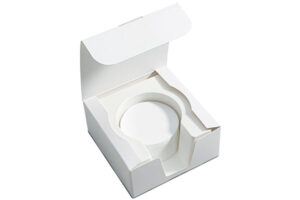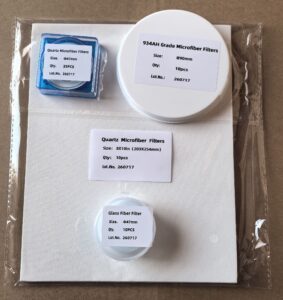

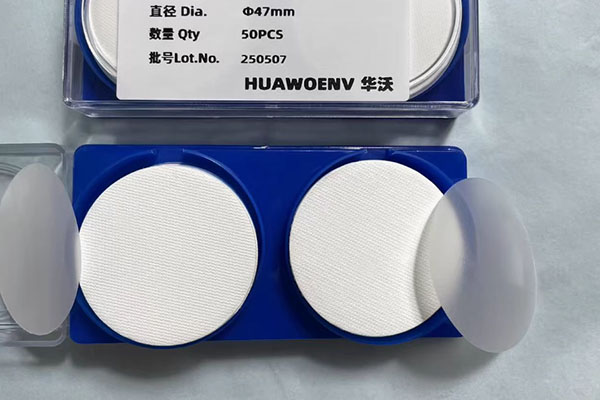
Thick filter media with increased loading capacity ensures reliable filtration results in critical applications. But is this product the right choice for your lab needs?
The Whatman GF D filter is a glass fiber filter designed for fine membrane filtration with a nominal particle retention of 2.7 µm[^1]. It is thick, has a high loading capacity, and can function as a prefilter when paired with GF/B filters[^2].
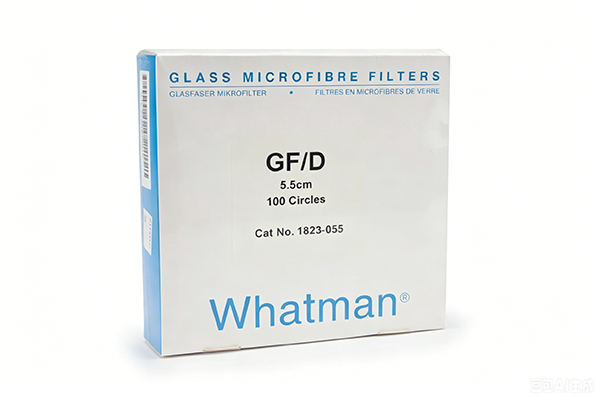
Filters like GF D are widely used in laboratories for prefiltration, water sample testing, air dust sampling, solution clarification, chromatography preparation, and smoke or atmospheric particle collection[^3]. These applications make it an essential tool in many environmental and scientific studies.
Why choose GF D filters for your application?
Efficient filtration is critical for accurate lab results. Poor filter choices can lead to clogged membranes, reduced throughput, or inaccurate readings[^4]. GF D filters are specifically designed to overcome these limitations.
GF D filters are ideal for handling high particulate loads due to their thick glass fiber media, which enhances loading capacity[^5]. Their nominal particle retention of 2.7 µm ensures effective filtration of fine particles.
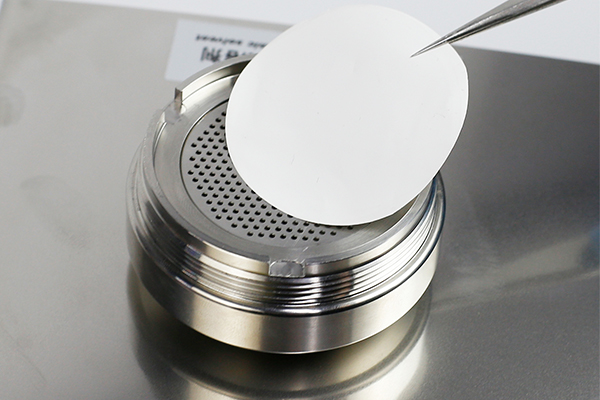
The versatility of GF D filters is another advantage. Whether used as standalone filters or prefilters with GF/B, they adapt to a range of laboratory setups. This flexibility increases their appeal for environments requiring consistent and reliable results.
How do GF D filters compare to similar products?
It's important to know whether GF D filters meet your requirements better than alternatives. How do they stack up against other glass fiber filters?
Compared to thinner filters, GF D offers higher loading capacity due to its thickness, making it better suited for applications with heavy particulate loads. It is also compatible with various filter holders, ranging in sizes to provide convenience for diverse lab setups.
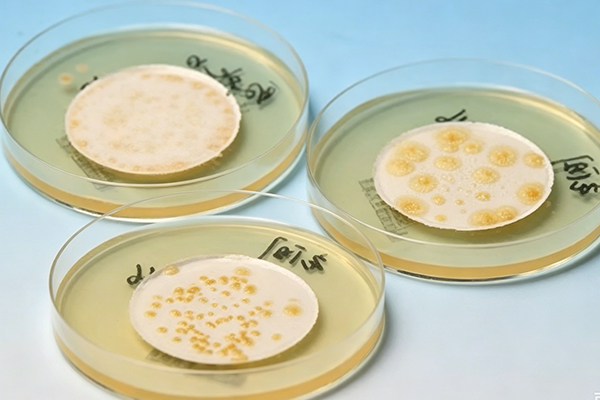
Here’s a comparison table:[^6]
| Filter Type | Nominal Particle Retention | Thickness | Loading Capacity | Application Suitability |
|---|---|---|---|---|
| GF/A | 1.6 µm | Thin | Medium | Precise air monitoring |
| GF/B | 1.0 µm | Thin | Low | Fine particle collection |
| GF/D | 2.7 µm | Thick | High | Prefiltration, heavy loads |
| GF/F | 0.7 µm | Thin | Low | Biological sample filtration |
If you're handling high particulate samples or need effective prefiltration, GF D filters outperform others due to their thickness and retention specifications.
HuaEnv – An alternative to Whatman GF D filters?
Quality matters in lab equipment, yet high costs can strain budgets. Brands like Whatman and Ahlstrom offer reliable products but often come with high prices. HuaEnv provides an affordable alternative.
HuaEnv is a manufacturer in China offering high-quality glass fiber filters, including GF/A, GF/B, GF/D, GF/F, 934-AH, and EPM2000. These filters match international standards[^7] and come at competitive rates.
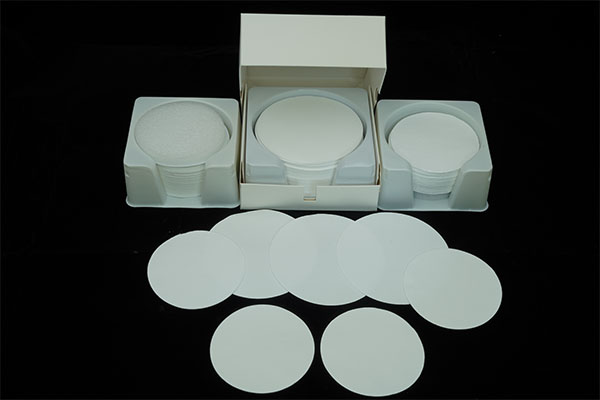
HuaEnv filters are made using precise manufacturing techniques, ensuring reliability and consistency. Free samples are available to assess their quality firsthand. For distributors seeking cost-effective solutions without compromising quality, HuaEnv filters are worth considering.
Are GF D filters compatible with your current lab setup?
Switching filters can be troublesome if they don't fit existing equipment. Compatibility is essential for seamless integration.
GF D filters come in various sizes to fit most standard filter holders[^8], ensuring smooth adoption into your lab workflow. Their versatility makes them a practical choice for diverse applications.
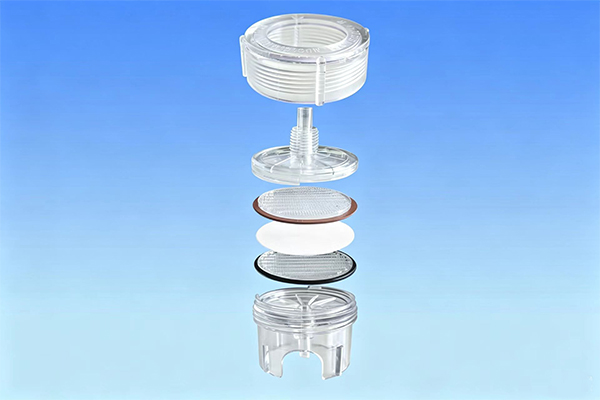
When choosing filters, consider the size of your filter holder and specific filtration needs. GF D filters are designed to meet these demands, making them a reliable and adaptable choice.
Conclusion
Whatman GF D filters are thick glass fiber filters with high loading capacity and nominal particle retention of 2.7 µm. They excel in prefiltration and heavy particulate applications. For cost-effective alternatives, HuaEnv offers comparable quality filters that meet various laboratory needs.
[^1]: "[PDF] Whatman filtration Product guide", https://macro.lsu.edu/howto/Whatman-filtration-product-guide.pdf. The Whatman/Cytiva Grade GF/D product specification lists a nominal particle retention of 2.7 μm for this glass microfiber filter grade, supporting the stated retention rating. Evidence role: statistic; source type: other. Supports: Whatman GF/D filters have a nominal particle retention of 2.7 µm.. Scope note: Manufacturer specifications document the nominal rating but do not independently verify performance across all sample types or operating conditions.
[^2]: "What is a Whatman GF/ D filter?", https://huaenv.com/what-is-a-whatman-gf-d-filter/. The Whatman/Cytiva glass microfiber filter literature describes Grade GF/D as a thick, high-loading grade used for prefiltration and notes its use with finer glass fiber grades such as GF/B, supporting the stated prefilter role. Evidence role: definition; source type: other. Supports: GF/D filters can be used as prefilters, including in combination with GF/B filters.. Scope note: This supports the intended use described by the product literature; it does not prove superior performance for every paired filtration setup.
[^3]: "Review of Filters for Air Sampling and Chemical Analysis in Mining ...", https://pmc.ncbi.nlm.nih.gov/articles/PMC10174218/. Laboratory and environmental monitoring references describe glass fiber or glass microfiber filters as commonly used for suspended solids testing, air particulate sampling, sample clarification, and prefiltration, providing contextual support for the listed application areas. Evidence role: general_support; source type: institution. Supports: Glass fiber filters such as GF/D are used across prefiltration, environmental sampling, clarification, and particle collection workflows.. Scope note: A single source may not cover every listed application; multiple standards or laboratory references may be needed for full support.
[^4]: "Evaluating the Performance of Gravity-Driven Membrane Filtration ...", https://pmc.ncbi.nlm.nih.gov/articles/PMC12259810/. Filtration engineering references explain that filter pore size, media structure, and particulate loading affect fouling, pressure drop, throughput, and particle retention, supporting the mechanism by which unsuitable filter selection can impair analytical results. Evidence role: mechanism; source type: education. Supports: Choosing an inappropriate filter can cause clogging, lower throughput, and affect measurement accuracy.. Scope note: The evidence supports the general filtration mechanism rather than documenting a specific failure case involving GF/D filters.
[^5]: "Performance factors for filtration of air using cellulosic fiber-based ...", https://bioresources.cnr.ncsu.edu/resources/performance-factors-for-filtration-of-air-using-cellulosic-fiber-based-media-a-review/. Depth-filtration literature explains that thicker fibrous media can retain particles throughout the media depth rather than only at the surface, increasing solids-holding or loading capacity under suitable conditions. Evidence role: mechanism; source type: paper. Supports: The thickness of glass fiber media can increase loading capacity by enabling depth filtration.. Scope note: This supports the general mechanism for fibrous depth filters; actual loading capacity depends on sample composition, flow rate, and filter diameter.
[^6]: "Whatman™ Grade GF/F Glass Microfiber Filters, Binder Free - Cytiva", https://www.cytivalifesciences.com/en/us/products/items/whatman-grade-gf-f-glass-microfiber-filters-binder-free-p-00425. Whatman/Cytiva specifications for GF/A, GF/B, GF/D, and GF/F list their nominal particle retention ratings and physical grades, supporting the table’s numerical retention values among these glass microfiber filters. Evidence role: statistic; source type: other. Supports: The comparison table’s nominal retention values for GF/A, GF/B, GF/D, and GF/F should match published product specifications.. Scope note: Such specifications support nominal retention values and product descriptions; qualitative labels such as “low,” “medium,” or “high” loading capacity may require separate comparative test data.
[^7]: "[PDF] NC DENR/DWQ LABORATORY CERTIFICATION", https://www.deq.nc.gov/chlorophyll-checklist-sm-10150-b-pdf/open. A certification record or accredited test report identifying the ISO, ASTM, EN, or equivalent standards applied to HuaEnv glass fiber filters would support the narrower claim that the products are documented against named international standards. Evidence role: general_support; source type: institution. Supports: HuaEnv glass fiber filters are claimed to conform to relevant international standards.. Scope note: Standards documentation would not by itself establish equivalence to Whatman products unless it reports comparable performance metrics such as retention, flow rate, ash content, and loading capacity.
[^8]: "Whatman filtration Product guide", https://macro.lsu.edu/howto/Whatman-filtration-product-guide.pdf. Product catalog data listing GF/D discs in multiple diameters, together with standard laboratory filter-holder diameter specifications, supports the claim that GF/D filters are available in sizes compatible with common holders. Evidence role: general_support; source type: other. Supports: GF/D filters are available in multiple sizes that can fit common laboratory filter holders.. Scope note: The word “most” is broad; compatibility still depends on the exact holder diameter, sealing design, and filtration apparatus.