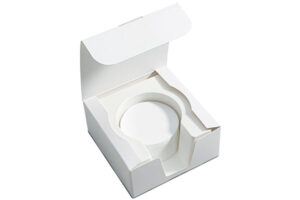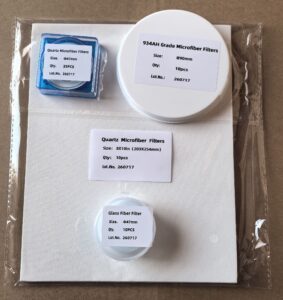

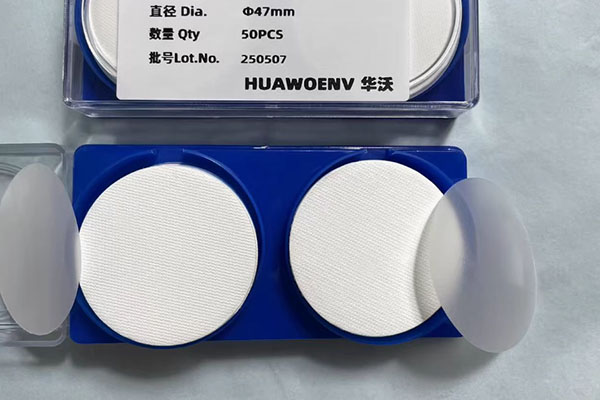
Glass microfiber filters are essential in many laboratory applications. Grade GF/D filters stand out for their thickness and impressive loading capacity[^1]. These filters are versatile, functioning as prefilters with GF/B[^2] and fitting most filter holders due to their variety of available sizes[^3].
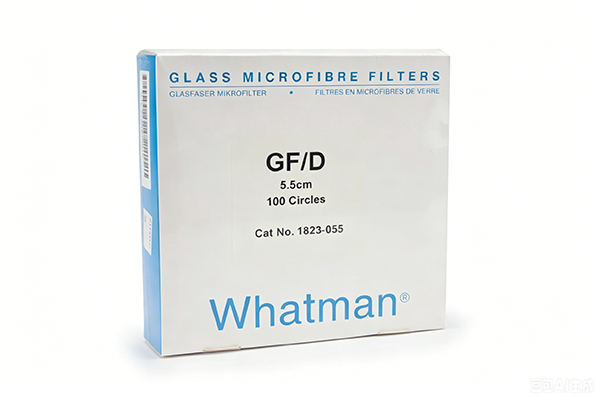
Understanding GF/D filters can improve laboratory processes, especially in applications like prefiltration, air dust sampling, solution clarification, and water sample testing. Their unique design ensures high performance in filtration tasks.
What makes GF/D filters unique?
When choosing lab filters, versatility, efficiency, and compatibility are crucial. GF/D filters meet these criteria, offering a combination of thickness, durability, and compatibility with a variety of filter holders. They are reliable for high-volume filtration.
GF/D filters are constructed from fine microfiber glass[^4], making them suitable for tasks requiring precision and durability. They provide consistent filtration results and are ideal for water sample analysis[^5], air dust collection[^6], solution clarification, and chromatography pretreatment.
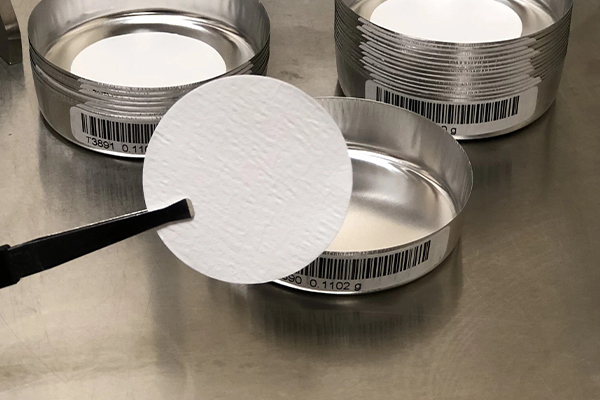
GF/D filters excel in applications requiring high particle retention while maintaining flow rates[^7]. They are also commonly used as prefilters with GF/B filters. This pairing enhances filtering efficiency, especially when dealing with challenging samples containing large particulates.
How does GF/D compare with other grades like GF/A, GF/B, and GF/C?
Choosing the right filter grade can be confusing due to the range of options available. GF/D filters are thicker than GF/A and GF/C[^8], making them suitable for applications requiring high dirt holding capacity. GF/B, on the other hand, pairs well with GF/D for layered filtration setups.
| Grade | Characteristics | Ideal Use |
|---|---|---|
| GF/A | Fine filtration with high flow rates | Air sampling, water testing |
| GF/B | High retention for fine particles | Prefiltering with GF/D |
| GF/C | General-purpose filtration | Solution clarification |
| GF/D | Thick, high loading capacity | Prefiltering, challenging sample filtration |
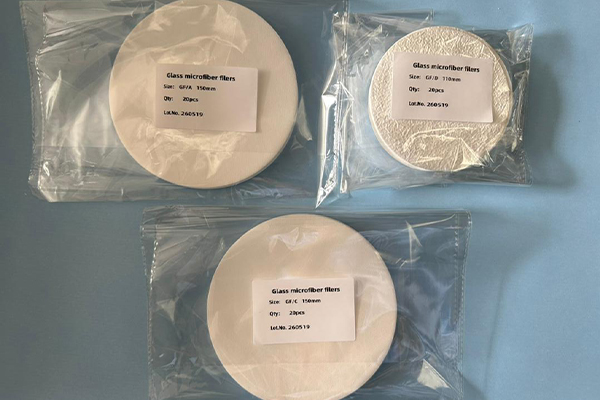
GF/D filters fill a niche in the filtration world. Their thickness and durability offer advantages for tasks that other grades might not handle as efficiently, such as prefiltration of samples with heavy particulates.
Why are GF/D filters useful for air dust and particulate sampling?
Air dust sampling poses unique challenges, like the need for filters that can capture fine particles while maintaining structural integrity. GF/D filters excel in such tasks due to their robust design and reliable performance.
GF/D filters are often used in environmental monitoring for collecting atmospheric particulate matter. Their ability to capture fine particles without collapsing makes them ideal for air dust sampling in both industrial and research settings.
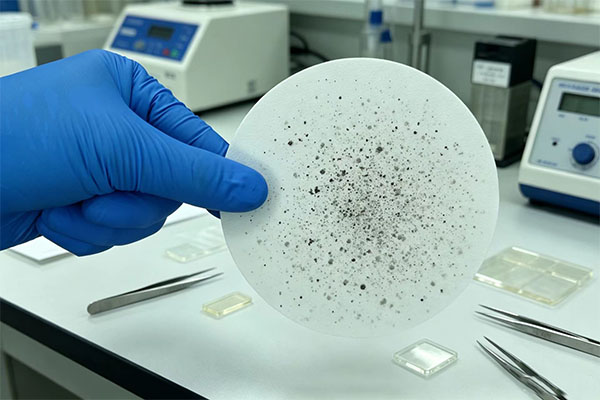
Huaenv manufactures high-quality GF/D filters, adhering to strict standards. These filters deliver accurate results in air dust and particulate sampling, ensuring reliable environmental data for analysis and reporting.
Why choose Huaenv for Glass microfiber filters?
With over 15 years of OEM/ODM experience, Huaenv specializes in producing high-quality glass microfiber filters, including GF/D, to replace premium brands like Whatman and Ahlstrom. Our filters are cost-effective and tailored to meet diverse laboratory needs.
Huaenv offers a variety of filter grades, including GF/A, GF/B, GF/C, GF/D, GF/F, 934-AH, and EPM2000. We produce filters using advanced techniques to ensure precision and reliability in applications like environmental monitoring, solution clarification, and chromatography.
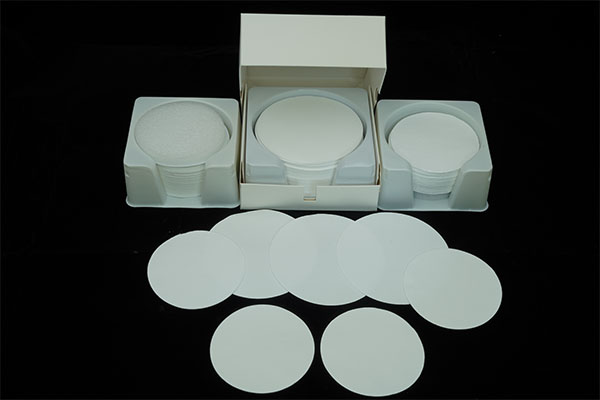
Our filters come with certification and traceability documents to ensure compliance and quality assurance. In addition, we provide free samples for distributors and laboratories looking for reliable alternatives to high-priced international brands.
Conclusion
GF/D glass microfiber filters are essential for applications requiring efficiency, durability, and reliability. Huaenv offers high-quality options that meet diverse laboratory needs while providing cost-effective solutions.
[^1]: "What is a Whatman GF/ D filter?", https://huaenv.com/what-is-a-whatman-gf-d-filter/. A technical specification or laboratory reference comparing GF/D with other glass microfiber grades would support that GF/D is marketed and used as a relatively thick, high-loading prefilter grade; this would document the grade-specific property rather than infer it from general glass-fiber filtration behavior. Evidence role: general_support; source type: institution. Supports: GF/D filters stand out for their thickness and loading capacity.. Scope note: Support is likely to be grade-specific and may come from technical specifications rather than independent performance testing.
[^2]: "[PDF] Whatman filtration Product guide", https://macro.lsu.edu/howto/Whatman-filtration-product-guide.pdf. A filtration methods reference describing the use of coarse glass-fiber prefilters upstream of finer filters would support the claim that GF/D can be used in a layered prefiltration arrangement with GF/B; the evidence would establish the filtration principle and typical configuration rather than prove superior performance in every sample matrix. Evidence role: mechanism; source type: education. Supports: GF/D filters can function as prefilters with GF/B filters.. Scope note: Contextual support may describe prefiltering generally and may not test the exact GF/D–GF/B combination.
[^3]: "Whatman™ Grade GF/D Glass Microfiber Filters, Binder Free - Cytiva", https://www.cytivalifesciences.com/en/us/products/items/whatman-grade-gf-d-glass-microfiber-filters-binder-free-p-00301?selectedProduct=28418407. A catalog or institutional laboratory procurement guide listing GF/D discs in multiple standard diameters would support the statement that the filters are available in sizes compatible with common holders; it would not by itself verify compatibility with all holder designs. Evidence role: general_support; source type: institution. Supports: GF/D filters are available in multiple sizes that allow use with many standard filter holders.. Scope note: Availability in standard diameters supports broad compatibility but not universal fit across all filter-holder models.
[^4]: "Grade TSS Borosilicate Glass Fiber - Sterlitech Corporation", https://www.sterlitech.com/grade-tss-borosilicate-glass-fiber.html?srsltid=AfmBOoqLIWSWMvQCguWmI8mxOHHlcGaWa5s459NpUT-UnEuujWfPzn3G. A materials or filtration reference describing glass microfiber filters as mats of fine borosilicate glass fibers would support the article’s description of their construction; this verifies material composition but not the performance of any specific brand. Evidence role: definition; source type: encyclopedia. Supports: GF/D filters are constructed from fine microfiber glass.. Scope note: This supports the general construction of glass microfiber filters, not necessarily manufacturing details for every GF/D product.
[^5]: "[PDF] PROCESSING OF A5. WATER SAMPLES", https://pubs.usgs.gov/twri/twri9a5/archive/twri9a5_ch5.pdf. A government or standards method for water-quality analysis using glass-fiber filters would support the use of glass microfiber filters in water sample testing; the source would establish accepted laboratory use, though not necessarily single out GF/D grade for every water-analysis method. Evidence role: case_reference; source type: government. Supports: Glass microfiber filters are used in water sample analysis.. Scope note: Many water methods specify glass-fiber filters generally or particular pore-retention characteristics, so support may be contextual rather than exclusive to GF/D.
[^6]: "Fibrous glass dust - NIOSH Pocket Guide to Chemical Hazards - CDC", https://www.cdc.gov/niosh/npg/npgd0288.html. An air-monitoring method or occupational/environmental sampling reference specifying glass-fiber filters for particulate collection would support the use of glass microfiber filters in air dust sampling; it would demonstrate accepted application rather than validate the performance of a named product. Evidence role: case_reference; source type: government. Supports: Glass microfiber filters are used for air dust and particulate collection.. Scope note: Sampling methods may specify filter material, diameter, or collection efficiency without naming GF/D grade specifically.
[^7]: "A theoretical study on the filtration efficiency and dust holding ... - PMC", https://pmc.ncbi.nlm.nih.gov/articles/PMC10395295/. A filtration-science source explaining the relationship between filter depth, particle loading, and flow resistance would support the claim that thick depth filters can retain particles while preserving flow better than rapidly clogging surface filters; this is mechanistic support rather than a direct GF/D performance comparison. Evidence role: mechanism; source type: paper. Supports: GF/D filters can retain particles while maintaining usable flow rates because of depth-filter structure and loading capacity.. Scope note: The evidence may explain depth-filtration behavior generally and may not provide measured flow rates for GF/D filters under all operating conditions.
[^8]: "What is a Whatman GF/ D filter?", https://huaenv.com/what-is-a-whatman-gf-d-filter/. A comparative specification table for glass microfiber grades would support that GF/D has greater nominal thickness than GF/A and GF/C; such a source would substantiate the physical comparison but would not alone prove suitability for every high-solids application. Evidence role: general_support; source type: institution. Supports: GF/D filters are thicker than GF/A and GF/C filters.. Scope note: Thickness specifications can vary by manufacturer and lot, so the support should be interpreted as nominal grade data.