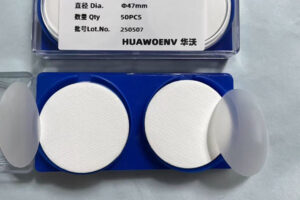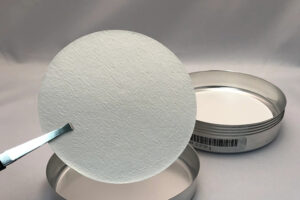

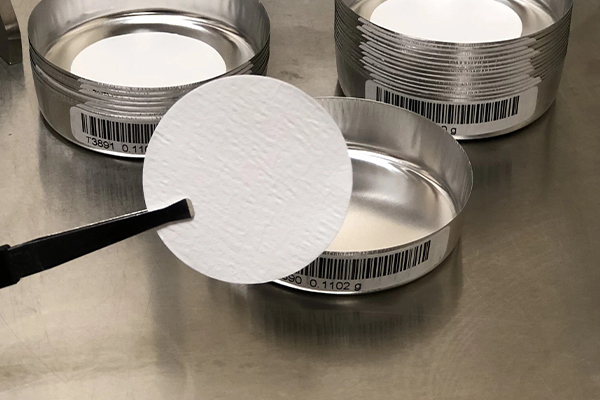
The choice of prefilters[^1] can significantly impact the efficiency and accuracy of filtration processes. Grade GF/D glass microfiber prefilters stand out due to high loading capacity, faster flow rates, and quick filtering speeds[^2].
Grade GF/D glass microfiber prefilters are designed for applications requiring high particle retention, fluid flow efficiency, and protection for membranes in air filtration and gravimetric analysis involving volatile materials and ignition[^3].
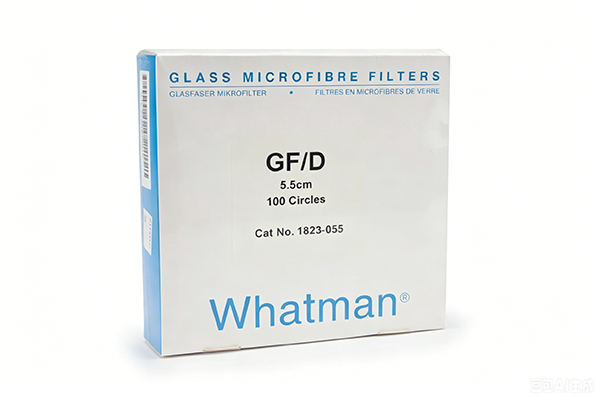
These prefilters are suitable for demanding environments. Their combination of durability, temperature resistance, and performance ensures reliable results in routine and specialized filtration tasks.
Why are GF/D glass microfiber prefilters ideal for air filtration and gravimetric analysis?
Air filtration and gravimetric analysis often involve volatile materials and ignition, requiring specialized filter media. GF/D prefilters are thick and binder-free[^4], ensuring high loading capacity and fast filtration.
GF/D prefilters excel in handling high particle loading while maintaining efficiency in air filtration and gravimetric analysis. Their borosilicate glass material withstands temperatures up to 550°C and offers 2.7 µm particle retention[^5].
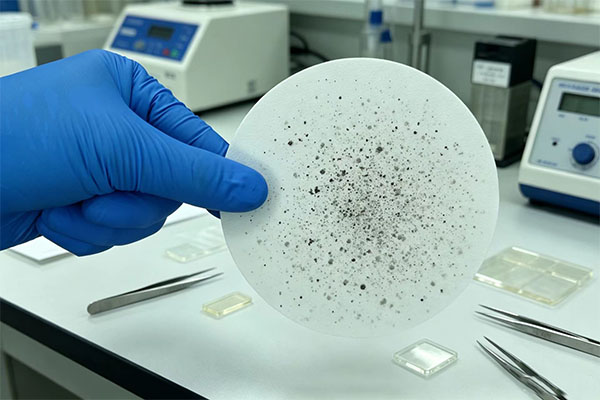
These filters are designed for precision and durability. Their thickness of 675 µm[^6] ensures efficient prefiltration without compromising flow rate. With an air flow rate of 2.6 s/100 ml/in² and water flow rate of 681 ml/min[^7], they balance speed and accuracy effectively.
Can GF/D prefilters be combined with other filters for enhanced performance?
Combining filters can improve performance. GF/D prefilters, paired with GF/B filters, enhance efficiency and provide robust protection for finely retentive membranes.
GF/D prefilters combined with GF/B filters increase the lifespan and effectiveness of membranes by reducing clogging and optimizing filtration efficiency[^8], especially in high particle loading situations.
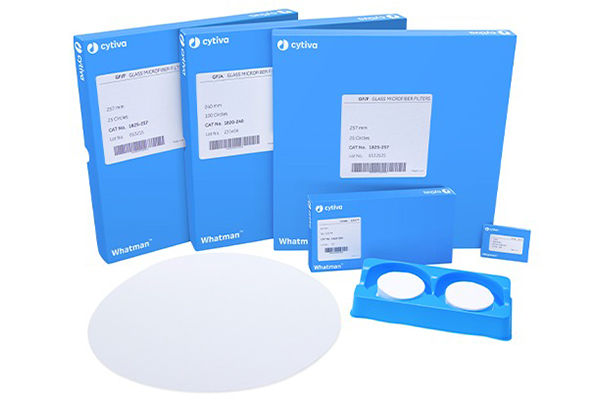
Pairing these filters creates a layered filtration system. The coarser GF/D filter (2.7 µm retention) is used as a prefilter for the finer GF/B filter (1.0 µm retention)[^9]. The GF/D captures the larger particles first, which protects the GF/B from clogging. This combination reduces wear on critical membranes and boosts overall filtration efficiency.
| Property | GF/D Prefilters | GF/B Filters |
|---|---|---|
| Particle Retention Rate | 2.7 µm | 1.0 µm |
| Thickness | 675 µm | 750 µm |
| Loading Capacity | Very High | High |
| Compatibility | Excellent for pairing | Suitable for pairing |
What are the specifications of GF/D glass microfiber prefilters?
Understanding specifications is key to selecting the right filter media. GF/D prefilters are designed for precision and versatility across various applications.
GF/D filters feature binder-free borosilicate glass media, are available in various diameters, have a 2.7 µm particle retention, and can withstand temperatures up to 550°C.
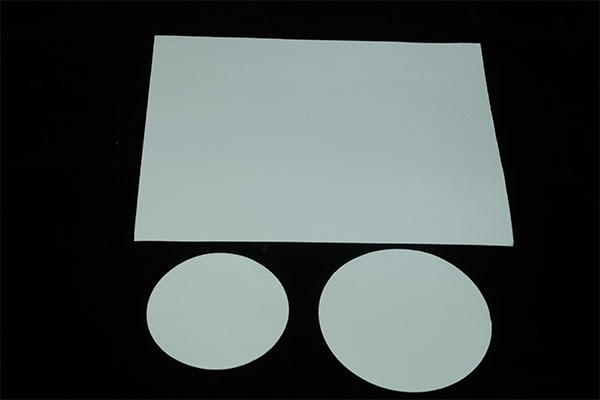
These attributes make GF/D filters reliable for air filtration, water sample analysis, and other demanding applications. Their high performance in flow rate and particle retention ensures consistent results across varied laboratory tasks.
| Specification | Value |
|---|---|
| Material | Binder-free borosilicate glass |
| Thickness | 675 µm |
| Particle Retention Rate | 2.7 µm |
| Maximum Temperature | 550°C |
| Air Flow Rate | 2.6 s/100 ml/in² |
| Water Flow Rate | 681 ml/min |
Why choose HuaEnv for GF/D glass microfiber prefilters?
HuaEnv provides high-quality alternatives to brands like Whatman and Ahlstrom, offering GF/D prefilters and other glass fiber filters such as GF/A, GF/B, GF/C, GF/F, 934-AH, and EPM2000.
HuaEnv specializes in producing glass fiber filters with customizable options, competitive pricing, and flexible solutions, ensuring reliable products for distributors and laboratories worldwide.
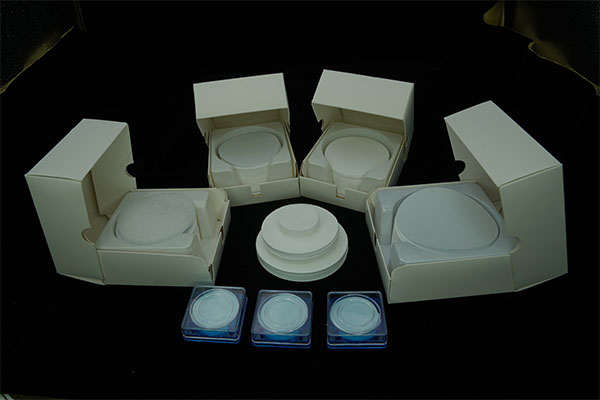
Our production capabilities include precise cutting and quality control processes. We offer free samples to distributors seeking alternatives to high-cost international brands. HuaEnv filters are suitable for applications like air sampling, water analysis, chromatography, and gas monitoring[^10].
Conclusion
GF/D glass microfiber prefilters combine high loading capacity, fast filtration speed, and precision. HuaEnv takes pride in providing reliable products to enhance laboratory efficiency and performance.
[^1]: "A Review on Membrane Fouling Prediction Using Artificial Neural ...", https://pmc.ncbi.nlm.nih.gov/articles/PMC10383311/. A filtration engineering or membrane-fouling source should document that upstream prefiltration can affect particle loading, flow resistance, clogging, and downstream analytical performance. Evidence role: mechanism; source type: paper. Supports: The choice of prefilters can significantly impact the efficiency and accuracy of filtration processes.. Scope note: This would support the general filtration principle, not the performance of a specific GF/D product unless the source tests that grade directly.
[^2]: "Grade GF/D Glass Microfiber PreFilters, 47mm Circle 100/Pk", https://huaenv.com/grade-gf-d-glass-microfiber-prefilters-47mm-circle-100-pk-what-makes-them-stand-out/. A Grade GF/D technical specification sheet should identify GF/D as a relatively thick glass microfiber prefilter with high loading capacity and fast flow characteristics compared with finer-retention grades. Evidence role: general_support; source type: other. Supports: Grade GF/D glass microfiber prefilters stand out due to high loading capacity, faster flow rates, and quick filtering speeds.. Scope note: Vendor or manufacturer specifications are likely needed for grade-specific performance and may not constitute independent comparative testing.
[^3]: "[PDF] Method IO-3.1 - Selection, Preparation and Extraction of Filter Material", https://www.epa.gov/sites/default/files/2019-11/documents/mthd-3-1.pdf. Standard methods for gravimetric solids or particulate analysis describe the use of glass-fiber filters and high-temperature ignition steps, supporting the contextual suitability of heat-resistant glass media in such procedures. Evidence role: historical_context; source type: government. Supports: GF/D glass microfiber prefilters are designed for applications requiring high particle retention, fluid flow efficiency, and protection for membranes in air filtration and gravimetric analysis involving volatile materials and ignition.. Scope note: Such methods support the general use of glass-fiber filters in ignition-based gravimetric analysis, not necessarily the suitability of every GF/D product for every volatile-material workflow.
[^4]: "[PDF] Method IO-3.1 - Selection, Preparation and Extraction of Filter Material", https://www.epa.gov/sites/default/files/2019-11/documents/mthd-3-1.pdf. A GF/D specification source should state that the grade is a thick, binder-free borosilicate glass microfiber filter, while analytical-method sources explain why binder-free glass media are useful where residues or ignition could affect measurements. Evidence role: definition; source type: other. Supports: GF/D prefilters are thick and binder-free, contributing to high loading capacity and fast filtration.. Scope note: A specification sheet can verify composition and thickness, but the analytical advantage of being binder-free may require a separate methods source.
[^5]: "[PDF] Whatman filtration Product guide", https://macro.lsu.edu/howto/Whatman-filtration-product-guide.pdf. A Grade GF/D product specification should list the maximum operating temperature and nominal particle retention, supporting the stated 550°C temperature tolerance and 2.7 µm retention value. Evidence role: statistic; source type: other. Supports: GF/D borosilicate glass material withstands temperatures up to 550°C and offers 2.7 µm particle retention.. Scope note: These values are grade- and manufacturer-specific; the citation should match the exact GF/D product being described.
[^6]: "Whatman glass microfiber filters, Grade GF/D diam. 4.7 cm ...", https://www.sigmaaldrich.com/US/en/product/aldrich/wha1823047?srsltid=AfmBOopY8wGrjUPjp9ZWADShl-DOoyRrDHbWEBe75p4nTw709sjmQWVf. A GF/D technical data sheet should list nominal thickness, supporting the stated 675 µm value for the filter grade. Evidence role: statistic; source type: other. Supports: GF/D filters have a thickness of 675 µm.. Scope note: Thickness tolerances and nominal values may differ by manufacturer, so the source should correspond to the product line discussed.
[^7]: "[PDF] Whatman filtration Product guide", https://macro.lsu.edu/howto/Whatman-filtration-product-guide.pdf. A manufacturer or laboratory-supply technical specification should report the nominal air-flow and water-flow measurements for GF/D filters, supporting the stated flow-rate values. Evidence role: statistic; source type: other. Supports: GF/D filters have an air flow rate of 2.6 s/100 ml/in^2 and a water flow rate of 681 ml/min^2.. Scope note: Flow-rate values depend on test method, pressure conditions, filter diameter, and manufacturer, so the citation should state the measurement conditions where possible.
[^8]: "A generalized fractional model for one-step identification of ... - PMC", https://pmc.ncbi.nlm.nih.gov/articles/PMC12848096/. Membrane-filtration literature shows that prefilters or staged filtration can remove larger particles before a finer membrane, reducing fouling and preserving flux, which supports the mechanism described here. Evidence role: mechanism; source type: paper. Supports: Combining GF/D prefilters with GF/B filters can reduce clogging and improve filtration efficiency in high particle loading situations.. Scope note: This supports the general mechanism of prefiltration and membrane protection, not the specific GF/D–GF/B pairing unless a source tests that combination.
[^9]: "What is a Whatman GF/ D filter?", https://huaenv.com/what-is-a-whatman-gf-d-filter/. Technical data comparing GF/B and GF/D nominal particle retention should establish the relative retention sizes of the two grades and clarify their roles in a staged filtration setup. Evidence role: definition; source type: other. Supports: GF/B filters act as primary prefilters, capturing larger particles, while GF/D filters focus on fine particle retention.. Scope note: Available specifications may show that GF/D is coarser than GF/B, so the source may contextualize or challenge this sentence rather than directly confirm it.
[^10]: "Review of Filters for Air Sampling and Chemical Analysis in Mining ...", https://pmc.ncbi.nlm.nih.gov/articles/PMC10174218/. Laboratory-method references and technical guidance on glass microfiber filters should document their use in air particulate sampling, water-quality analysis, chromatographic sample preparation, or gas-monitoring workflows. Evidence role: general_support; source type: institution. Supports: Glass fiber filters are suitable for applications like air sampling, water analysis, chromatography, and gas monitoring.. Scope note: This would support the general application range of glass microfiber filters; it may not prove that every HuaEnv GF/D product is validated for each listed application.