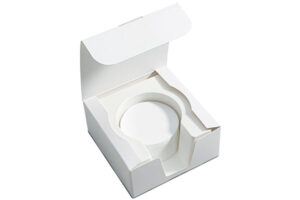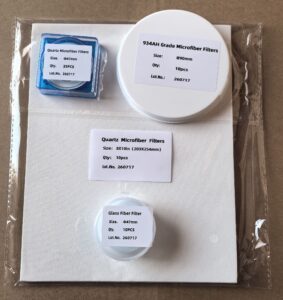

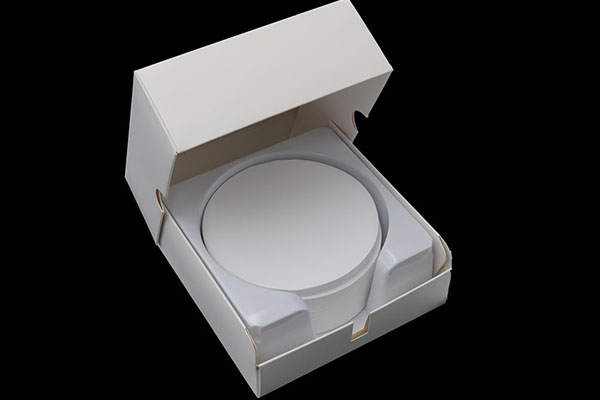
When it comes to precise filtration, quality and performance matter. For analytical applications requiring high purity, fast flow rates[^1], and high loading capacities, not all filtration solutions are created equal.
Whatman GF/C glass microfiber filters are exceptional due to their fine particle retention of 1.2 μm[^2], fast flow rates, and support for total suspended solids analysis[^3]. Their binder-free borosilicate glass composition[^4] ensures high purity and versatility in both liquid and gaseous filtration[^5].
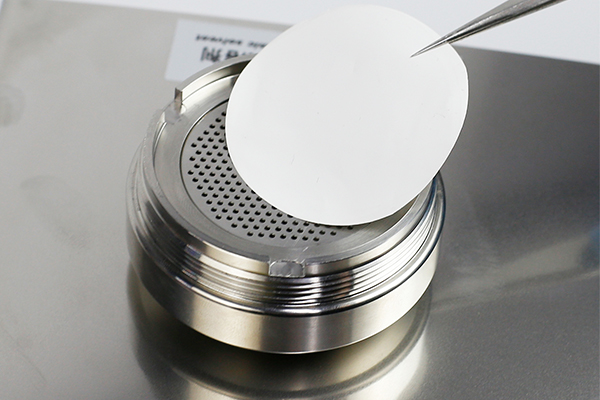
If you’ve ever faced challenges with retention efficiency, flow rate, or particle loading in your filtration processes, you know how critical it is to have a reliable solution. Let’s dive deeper into what makes Grade GF/C filters so dependable, their unique properties, and how they can be applied effectively.
Why Choose Glass Microfiber Filters for Analytical Applications?
For applications requiring precision, choosing the right filter media can make all the difference in achieving reliable results.
Glass microfiber filters, like the Whatman GF/C series, offer unparalleled benefits, including inert fiber composition, high temperature resistance up to 500°C[^6], and retention of particles as small as sub-micron sizes[^7]. They are free from binders or additives, ensuring purity and performance.

Key Characteristics and Advantages
Let’s break down the features that make glass microfiber filters the preferred choice in laboratories worldwide:
| Feature | Advantage |
|---|---|
| High Purity | Free of binders or additives, ensuring no contamination in results. |
| Fastest Flow Rate | Speeds up filtration processes without compromising on retention. |
| High Load Capacity[^8] | Handles large volumes of particulates effectively. |
| Temperature Resistance (up to 500°C) | Suitable for high-temperature applications. |
| Retention of Sub-Micron Particles | Captures fine particulates for accurate analysis. |
| Versatile Use | Effective in both liquid and gaseous filtration. |
These characteristics make them ideal for applications such as microfiltration[^9], environmental monitoring, and total suspended solids analysis in both potable and wastewater[^10].
What Applications are Ideal for Whatman GF/C Filters?
It’s not just their features that stand out—what truly sets these filters apart is their versatility in various applications.
Whatman GF/C filters are widely used in environmental testing, including total suspended solids analysis for potable and waste water, where their fine retention and loading capacity excel. They are also trusted for air monitoring and high-temperature filtration processes.
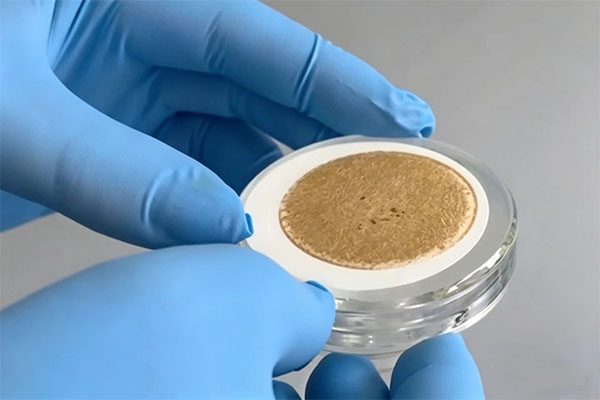
Dive Deeper: Application Scenarios
Here are some typical applications where Whatman GF/C filters play a pivotal role:
1. Total Suspended Solids (TSS) Analysis
- Use Case: Testing water quality for contamination levels in drinking water and wastewater.
- Why GF/C? The 1.2 μm pore size ensures accurate capture of suspended particles, supporting regulatory compliance and public health.
2. Air Quality Monitoring
- Use Case: Capturing airborne particles for analysis in environmental studies[^11].
- Why GF/C? Their inert composition prevents reaction with sample materials, preserving purity in analysis.
3. High-Temperature Filtration
- Use Case: Applications involving gases or liquids at elevated temperatures.
- Why GF/C? Withstanding up to 500°C, these filters maintain integrity under extreme conditions[^12].
By accommodating such diverse needs, these filters are indispensable tools for researchers, engineers, and analysts across various industries.
How Does HuaEnv Compare to Whatman GF/C Filters?
While the Whatman GF/C filters have set a standard, alternatives like HuaEnv’s glass microfiber filters provide excellent value for those seeking quality at a more competitive price.
HuaEnv offers comparable borosilicate glass microfiber filters, featuring binder-free composition, high purity, and fast flow rates. Free samples are available for distributors worldwide, making HuaEnv an attractive option.
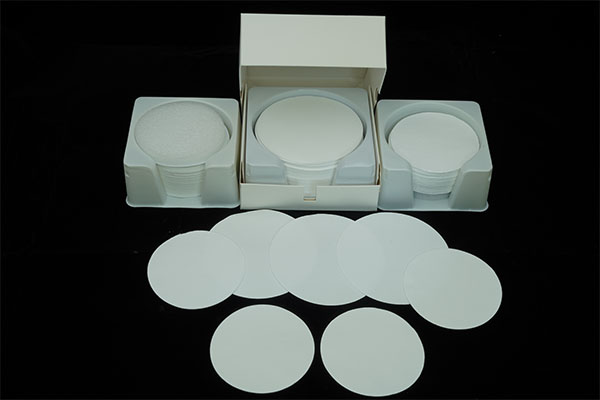
Dive Deeper: A Side-by-Side Comparison
| Feature | Whatman GF/C | HuaEnv Glass Microfiber Filters |
|---|---|---|
| Pore Size | 1.2 μm | 1.2 μm |
| Composition | Binder-free borosilicate glass | Binder-free borosilicate glass |
| Temperature Resistance | Up to 500°C | Up to 500°C |
| Applications | TSS analysis, air monitoring, etc. | TSS analysis, air monitoring, etc. |
| Cost | Premium pricing | Cost-effective alternative |
| Sample Availability | Limited | Free samples for global distributors |
HuaEnv not only matches the technical specifications but also provides additional flexibility for small-batch orders, making it easier for laboratories to access high-quality filtration solutions.
Conclusion
Glass microfiber filters like Whatman GF/C are the backbone of many analytical applications, offering precision, purity, and reliability. Whether you’re testing water quality, monitoring air, or working in high-temperature environments, these filters deliver consistent results. For those seeking a cost-effective solution, HuaEnv provides an excellent alternative without compromising on quality. Ready to enhance your filtration needs? Consider trying a sample today.
[^1]: "Whatman™ Filter Paper Grade GF/C Microfiber Glass Filter, Binder ...", https://www.cytivalifesciences.com/en/us/products/items/whatman-filter-paper-grade-gf-c-microfiber-glass-filter-binder-free-p-09618. Whatman GF/C product literature characterizes Grade GF/C as a glass microfiber filter with relatively fast flow for its retention class, supporting the general performance claim. Evidence role: general_support; source type: other. Supports: Whatman GF/C filters are associated with fast flow rates.. Scope note: Flow rate depends on filter diameter, pressure or vacuum, liquid viscosity, and particulate loading, so the source supports the product characterization rather than a universal measured rate.
[^2]: "Whatman ® glass microfiber grade GF/C filter discs 1.2 μm pore size", https://www.sigmaaldrich.com/US/en/product/aldrich/wha1822024?srsltid=AfmBOooFaB4lJx86ONTQ71eUAbsCDSZvGgXlaff8mWe1D9vwuihKAGDS. A technical datasheet for Whatman Grade GF/C reports a nominal particle retention of 1.2 µm, supporting the stated retention specification. Evidence role: definition; source type: other. Supports: Whatman GF/C glass microfiber filters have a fine particle retention rating of 1.2 µm.. Scope note: This supports the nominal product specification, not performance in every sample matrix or operating condition.
[^3]: "[PDF] Method 160.2", https://www.uvm.edu/bwrl/lab_docs/protocols/106.2_TSS_by_gravimetry_(EPA_1971).pdf. Standard water-analysis methods describe total suspended solids determination by filtering a measured water sample through a pre-weighed glass-fiber filter and weighing the retained residue, supporting the relevance of glass microfiber filters to TSS analysis. Evidence role: mechanism; source type: government. Supports: Glass microfiber filters are suitable for total suspended solids analysis.. Scope note: The method evidence supports the use of glass-fiber filters for TSS generally; it may not name Whatman GF/C specifically.
[^4]: "Whatman™ Filter Paper Grade GF/C Microfiber Glass Filter, Binder ...", https://www.cytivalifesciences.com/en/us/products/items/whatman-filter-paper-grade-gf-c-microfiber-glass-filter-binder-free-p-09618. Product specifications for Whatman glass microfiber grades identify GF/C as a binder-free borosilicate glass fiber filter, supporting the stated material composition. Evidence role: definition; source type: other. Supports: Whatman GF/C filters are made from binder-free borosilicate glass.. Scope note: This verifies the construction of the Whatman product grade, not equivalent construction for other brands.
[^5]: "Glass microfiber filters for laboratory analytical: Why are they ...", https://huaenv.com/glass-microfiber-filters-for-laboratory-analytical-why-are-they-indispensable/. Technical descriptions of binder-free glass microfiber filters state that the absence of binder reduces extractables and that glass fiber media are used for both liquid clarification and air or gas sampling, supporting the purity and cross-media-use claim. Evidence role: general_support; source type: research. Supports: Binder-free borosilicate glass microfiber filters provide high-purity filtration and can be used in liquid and gaseous filtration.. Scope note: The support is contextual; actual purity and suitability depend on the analyte, pre-treatment, and filtration protocol.
[^6]: "[PDF] Whatman filtration Product guide", https://macro.lsu.edu/HowTo/Whatman-filtration-product-guide.pdf. Manufacturer technical literature for Whatman glass microfiber filters reports heat resistance up to approximately 500 °C, supporting the stated maximum-temperature specification. Evidence role: definition; source type: other. Supports: Glass microfiber filters such as Whatman GF/C can resist temperatures up to 500 °C.. Scope note: The rating describes dry heat resistance of the filter medium and may not apply to all chemical environments, holders, seals, or wet filtration conditions.
[^7]: "Whatman filtration Product guide", https://macro.lsu.edu/HowTo/Whatman-filtration-product-guide.pdf. Catalog data for glass microfiber filter grades show nominal retention ratings below 1 µm for some grades, establishing that glass microfiber media can be manufactured for sub-micron particle retention. Evidence role: general_support; source type: other. Supports: Some glass microfiber filters can retain sub-micron particles.. Scope note: This supports glass microfiber filters as a class; Whatman GF/C itself is commonly specified at 1.2 µm rather than sub-micron retention.
[^8]: "Chemical Modification with Surface-Active Treatment - PMC", https://pmc.ncbi.nlm.nih.gov/articles/PMC11174125/. Filtration references describe glass-fiber media as depth filters with a relatively thick, porous matrix that can retain particles throughout the filter depth, explaining their high particulate loading capacity. Evidence role: mechanism; source type: education. Supports: Glass microfiber filters have high load capacity because their depth structure can retain particulates throughout the medium.. Scope note: The mechanism supports the general capacity advantage of depth glass-fiber media; actual loading capacity varies with particle size distribution and sample chemistry.
[^9]: "Microfiltration Techniques and Devices - CAES Field Report", https://fieldreport.caes.uga.edu/publications/B1581/microfiltration-techniques-and-devices/. Filtration and membrane-science references define microfiltration as a pressure- or vacuum-driven process that removes suspended particles typically in the approximate 0.1–10 µm range, placing 1.2 µm glass microfiber filtration within the microfiltration range. Evidence role: definition; source type: encyclopedia. Supports: Glass microfiber filters with a 1.2 µm nominal retention can be used in microfiltration-type applications.. Scope note: This supports the classification of the pore/retention range, not the suitability of a particular product for every microfiltration protocol.
[^10]: "[PDF] TOTAL SUSPENDED SOLIDS (TSS) EPA Method 160.2 ...", https://19january2017snapshot.epa.gov/sites/production/files/2015-06/documents/160_2.pdf. Government and standards-based water-quality methods use filtration through glass-fiber filters followed by gravimetric drying to determine suspended solids in water and wastewater samples, supporting the stated analytical context. Evidence role: case_reference; source type: government. Supports: Glass microfiber filters are used for total suspended solids analysis in potable-water and wastewater contexts.. Scope note: The evidence supports TSS analysis in water matrices generally and may not specify every potable-water compliance method or the GF/C brand grade.
[^11]: "NIOSH Manual of Analytical Methods (NMAM) 5th Edition - CDC", https://www.cdc.gov/niosh/nmam/default.html. Air-sampling methods and occupational/environmental monitoring references describe collecting airborne particulate matter on filters for subsequent gravimetric or chemical analysis, supporting the stated use case. Evidence role: case_reference; source type: government. Supports: Filters can be used to capture airborne particles for environmental analysis.. Scope note: The support establishes filter-based air-particle collection generally; the chosen filter material must still match the target analyte and analytical method.
[^12]: "[PDF] Whatman filtration Product guide", https://macro.lsu.edu/HowTo/Whatman-filtration-product-guide.pdf. Technical specifications for glass microfiber filters report heat resistance up to about 500 °C, which supports the claim that the filter medium can tolerate high-temperature exposure. Evidence role: general_support; source type: other. Supports: Glass microfiber filters can maintain usable integrity in high-temperature filtration applications up to about 500 °C.. Scope note: The source supports temperature tolerance of the medium, but not necessarily mechanical integrity under all flow rates, pressure differentials, corrosive gases, or repeated thermal cycling.