
Polluted water poses a serious challenge[^1] to environmental monitoring and industrial processes. Choosing the right filtration material can make all the difference in accuracy and efficiency.
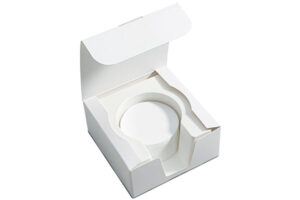
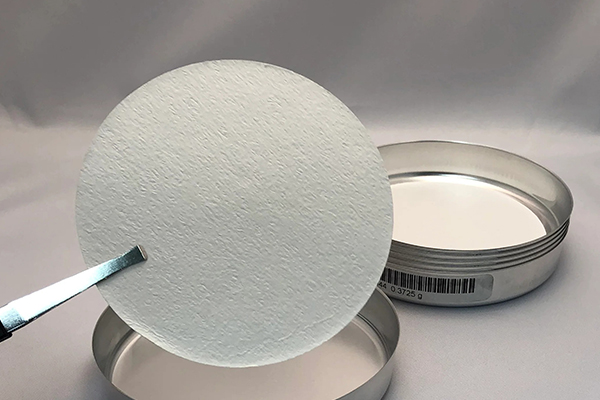
Whatman Glass Microfibre Filters GF/C, with a diameter of 47mm, are widely used for collecting suspended solids in potable water and monitoring wastewater[^2]. These filters provide exceptional filtration efficiency and reliability[^3] for environmental and industrial applications.
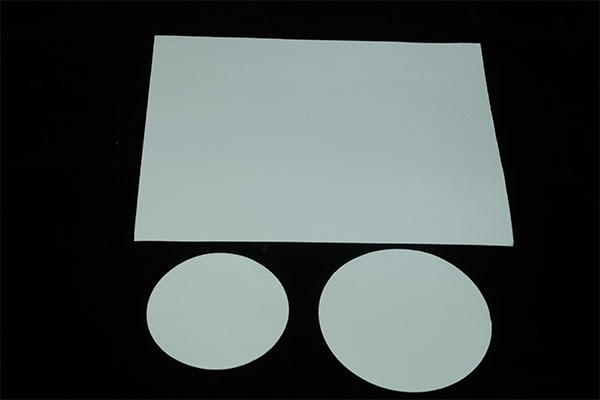
These filters are essential in maintaining water quality, ensuring laboratory accuracy, and supporting environmental sustainability. Let’s delve into their unique features and how they compare to alternatives.
Why are Whatman GF/C filters trusted for suspended solids collection in water?
Laboratories and industries often face challenges when filtering water samples for testing suspended solids. Precision and reliability are crucial to prevent errors.
Whatman GF/C filters are trusted because they offer high retention efficiency for fine particles while maintaining a fast flow rate[^4]. They are suitable for both potable water and wastewater testing[^5].
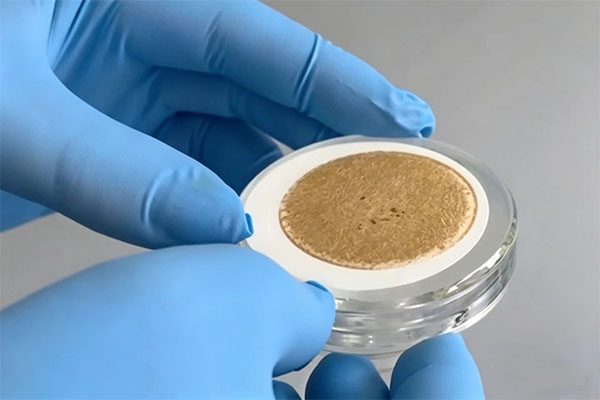
These filters work not only for suspended solids testing but also for a range of other applications like air sampling and solution clarification. Their versatility makes them indispensable in filtration tasks.
How do GF/C filters work?
Understanding how these filters operate helps in grasping their superiority over other materials.
- Material Composition: Made from glass microfibers, they trap fine particles effectively.
- Retention: They have a nominal particle retention of 1.2 µm[^6], suitable for most water testing applications.
- Flow Rate: Despite their fine retention, they maintain a high flow rate, making them efficient.
- Thermal Stability: Suitable for high-temperature applications[^7].
- Chemical Resistance: Performs well across a range of pH levels[^8].
To illustrate further:
| Feature | Benefit | Use Case |
|---|---|---|
| Nominal Retention 1.2 µm | Precise suspension particle capture | Suspended solids testing in water |
| High Flow Rate | Reduced filtration time | Routine testing in busy laboratories |
| Thermal Resistance | Suitable for elevated temperature applications | Industrial and environmental testing |
These characteristics make GF/C filters one of the most reliable choices across industries.
Can HuaEnv Glass Fibre Filters replace Whatman GF/C?
The rising demand for cost-effective alternatives has created an opportunity for equivalent and high-quality options.
HuaEnv Glass Fibre Filters are a robust alternative to Whatman GF/C filters. They provide similar or better performance[^9] for laboratories, industries, and distributors looking for cost-effective solutions.
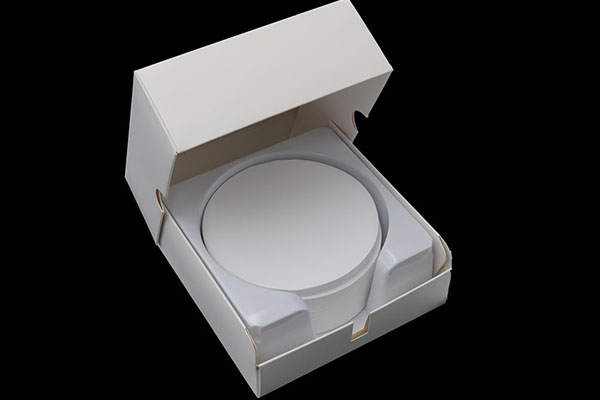
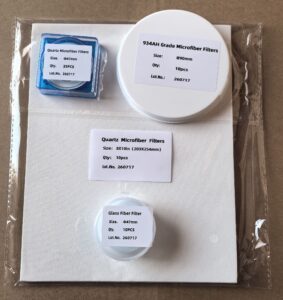
HuaEnv filters are available in a range of grades like GF/A, GF/B, GF/C, GF/D, GF/F, 934-AH, and EPM2000[^10]. Their competitive pricing and customizable options make them a compelling choice.
Features of HuaEnv Glass Fibre Filters:
- Diverse Grades: Offer equivalents to Whatman grades.
- Customizable Sizes: Meet specific requirements for varied applications.
- Cost-Effective: Provide better pricing for high-volume users.
- Free Samples: Ensure suitability before bulk purchases.
- OEM/ODM Capability: Tailored production for distributors.
| Whatman Grade | HuaEnv Equivalent | Applications |
|---|---|---|
| GF/A | HuaEnv GF/A | Air sampling, pre-filtration |
| GF/C | HuaEnv GF/C | Suspended solids in water |
| 934-AH | HuaEnv 934-AH | Smoke and atmospheric particle collection |
| EPM2000 | HuaEnv EPM2000 | Environmental testing, high-temp applications |
HuaEnv’s commitment to quality and flexibility positions it as a valuable partner for laboratories and suppliers worldwide.
What are the common uses of GF/C and equivalent filters?
The versatility of these filters makes them indispensable across several industries. Their applications often go beyond water testing.
GF/C filters and equivalents are used for pre-filtration, solution clarification, air dust sampling, suspended solids detection, and atmospheric particle collection.
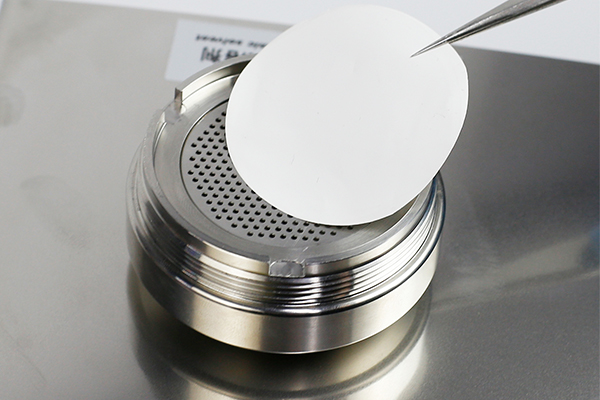
For example:
- Water Quality Testing: Detection of suspended solids in potable and wastewater.
- Air Monitoring: Collection of particulate matter in environmental studies.
- Industrial Applications: Filtration of industrial wastes and high-temperature sampling.
- Laboratory Use: Pre-filtration in chromatographic analysis and solution preparation.
These scenarios highlight the critical role these filters play in laboratory and industrial workflows.
Conclusion
Whatman GF/C filters are a reliable choice for suspended solids testing in water. However, HuaEnv Glass Fibre Filters offer an affordable and customizable alternative without compromising performance. Both options are vital for environmental monitoring and industrial testing needs.
[^1]: "Wastewater and environmental surveillance (WES)", https://www.who.int/teams/environment-climate-change-and-health/water-sanitation-and-health/sanitation-safety/wastewater. International water-quality assessments identify chemical and microbial water pollution as a major challenge for environmental protection, public health, and water-resource management; this provides background context rather than evidence about the specific filters discussed here. Evidence role: general_support; source type: institution. Supports: Polluted water is a significant challenge for environmental monitoring and industrial processes.. Scope note: Contextual support only; it does not evaluate any filtration product.
[^2]: "NEMI Method Summary - 2540 D", https://www.nemi.gov/methods/method_summary/9819/. Standard water-analysis methods describe the use of glass-fiber filters in gravimetric suspended-solids measurement for water and wastewater; this supports the application category but does not by itself quantify how widely Whatman GF/C is used. Evidence role: expert_consensus; source type: institution. Supports: Whatman GF/C 47 mm glass microfiber filters are used for collecting suspended solids in potable water and wastewater monitoring.. Scope note: Supports the general method and filter type, not market prevalence or brand-specific adoption.
[^3]: "[PDF] Whatman filtration Product guide", https://macro.lsu.edu/HowTo/Whatman-filtration-product-guide.pdf. Technical specifications for GF/C-type glass microfiber filters list nominal particle retention and flow characteristics relevant to filtration performance; such specifications support measurable performance parameters but do not independently establish the promotional term “exceptional.” Evidence role: general_support; source type: other. Supports: GF/C filters provide high filtration efficiency and reliable performance for environmental and industrial filtration applications.. Scope note: Product data can support specifications, but the qualitative superiority claim would require independent comparative testing.
[^4]: "WHATMAN Grade GF/C Microfiber Glass Filter, Binder Free", https://www.laborindo.com/product/whatman-grade-gfc-microfiber-glass-filter-binder-free_117.html. Published filter specifications for GF/C-grade glass microfiber filters report nominal particle retention and flow-rate-related properties, supporting the claim that the grade is designed to combine fine-particle retention with relatively rapid filtration; the values are nominal and method-dependent. Evidence role: mechanism; source type: other. Supports: Whatman GF/C filters combine fine-particle retention with a fast flow rate.. Scope note: Nominal specifications may not predict performance for every water matrix or suspended-solids load.
[^5]: "A MODIFIED FILTRATION METHOD FOR THE ANALYSIS OF ...", https://hero.epa.gov/reference/6895546/. Water-quality methods for suspended-solids measurement include filtration of water and wastewater samples through glass-fiber filters, supporting the suitability of this filter class for such testing; the method evidence does not necessarily endorse one brand or grade for all protocols. Evidence role: expert_consensus; source type: government. Supports: GF/C-type glass microfiber filters are suitable for potable-water and wastewater testing applications involving suspended solids.. Scope note: Some regulatory methods specify particular filter characteristics, so suitability depends on the exact analytical method used.
[^6]: "Grade GF/C Glass Microfiber Filter Papers, 1.2um, 50mm Dia ...", https://scientificfilters.com/filter-papers-glass-microfiber-filters-1822-050. Manufacturer and laboratory-supply technical data list Whatman GF/C glass microfiber filters as having a nominal particle retention of approximately 1.2 µm; the value is nominal rather than an absolute pore-size cutoff. Evidence role: definition; source type: other. Supports: GF/C filters have a nominal particle retention of 1.2 µm.. Scope note: Nominal retention depends on test conditions and should not be interpreted as absolute retention of all particles above 1.2 µm.
[^7]: "Filtration Characteristics of Glass Fiber Filter at Elevated Temperatures", https://nepis.epa.gov/Exe/ZyPURL.cgi?Dockey=91015XO6.TXT. Technical references for binder-free glass microfiber filters report high thermal stability compared with cellulose filter media, supporting their use in elevated-temperature procedures; this does not define suitability for every industrial high-temperature process. Evidence role: mechanism; source type: research. Supports: GF/C glass microfiber filters are suitable for some high-temperature applications.. Scope note: Actual temperature limits vary by product grade, binder content, and method conditions.
[^8]: "[PDF] Materials Compatability", https://scs.illinois.edu/system/files/inline-files/MaterialsCompatability.pdf. Chemical-compatibility references for borosilicate glass microfiber media describe resistance to many aqueous chemical conditions across a broad pH range; this supports general chemical compatibility but not performance in every solvent, acid, or alkaline matrix. Evidence role: mechanism; source type: research. Supports: Glass microfiber filters have chemical resistance across a range of pH conditions.. Scope note: Compatibility depends on exposure time, concentration, temperature, and the specific chemicals present.
[^9]: "The adsorption of dissolved organic carbon onto glass fiber filters ...", https://pmc.ncbi.nlm.nih.gov/articles/PMC6155487/. An independent side-by-side validation comparing HuaEnv GF/C and Whatman GF/C on retention, flow rate, loading capacity, and recovery in representative water samples would support claims of comparable performance; any conclusion would be limited to the tested methods and sample matrices. Evidence role: case_reference; source type: research. Supports: HuaEnv Glass Fibre Filters provide similar or better performance than Whatman GF/C filters.. Scope note: Equivalence in one test protocol would not prove equal or better performance across all laboratory and industrial applications.
[^10]: "Whatman Glass Microfiber Filters: Are there alternatives?", https://huaenv.com/whatman-glass-microfiber-filters-are-there-alternatives/. A product catalogue or technical datasheet identifying HuaEnv glass fibre filter grades would support the statement about available grades; such documentation verifies availability but does not establish analytical equivalence to other brands. Evidence role: definition; source type: other. Supports: HuaEnv offers glass fibre filters in grades including GF/A, GF/B, GF/C, GF/D, GF/F, 934-AH, and EPM2000.. Scope note: Availability information is product-specific and may change over time.