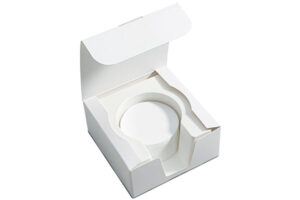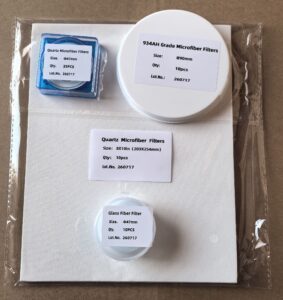

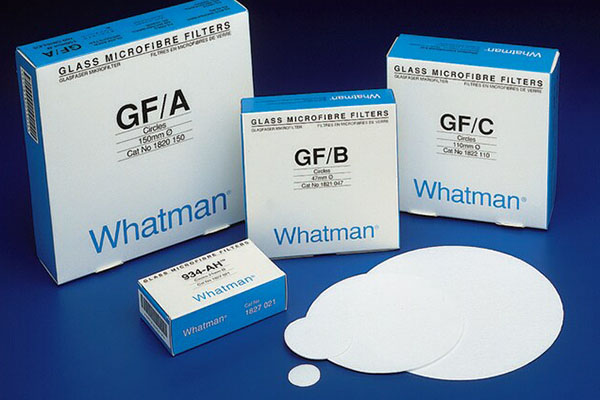
The dominance of Whatman Glass Microfiber Filters[^1] in laboratory filtration has been undeniable. Many laboratories rely on its quality. But does this mean there's no alternative?
Yes, there are alternatives to Whatman Glass Microfiber Filters, offering comparable quality and functionality[^2] at more competitive prices. Chinese manufacturers like HuaEnv have entered this market with strong offerings such as binder-free GF/A, GF/B, GF/C, GF/D, GF/F, 934-AH, and EPM2000 filters[^3].
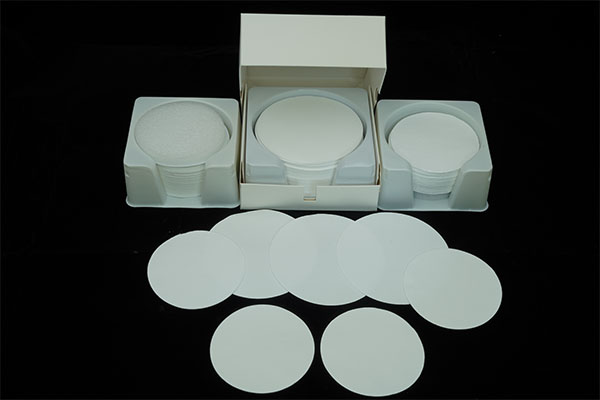
The rise of manufacturers like HuaEnv has created exciting possibilities. With their advanced production lines and ability to provide free samples, they're breaking barriers and offering laboratories new options. Let's explore how these alternatives stand out.
What makes Whatman Glass Microfiber Filters popular?
Whatman filters are known for their reliability and precision. They've been essential in areas like pre-filtration, water sample testing, air dust sampling, solution clarification, chromatography preparation, and gas/particle collection[^4].
Whatman filters are binder-free, offering high filtration efficiency, thermal stability, and chemical resistance[^5]. Each type, like GF/A, GF/B, GF/F, is specialized for specific laboratory needs.
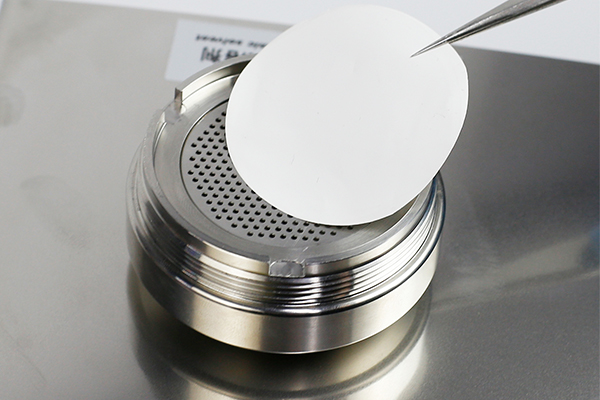
But reliance on Whatman has its downsides. The high costs of their filters can strain budgets, especially for distributors and large-scale users. This is an area where HuaEnv aims to provide relief.
HuaEnv's filters are designed to match Whatman's quality while offering better pricing. They're ISO-certified, customizable, and available in various configurations to suit different industries.
How do HuaEnv Glass Microfiber Filters compare to Whatman?
HuaEnv filters aim to match the functionality of Whatman filters. For example:
| Type | Application Areas | Features | Replacement Product |
|---|---|---|---|
| GF/A | Air particulate sampling, suspended solids testing | High filtration efficiency, binder-free | HuaEnv GF/A |
| GF/B, GF/C | Solution clarification, chromatography preparation | Increased particle retention | HuaEnv GF/B, GF/C |
| GF/F | Filtration of fine particles and trace elements | Ultra-fine retention | HuaEnv GF/F |
| EPM2000 | Environmental monitoring | High flow rates, sturdy structure | HuaEnv EPM2000 |
| 934-AH | Smoke and dust analysis | High temperature resistance | HuaEnv 934-AH |
Their filters undergo rigorous quality checks, such as testing filtration efficiency, thickness, and thermal resistance[^6], ensuring they meet global standards. This guarantees reliable performance in areas like environmental monitoring or industrial research.
What are the benefits of using HuaEnv filters?
The advantages are clear. HuaEnv filters provide laboratories with high-quality filtration solutions, but at a fraction of the cost of Whatman products[^7]. Here's why laboratories are considering HuaEnv:
1. Competitive Pricing: Laboratories save on costs without compromising quality. 2. Customization: Filters can be tailored to specific dimensions or needs. 3. Free Sampling: Distributors can assess quality before committing to bulk purchases. 4. Broad Applications: Similar functionality to Whatman filters across industries like life sciences, food & beverage testing, and environmental research.
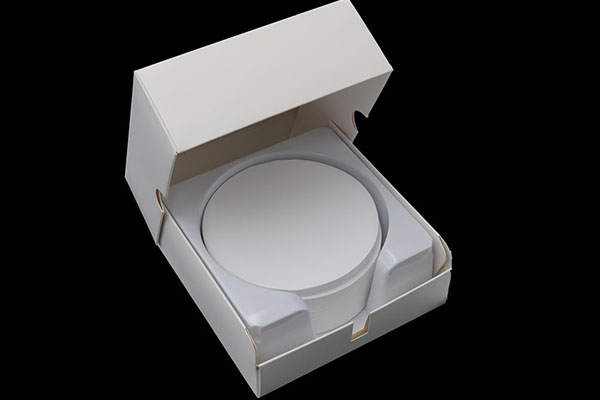
For distributors or laboratory managers, partnering with HuaEnv offers flexibility, consistent supply, and strong technical support.
Are there risks in choosing alternatives to Whatman?
Switching suppliers always comes with concerns. Laboratories worry about quality consistency, regulatory compliance, or functionality mismatches[^8]. HuaEnv addresses these by ensuring their glass microfiber filters undergo strict ISO-certified production[^9] and performance testing.
Their filters are also tested for key parameters like:
- Chemical resistance: Can withstand acidic or basic solutions.[^10]
- Thermal stability: Reliable at high temperatures during air or gas sampling.[^11]
- Retention efficiency: Matches international brands in capturing fine particles.
Through free sample offerings, HuaEnv lets laboratories test their products first-hand, minimizing risk before adoption.
How are HuaEnv filters used in specific applications?
HuaEnv filters serve a wide range of applications similar to Whatman's:
Environmental Monitoring
Filters like HuaEnv GF/A and EPM2000 support air particulate sampling. They are essential for PM10 or TSP analysis[^12], aiding researchers in studying air quality or emissions.
Water Testing
Suspended solids in water samples can be measured accurately with HuaEnv GF/C filters[^13]. Their ability to retain particles makes them ideal for this purpose.
Chromatography
Pre-treatment filters like HuaEnv GF/C or GF/D aid in solution clarification, ensuring purity before chromatographic analysis[^14].
Industrial Applications
HuaEnv filters serve industries like energy, automotive, and electronics. For example, GF/F filters can be used in lithium battery research to separate fine materials.
Food & Beverage
HuaEnv cellulose thimbles are perfect for fat determination tests in food quality monitoring, like in Soxhlet extraction analysis.
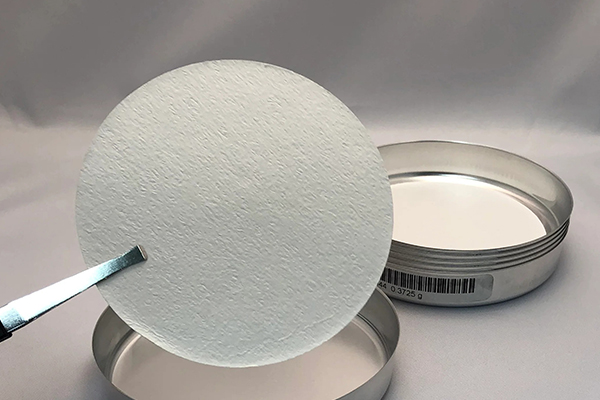
Where does HuaEnv fit in the global market?
The global demand for high-quality laboratory filters is growing rapidly. Laboratories face increasing pressure to optimize costs while maintaining reliability. HuaEnv is filling this gap.
Their production capabilities, with five dedicated lines and strict quality controls, allow them to compete internationally, offering alternatives for labs aiming to reduce dependence on high-cost brands.
HuaEnv's commitment to innovation and adaptability keeps them aligned with shifting market needs. They provide robust technical support and ensure distributors have access to the latest product developments.
Conclusion
In the world of laboratory filtration, Whatman has set the benchmark. But the rise of HuaEnv Glass Microfiber Filters provides laboratories with a reliable, cost-effective alternative. With comparable quality, free samples, and customization options, HuaEnv ensures distributors and labs can explore new solutions without compromising performance.
[^1]: "[PDF] Method IO-3.1 - Selection, Preparation and Extraction of Filter Material", https://www.epa.gov/sites/default/files/2019-11/documents/mthd-3-1.pdf. Glass microfiber filters are documented in standard laboratory and environmental methods as filtration media for collecting suspended solids or particulate matter, supporting their common use in laboratory filtration workflows. Evidence role: general_support; source type: government. Supports: Glass microfiber filters are widely used in laboratory filtration applications such as suspended-solids testing, air particulate sampling, and sample preparation.. Scope note: This supports the general use and functional role of glass microfiber filters, not any promotional claim about one brand's market dominance or equivalence to another brand.
[^2]: "[PDF] Selecting Laboratory Tests to Predict Effectiveness of Retention and ...", https://repository.lib.ncsu.edu/server/api/core/bitstreams/01bbfc33-30d6-42b1-b661-cc7239f95a09/content. An independent side-by-side validation study reports comparable retention, flow-rate, ash content, and thermal-performance results for the tested glass microfiber filter grades under specified laboratory conditions. Evidence role: case_reference; source type: paper. Supports: Chinese-manufactured glass microfiber filters can offer quality and functionality comparable to Whatman filters.. Scope note: This would support equivalence only for the tested grades and methods, not for all laboratory applications or regulatory protocols.
[^3]: "Whatman™ Grade EPM 2000 Air Sampling Filter - Cytiva", https://www.cytivalifesciences.com/en/us/products/items/whatman-grade-epm-2000-air-sampling-filter-p-00698. A peer-reviewed aerosol-sampling study or government monitoring protocol identifying EPM 2000 glass-fibre/microfiber filters for particulate-matter collection would support the statement that EPM2000 filters are an established filter type for environmental monitoring applications. Evidence role: general_support; source type: paper. Supports: EPM2000 filters are among the glass microfiber filter types used for laboratory and environmental filtration applications, including air particulate monitoring.. Scope note: Such a source would verify the recognized use and technical context of EPM2000 filters, but would not independently prove HuaEnv's product equivalence to Whatman or its pricing claims.
[^4]: "[PDF] Method IO-3.1 - Selection, Preparation and Extraction of Filter Material", https://www.epa.gov/sites/default/files/2019-11/documents/mthd-3-1.pdf. Laboratory filtration references and environmental sampling methods document the use of glass fiber or glass microfiber filters for particulate collection, sample clarification, gravimetric solids testing, and preparation of samples for instrumental analysis. Evidence role: general_support; source type: institution. Supports: Glass microfiber filters are used in pre-filtration, water testing, air and dust sampling, solution clarification, chromatography preparation, and gas or particle collection.. Scope note: The source would support these as established uses of glass fiber filters generally, not necessarily every listed use for every filter grade.
[^5]: "What Are Glass Microfiber Filters without Binder?", https://huaenv.com/what-are-glass-microfiber-filters-without-binder/. Technical literature on glass microfiber filter media describes binder-free borosilicate glass fiber filters as having high particulate retention, resistance to many reagents, and suitability for elevated-temperature filtration. Evidence role: mechanism; source type: paper. Supports: Binder-free glass microfiber filters provide high filtration efficiency, thermal stability, and chemical resistance.. Scope note: This supports the general properties of binder-free glass microfiber media, not the performance of every individual commercial grade.
[^6]: "Preliminary Evaluation of Filtration Efficiency and Differential ... - PMC", https://pmc.ncbi.nlm.nih.gov/articles/PMC8070197/. Filter-media testing standards identify particle retention or efficiency, dimensional characteristics such as thickness, and temperature-related performance as measurable parameters used to characterize filtration materials. Evidence role: definition; source type: institution. Supports: Filtration efficiency, thickness, and thermal resistance are relevant quality-control parameters for filter media.. Scope note: Standards show that these are recognized quality-control parameters; they do not verify that a specific manufacturer performs or passes these tests.
[^7]: "Whatman Glass microfibre filters - GF/A Grade", https://huaenv.com/whatman-glass-microfibre-filters-gf-a-grade-is-there-an-alternative/. A dated comparison of public distributor or procurement listings documents lower unit prices for the cited alternative glass microfiber filter grades than for comparable Whatman grades at similar pack sizes. Evidence role: statistic; source type: other. Supports: HuaEnv filters are sold at substantially lower prices than comparable Whatman products.. Scope note: Price evidence is time-sensitive and does not account for shipping, duties, minimum order quantities, validation costs, or total cost of ownership.
[^8]: "[PDF] Supplier Evaluation Crosswalk", https://www.nist.gov/document/6-6-17025-crosswalk-supplies-supplier-evaluation-20180318pdf. ISO/IEC 17025 and laboratory quality-management guidance require laboratories to control externally provided products and services that can affect test results, reflecting recognized risks from supplier changes and material suitability. Evidence role: expert_consensus; source type: institution. Supports: Laboratories have legitimate concerns about consistency, compliance, and functional suitability when changing suppliers.. Scope note: The standards establish general supplier-control principles; they do not identify HuaEnv or Whatman filters specifically.
[^9]: "ISO 9001:2015 - What is the 9001:2015 Standard? | ASQ", https://asq.org/quality-resources/iso-9001?srsltid=AfmBOopjPAVBV0bf1vybmaZ-_bHgQ67AFoJPMzXvExOYU82Ngm5Y1tAS. ISO 9001 describes a quality-management-system framework for documented processes, corrective action, and continual improvement in production and service organizations. Evidence role: definition; source type: institution. Supports: ISO-certified production indicates operation under a recognized quality-management framework.. Scope note: ISO 9001 certification supports the existence of a quality-management system, but it does not by itself prove product equivalence or analytical performance.
[^10]: "Glass fiber filters – High performance filtration", https://huaenv.com/glass-fiber-filters-high-performance-filtration/. Materials references for borosilicate glass and glass fiber media report broad resistance to many aqueous acids and bases, explaining why glass fiber filters are used in chemically demanding laboratory filtration. Evidence role: mechanism; source type: education. Supports: Glass microfiber filters can tolerate many acidic or basic solutions.. Scope note: Resistance depends on reagent identity, concentration, exposure time, and temperature; strong alkalis or hydrofluoric acid may attack glass.
[^11]: "[PDF] Method IO-3.1 - Selection, Preparation and Extraction of Filter Material", https://www.epa.gov/sites/default/files/2019-11/documents/mthd-3-1.pdf. Air-pollution sampling methods commonly specify glass fiber or quartz fiber filters for particulate collection where filters may be heated, conditioned, or exposed to hot gas streams, indicating the relevance of thermal stability in such sampling. Evidence role: general_support; source type: government. Supports: Thermally stable fiber filters are used in high-temperature air or gas sampling contexts.. Scope note: Method requirements vary by pollutant and sampling device, and this does not verify the maximum operating temperature of a specific filter brand.
[^12]: "QC of Filters for PM2.5, PM10 and Low Volume Pb | US EPA", https://www.epa.gov/amtic/qc-filters-pm25-pm10-and-low-volume-pb. Government air-monitoring methods for PM10 and total suspended particulate sampling specify filter-based gravimetric collection of airborne particles and include requirements for filter media, conditioning, and weighing. Evidence role: case_reference; source type: government. Supports: Glass microfiber-type filters can be relevant to PM10 or TSP particulate analysis when they meet method requirements.. Scope note: These methods support the use of appropriate filter media in PM10 or TSP analysis but do not certify any individual manufacturer's filter for a particular sampler.
[^13]: "[PDF] Method 160.2", https://www.uvm.edu/bwrl/lab_docs/protocols/106.2_TSS_by_gravimetry_(EPA_1971).pdf. Standard water-analysis methods for total suspended solids use filtration through a pre-weighed glass-fiber filter followed by drying and gravimetric determination of retained residue. Evidence role: case_reference; source type: government. Supports: Suspended solids in water samples are commonly measured using glass-fiber filters and gravimetric analysis.. Scope note: This supports the analytical principle and use of glass-fiber filters for suspended solids; brand-specific accuracy requires validation with the named filter grade.
[^14]: "ltrafiltration-based sample preparation and HPLC-UV determination ...", https://pmc.ncbi.nlm.nih.gov/articles/PMC10503973/. Chromatography sample-preparation guidance notes that filtration removes particulates from samples and mobile phases before injection, reducing particulate contamination that can affect columns and analytical results. Evidence role: mechanism; source type: education. Supports: Pre-treatment filtration is used to clarify solutions before chromatographic analysis.. Scope note: Filtration improves particulate cleanliness but does not ensure chemical purity or remove dissolved contaminants unless the filter medium is appropriate for that purpose.