
When it comes to laboratory filtration, Whatman is often the go-to name. They are a widely recognized market leader[^1]. But is there an alternative? Absolutely.
Yes, HuaEnv can produce glass microfiber filters of equivalent quality to Whatman Grade GF/C[^2]. These filters, with a particle retention of 1.2 µm[^3] and a high flow rate, are ideal for suspended solids analysis[^4] and water testing.
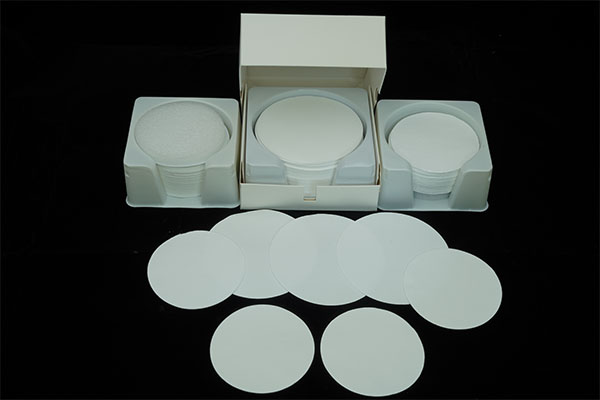
If you’re seeking a reliable alternative, HuaEnv’s filters match Whatman’s in quality and specifications. Let’s dive into the details and see how they measure up.
Why are Whatman Grade GF/C Filters Popular?
Whatman has built its reputation over decades by offering consistent quality and usability. Labs trust them, but they come at a premium price.
The Whatman Grade GF/C filter is a glass microfiber filter designed for suspended solids analysis. Its 1.2 µm particle retention ensures accuracy in testing potable and wastewater[^5].

The filters are binder-free, ensuring purity[^6]. With a nominal thickness of 260 µm and a recommended temperature limit of 550°C[^7], they are versatile. Their air and water flow rates are optimized for efficiency. However, high costs and limited customization are significant drawbacks.
Key Specifications of Whatman Grade GF/C:
| Property | Value |
|---|---|
| Particle Retention | 1.2 µm |
| [Nominal Thickness | 260 µm](https://www.sigmaaldrich.com/US/en/product/aldrich/wha2822090?srsltid=AfmBOooZRs6B6XUtd2I7zrDJ9wBvUzWu-5nsDBLlNFVY1jzRj71Hn4of)[^8] |
| Max Recommended Temperature | 550°C |
| Air Flow Rate | 6.7 s/100 ml/in² |
| Water Flow Rate | 105 ml/min |
| Basis Weight | 53 g/m² |
| Filter Shape | Circle |
| Filter Size | 90 mm Diameter |
| Binder Type | Binder-Free |
| Pack Size | 100 |
These specifications make them suitable for total suspended solids testing[^9] and high-temperature applications.
How Does HuaEnv Compare?
For those seeking an alternative, HuaEnv fills the gap with an option that balances cost and quality. HuaEnv’s glass microfiber filters offer the same specifications as the Whatman Grade GF/C[^10] while allowing for more flexibility.
HuaEnv’s glass microfiber filters are customizable in shape and size. They meet the same particle retention, flow rate, and temperature thresholds as Whatman but are available at better prices.
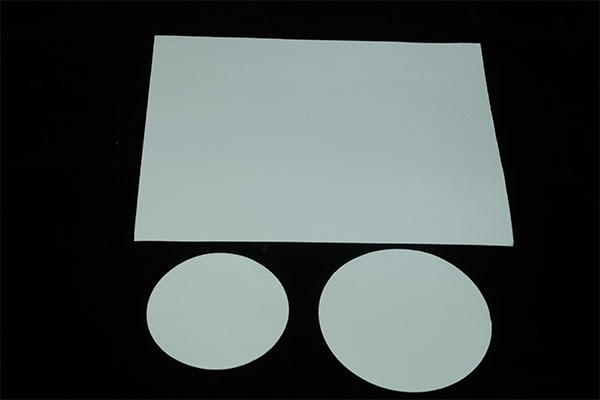
HuaEnv even offers free samples for testing. This allows you to verify quality before committing to bulk orders. With customization options such as circles or sheets in various dimensions, HuaEnv ensures that specific lab requirements are met.
Comparison Table: Whatman vs. HuaEnv
| Feature | Whatman GF/C | HuaEnv Alternative |
|---|---|---|
| Particle Retention | 1.2 µm | 1.2 µm |
| Nominal Thickness | 260 µm | 260 µm |
| Temperature Resistance | 550°C | 550°C |
| Material | Binder-Free Glass | Binder-Free Glass |
| Customization | Limited | Extensive |
| Price | Premium | Cost-Effective |
| Free Samples | No | Yes |
By offering the same level of performance, HuaEnv makes it possible to reduce lab costs without sacrificing quality.
What Applications Are These Filters Ideal For?
Both Whatman and HuaEnv filters shine in applications requiring high precision. For instance:
These glass microfiber filters are widely used in total suspended solids analysis for both potable water and wastewater. They also work well in high-temperature filtration and air sampling.
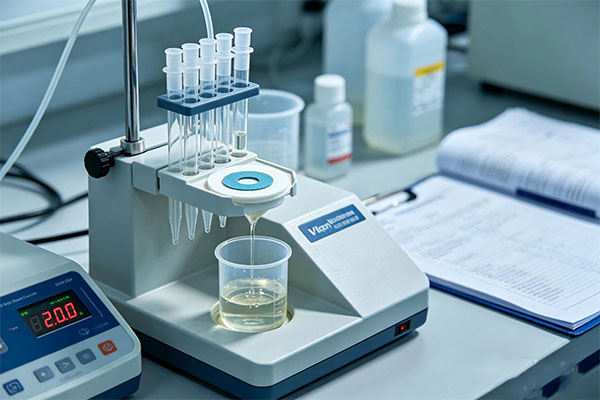
In addition to water testing, they are used in environmental monitoring, life sciences, and food and beverage industries. The 1.2 µm retention and high flow rates ensure their adaptability across multiple fields.
Common Use Cases:
- Environmental Monitoring: Testing air and water for pollutants.
- Potable Water Testing: Ensuring clean and safe drinking water.
- Wastewater Analysis: Measuring suspended solids in treated water.
- High-Temperature Applications: Suitable for up to 550°C.
- Industrial Applications: Supporting filtration in manufacturing processes.
Conclusion
Whatman Grade GF/C filters have long been the gold standard, but alternatives like HuaEnv offer an equally reliable option with more flexibility and cost savings. With their ability to produce customizable filters matching Whatman’s specifications, HuaEnv is an excellent choice for laboratories seeking efficiency without breaking the budget.
[^1]: "Whatman PLC - Wikipedia", https://en.wikipedia.org/wiki/Whatman_PLC. A neutral company-history or market-profile source should document Whatman’s long-standing role in laboratory filtration and its acquisition into GE/Cytiva, supporting brand recognition rather than proving current market share. Evidence role: historical_context; source type: encyclopedia. Supports: Whatman is a widely recognized market leader in laboratory filtration.. Scope note: Such sources may establish prominence and history but may not quantify present-day market leadership.
[^2]: "Review of Filters for Air Sampling and Chemical Analysis in Mining ...", https://pmc.ncbi.nlm.nih.gov/articles/PMC10174218/. An independent laboratory comparison, certificate of analysis, or standards-based performance test should show that the alternative filter matches GF/C-relevant metrics such as particle retention, flow rate, thickness, and thermal tolerance; absent direct comparative testing, the source only supports specification similarity, not overall equivalence of quality. Evidence role: general_support; source type: research. Supports: HuaEnv can produce glass microfiber filters of equivalent quality to Whatman Grade GF/C.. Scope note: Specification matching does not by itself prove equivalent manufacturing consistency, lot-to-lot variation, or application performance.
[^3]: "Grade GF/C Glass Microfiber Filter Papers, 1.2um, 50mm Dia ...", https://scientificfilters.com/filter-papers-glass-microfiber-filters-1822-050. A product specification sheet or independent catalogue entry for Grade GF/C should state the nominal 1.2 µm particle retention value, supporting the cited numerical specification. Evidence role: definition; source type: other. Supports: Whatman Grade GF/C glass microfiber filters have a particle retention of 1.2 µm.. Scope note: Nominal particle retention values are typically method-dependent and may not represent an absolute pore-size cutoff.
[^4]: "[PDF] Method 160.2", https://www.uvm.edu/bwrl/lab_docs/protocols/106.2_TSS_by_gravimetry_(EPA_1971).pdf. EPA or Standard Methods guidance for total suspended solids should show that glass-fiber filters are used to collect suspended material from water samples, supporting the application context for GF/C-type filters. Evidence role: expert_consensus; source type: government. Supports: Glass microfiber filters are used for suspended solids analysis.. Scope note: Method guidance supports the general use of glass-fiber filters for suspended solids testing but may not require one specific commercial grade.
[^5]: "A MODIFIED FILTRATION METHOD FOR THE ANALYSIS OF ...", https://hero.epa.gov/reference/6895546/. Government or standards-method documentation should state that suspended-solids or related residue methods are applied to drinking-water and wastewater samples, supporting the water-testing context of the claim. Evidence role: general_support; source type: government. Supports: Glass microfiber filters with appropriate retention are used in potable-water and wastewater testing.. Scope note: The source may support water-matrix applicability generally, not the superior accuracy of a particular filter brand.
[^6]: "[PDF] Whatman filtration Product guide", https://macro.lsu.edu/HowTo/Whatman-filtration-product-guide.pdf. A technical source on glass microfiber filters should explain that binder-free construction reduces extractables or chemical contamination from binders, supporting the purity rationale in analytical filtration. Evidence role: mechanism; source type: research. Supports: Binder-free glass microfiber filters help maintain purity in filtration applications.. Scope note: This supports the mechanism by which binder-free media may reduce contamination, but it does not prove purity for every production lot.
[^7]: "WHATMAN Grade GF/C Microfiber Glass Filter, Binder Free", https://www.laborindo.com/product/whatman-grade-gfc-microfiber-glass-filter-binder-free_117.html. A Grade GF/C technical specification should list the maximum recommended operating temperature, supporting the stated 550°C limit for the filter material. Evidence role: definition; source type: other. Supports: Whatman Grade GF/C filters have a recommended temperature limit of 550°C.. Scope note: A recommended temperature limit is a product-use specification and may depend on exposure duration, atmosphere, and sample chemistry.
[^8]: "Whatman ® glass microfiber filters, Grade GF/C RTU - Sigma-Aldrich", https://www.sigmaaldrich.com/US/en/product/aldrich/wha2822090?srsltid=AfmBOooZRs6B6XUtd2I7zrDJ9wBvUzWu-5nsDBLlNFVY1jzRj71Hn4of. A manufacturer technical sheet or independent catalogue record should list the nominal GF/C thickness as 260 µm, supporting the numerical specification in the comparison table. Evidence role: definition; source type: other. Supports: Whatman Grade GF/C filters have a nominal thickness of 260 µm.. Scope note: Nominal thickness values can vary by batch and measurement method, so the source supports the catalogue specification rather than every individual filter.
[^9]: "[PDF] Method 160.2", https://www.uvm.edu/bwrl/lab_docs/protocols/106.2_TSS_by_gravimetry_(EPA_1971).pdf. EPA Method 160.2 or Standard Methods 2540D should describe collecting suspended solids on a glass-fiber filter and drying to determine total suspended solids, supporting the stated use case. Evidence role: expert_consensus; source type: government. Supports: Glass microfiber filters with these specifications are suitable for total suspended solids testing.. Scope note: The method supports glass-fiber filtration for TSS generally and does not necessarily endorse a particular commercial GF/C product.
[^10]: "Whatman Glass Microfiber Filters: Are there alternatives?", https://huaenv.com/whatman-glass-microfiber-filters-are-there-alternatives/. A standards-based comparison or paired product specifications should document matching values for retention, thickness, temperature tolerance, and flow-rate metrics; if based only on specification sheets, the evidence supports nominal comparability rather than demonstrated field performance. Evidence role: general_support; source type: research. Supports: HuaEnv’s glass microfiber filters offer the same specifications as Whatman Grade GF/C.. Scope note: Nominal specifications do not establish equivalence in quality control, durability, or analytical recovery across applications.