
When it comes to water and air quality monitoring[^1], precision is everything. Without the right filters, measurements of Total Suspended Solids (TSS), Total Dissolved Solids (TDS), and Total Suspended Volatiles (VSS) can be inconsistent and unreliable[^2]. This can lead to inaccurate data, wasted resources, and compromised results.
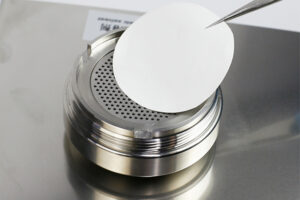
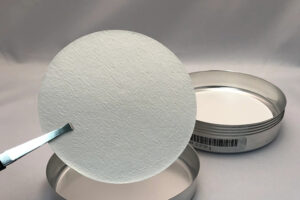
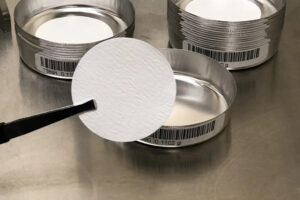
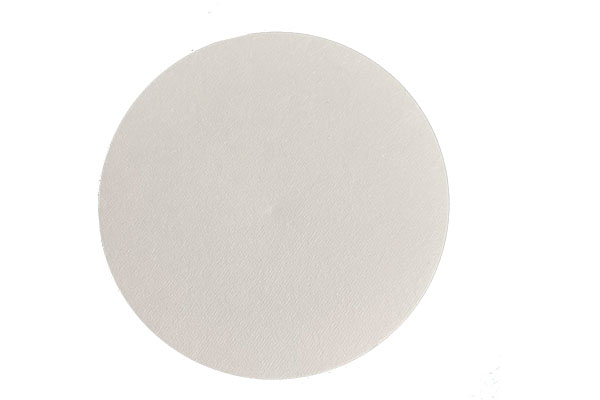
Grade 934-AH[^3] borosilicate glass microfiber filters are specifically designed for these applications. With a smooth surface, high retention efficiency, and high flow rates, they ensure precise and efficient filtration of large-volume samples. Their nominal particle retention of 1.5 µm makes them suitable for accurate analysis in TSS, TDS, and VSS measurements[^4].
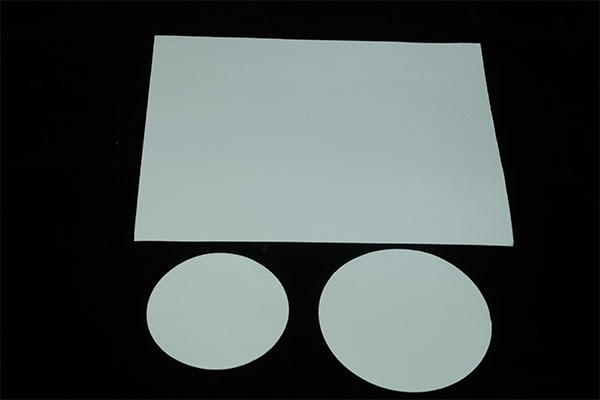
But what makes Grade 934-AH filters the ideal choice for these critical applications? Let's dive deeper into their key attributes and how they address the challenges of different filtration needs.
Why Are Grade 934-AH Filters Perfect for TSS Analysis?
Suspended solids in water samples can pose measurement challenges, particularly when dealing with turbid or high-volume solutions[^5]. Without reliable filtration, results can be skewed, leading to data that misrepresents the actual quality of the water.
Grade 934-AH filters are widely recognized for their high loading capacity, which allows them to hold a significant amount of particulate matter without compromising performance[^6]. This makes them ideal for TSS analysis, where precision and efficiency are key. Their binder-free borosilicate glass microfiber composition ensures durability, even under high-temperature conditions up to 550°C[^7].
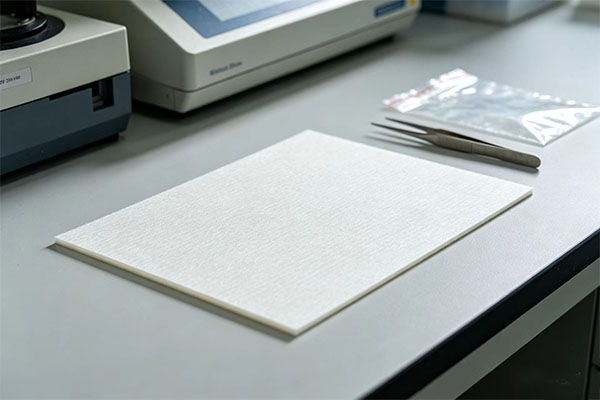
For TSS analysis, the smooth surface of these filters also plays a vital role. It enables efficient collection and recovery of particulates, ensuring minimal loss and maximum accuracy[^8]. Furthermore, their low fiber shedding guarantees clean results, free from contamination introduced by the filter itself.
How Do Grade 934-AH Filters Enhance TDS Monitoring?
Total Dissolved Solids (TDS) monitoring often involves pre-filtration steps, where suspended solids must be removed before dissolved solids can be accurately measured. Filters used in this process must deliver consistent performance and avoid clogging, even when dealing with turbid samples.
The high flow rate of Grade 934-AH filters makes TDS monitoring more efficient by allowing large volumes of liquid to pass through quickly without compromising filtration integrity[^9]. This attribute saves time and optimizes workflows in laboratories handling high sample throughput.
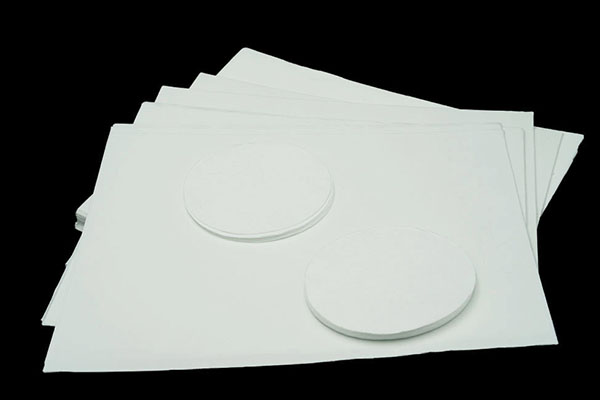
The filters' ability to retain fine particles down to 1.5 µm ensures that suspended solids are effectively removed, laying the foundation for accurate TDS evaluation[^10]. Additionally, the ready-to-use (RTU) formats available for these filters make them a convenient solution for laboratories and environmental monitoring facilities.
Can Grade 934-AH Filters Streamline VSS Measurements?
Volatile suspended solids (VSS) analysis requires filters that not only retain fine particles but also withstand high temperatures during drying or ignition processes. Filters that fail to meet these requirements can compromise the accuracy of results and limit the reliability of the data.
Grade 934-AH filters are tailor-made for VSS analysis due to their ability to withstand temperatures up to 550°C. This makes them ideal for applications where filters are exposed to extreme thermal conditions. Their binder-free composition ensures no unwanted materials interfere with the analysis during high-temperature processes.
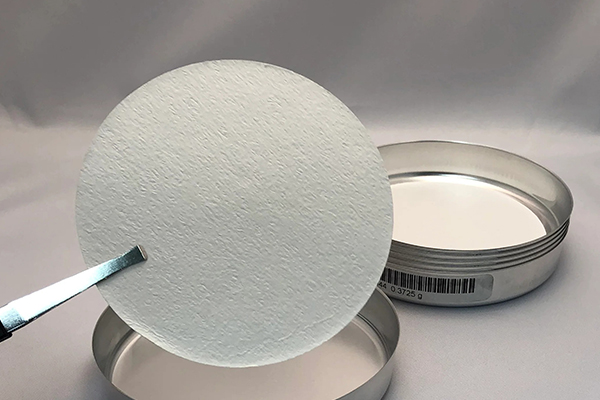
By providing consistent particle retention and high loading capacity, these filters streamline the VSS measurement process, making them a trusted choice for laboratories conducting environmental assessments.
What Applications Benefit from Grade 934-AH Filters?
Beyond TSS, TDS, and VSS analysis, Grade 934-AH filters are versatile and can be employed in various applications. Here are some of their primary uses:
| Application | Description |
|---|---|
| Water Quality Monitoring | Filtering suspended solids from water samples for TSS, TDS, and VSS analysis. |
| Air Pollution Monitoring[^11] | Collecting particulate matter for air quality assessments. |
| Solution Clarification | Removing fine particles from liquids in laboratory experiments. |
| Cell Harvesting | Filtering culture media to isolate cells for further analysis. |
| Liquid Scintillation Counting | Preparing samples for radiation counting in environmental or biological studies. |
| Pre-Filtration[^12] | Acting as a preliminary filter to protect analytical instruments from large particulates and debris. |
Why Choose HuaEnv as Your Grade 934-AH Filter Supplier?
Selecting the right supplier is just as important as choosing the right filter. With over 15 years of experience in manufacturing laboratory filtration materials, HuaEnv has established itself as a reliable factory for high-quality glass microfiber filters.
| Key Advantages of HuaEnv Filters | Details |
|---|---|
| Customizable Options | We produce various glass fiber filters to replace brands like Whatman and Ahlstrom. |
| High-Quality Manufacturing | Our filters are produced under ISO-certified conditions with strict quality control. |
| Free Samples | We offer free sample filters for testing and evaluation. |
| Wide Range of Sizes | Our filters are available in various formats, including circles and sheets. |
| Applications Expertise | Our products are designed for pre-filtration, water sample testing, air sampling, and more. |
HuaEnv prioritizes providing cost-effective solutions without compromising on quality. Whether you are a distributor of lab consumables or a laboratory manager looking for reliable filtration solutions, our filters are tailored to meet your needs.
Conclusion
Grade 934-AH filters are indispensable for TSS, TDS, and VSS analysis, offering precision, efficiency, and reliability. With their smooth surface, high loading capacity, and high-temperature durability, they stand out as a top choice for laboratories and environmental monitoring applications. As a trusted supplier, HuaEnv provides customizable and high-quality filtration solutions that exceed industry standards, helping you achieve consistent and accurate results in every application.
[^1]: "[PDF] Quality Assurance Handbook for Air Pollution Measurement ... - EPA", https://www.epa.gov/sites/default/files/2020-10/documents/final_handbook_document_1_17.pdf. Authoritative air-monitoring guidance explains that valid air quality assessment depends on accurate, quality-assured measurements of pollutant concentrations, supporting the article's statement that precision is essential in air quality monitoring. Evidence role: general_support; source type: government. Supports: Precision is essential in water and air quality monitoring because unreliable filtration or measurement can produce inaccurate environmental data.. Scope note: This support addresses the general need for accurate, quality-assured monitoring rather than the performance of Grade 934-AH filters specifically.
[^2]: "[PDF] Method 160.2", https://www.uvm.edu/bwrl/lab_docs/protocols/106.2_TSS_by_gravimetry_(EPA_1971).pdf. Standard methods for solids analysis specify filtration, drying, weighing, and ignition conditions because deviations in these steps affect reported suspended, dissolved, and volatile solids values. Evidence role: expert_consensus; source type: institution. Supports: Improper or unsuitable filtration can make TSS, TDS, and VSS measurements inconsistent or unreliable.. Scope note: The source would support the importance of standardized filtration and handling procedures, not evaluate this specific filter grade.
[^3]: "NEMI Method Summary - 2540 D", https://www.nemi.gov/methods/method_summary/9819/. A product specification or standard-methods source should document that Grade 934-AH glass microfiber filters are used for suspended-solids workflows and list relevant properties such as nominal particle retention, flow rate, loading capacity, and thermal tolerance. Evidence role: general_support; source type: institution. Supports: Grade 934-AH borosilicate glass microfiber filters are specifically designed for TSS, TDS, and VSS filtration applications and offer smooth surfaces, high retention efficiency, and high flow rates for large-volume samples.. Scope note: Neutral standards can support the use of glass-fiber filters in TSS/VSS methods, but product-specific attributes of 934-AH may require a manufacturer or distributor datasheet.
[^4]: "[PDF] Environmental Protection Division Laboratory - Georgia.gov", https://epd.georgia.gov/document/document/sop-3-005-rev-8-sm2540d-tsspdf/download. Regulatory and standard-method procedures for suspended-solids determinations commonly require use of glass-fiber filters with specified retention characteristics, supporting the relevance of nominal particle retention to solids measurements. Evidence role: expert_consensus; source type: government. Supports: A nominal particle retention rating is relevant to the suitability of filters for TSS, TDS, and VSS analysis.. Scope note: The source would establish the role of filter retention in the method; it may not directly certify that every 1.5 µm 934-AH filter is suitable for all TSS, TDS, and VSS protocols.
[^5]: "Turbidity and Water | U.S. Geological Survey - USGS.gov", https://www.usgs.gov/water-science-school/science/turbidity-and-water. Water-quality guidance describes turbidity as resulting from suspended particulate matter and notes that particulate loading can affect sample processing and measurement procedures. Evidence role: mechanism; source type: government. Supports: Turbid or high-volume water samples create practical challenges for suspended-solids measurement.. Scope note: This would provide general methodological context rather than a direct test of Grade 934-AH filter performance in turbid samples.
[^6]: "Glass fiber filters – High performance filtration", https://huaenv.com/glass-fiber-filters-high-performance-filtration/. Descriptions of glass microfiber filter media note that their depth-filter structure provides high particulate loading capacity and relatively rapid flow compared with membrane filters. Evidence role: mechanism; source type: education. Supports: High loading capacity allows glass microfiber filters to retain substantial particulate matter while maintaining filtration performance.. Scope note: This would support the general behavior of glass microfiber media; a product-specific loading-capacity value would require a validated datasheet or independent test.
[^7]: "[DOC] 2009_ArcLTER_TSS_LOI_Metho...", https://www.uvm.edu/bwrl/lab_docs/protocols/2009_ArcLTER_TSS_LOI_Method_v3.doc. Volatile suspended solids methods use glass-fiber filters and ignition at approximately 550 °C, indicating that appropriate filter media must tolerate this thermal step without adding combustible binder residues. Evidence role: mechanism; source type: institution. Supports: Binder-free borosilicate glass microfiber filters are appropriate for high-temperature solids methods involving ignition around 550 °C.. Scope note: The source would support the temperature requirement and rationale for binder-free media, but not independently verify the exact thermal rating of this named grade.
[^8]: "[PDF] TOTAL SUSPENDED SOLIDS (TSS) EPA Method 160.2 ...", https://19january2017snapshot.epa.gov/sites/production/files/2015-06/documents/160_2.pdf. Gravimetric suspended-solids methods depend on quantitative retention and recovery of particulate material on a preweighed filter, so losses during filtration or handling can affect analytical accuracy. Evidence role: mechanism; source type: government. Supports: Efficient particulate collection and recovery are important for accurate suspended-solids analysis.. Scope note: This would support the analytical principle, not prove that a smooth-surfaced 934-AH filter uniquely minimizes particulate loss.
[^9]: "Chemical Modification with Surface-Active Treatment - PMC", https://pmc.ncbi.nlm.nih.gov/articles/PMC11174125/. Glass-fiber depth filters are commonly described as having high permeability and loading capacity, properties that enable faster processing of particulate-laden liquids than many surface-retention membranes. Evidence role: mechanism; source type: research. Supports: High-flow glass microfiber filters can process larger liquid volumes efficiently while retaining particles.. Scope note: This would support the general filtration mechanism; it would not quantify the flow rate of Grade 934-AH filters without product-specific testing.
[^10]: "[PDF] Method 1684: Total, Fixed, and Volatile Solids in Water, Solid ... - EPA", https://www.epa.gov/sites/default/files/2015-10/documents/method_1684_draft_2001.pdf. TDS methods determine dissolved residue from the filtrate after suspended matter is removed, so effective separation of suspended solids is a prerequisite for measuring dissolved solids rather than total solids. Evidence role: mechanism; source type: institution. Supports: Removing suspended solids is necessary for accurate TDS evaluation.. Scope note: The source would support the analytical logic of filtration before TDS measurement, not prove complete removal by a particular 1.5 µm filter in every sample matrix.
[^11]: "[PDF] METHOD 201A—DETERMINATION OF PM10 AND PM2.5 ... - EPA", https://www.epa.gov/sites/default/files/2019-08/documents/method_201a_0.pdf. Air-monitoring methods for particulate matter commonly collect airborne particles on filters for subsequent mass or chemical analysis, supporting filter-based sampling as a standard approach in air-quality assessment. Evidence role: general_support; source type: government. Supports: Glass microfiber or similar filters can be used to collect particulate matter for air-quality assessments.. Scope note: This supports the listed application broadly and does not establish that Grade 934-AH is approved for every regulatory air-monitoring method.
[^12]: "Advances in particulate matter filtration: Materials, performance, and ...", https://pmc.ncbi.nlm.nih.gov/articles/PMC10119549/. Laboratory filtration guidance describes prefiltration as a step for removing larger particles before final filtration or instrumental analysis, reducing clogging and protecting downstream equipment. Evidence role: mechanism; source type: education. Supports: Pre-filtration removes larger particulates and debris to protect downstream analytical steps or instruments.. Scope note: This would support the general purpose of prefiltration, not prove that this filter grade is optimal for all analytical instruments.