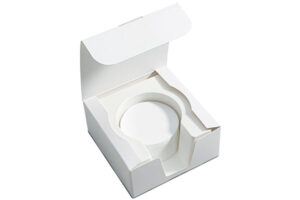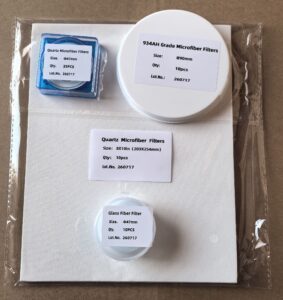

The search for a reliable solution to test total suspended solids (TSS) in water[^1] can often feel overwhelming. Finding the right filter paper is key to accurate results[^2].
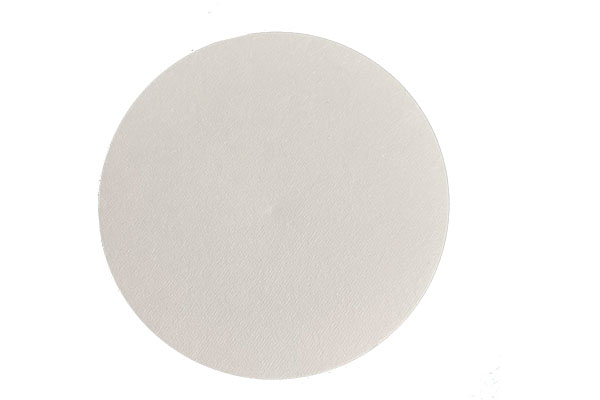
Whatman GF/C filter paper is a glass microfiber filter[^3] widely used for TSS testing in both potable and waste water[^4]. It is known for its high performance, binder-free composition[^5], and ability to provide accurate and consistent results[^6].
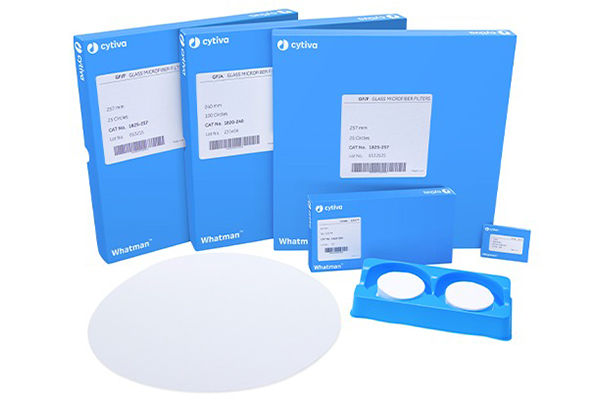
The versatility and reliability of Whatman GF/C filter paper make it appealing to a wide range of industries. But how does it stand out? Let’s explore its features and benefits further.
Why is Whatman GF/C a preferred choice for TSS testing?
Finding a filter paper that balances precision and versatility can be challenging. Whatman GF/C has established itself as a leader in TSS testing.
Whatman GF/C filter paper features a binder-free glass microfiber composition, which ensures efficient filtration and precise testing of both potable water and waste water samples.
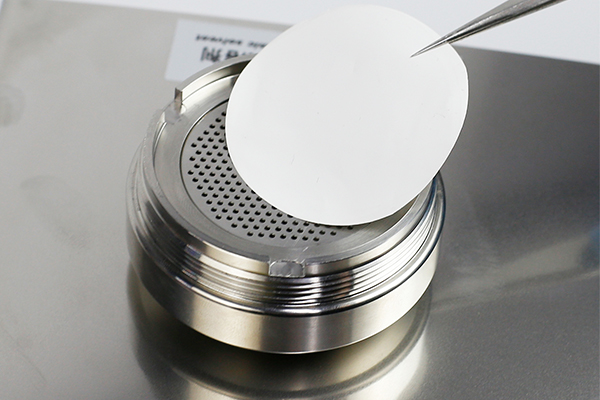
This filter paper is regarded as a trusted option for applications that demand both accuracy and durability. It is one of the most commonly used filters in environmental monitoring labs[^7] for its ability to support critical water analysis tasks.
Technical Specifications at a Glance
| Feature | Specification |
|---|---|
| Material | Binder-free glass microfiber |
| Diameter (standard size) | 47 mm[^8] (custom sizes available) |
| Applications | Potable and waste water TSS testing |
| Packaging | 100 pieces per pack |
In addition to standard options, these filters can be customized in circle or sheet shapes and tailored to specific dimensions to meet varied application requirements.
What makes binder-free glass microfiber filters special?
Accuracy in water testing comes down to the filter's performance. The binder-free composition of Whatman GF/C filter paper is a standout feature.
The absence of binders reduces the risk of contamination[^9], ensuring that the filtration process does not interfere with the chemical integrity of the sample.
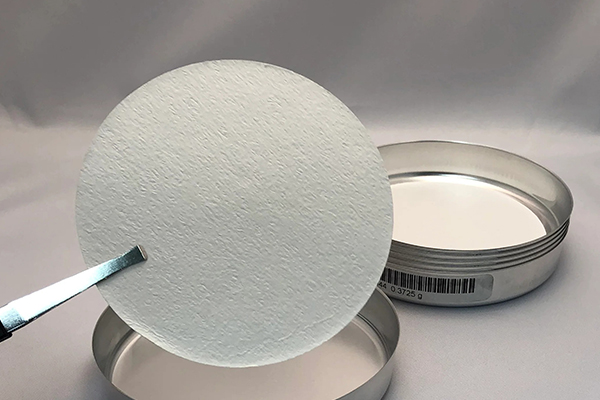
This feature is particularly important for labs conducting sensitive environmental testing. The binder-free nature also allows the filter to operate efficiently, even at high flow rates[^10], without compromising performance.
Advantages of Binder-Free Filters
- High filtration efficiency: The microfiber structure ensures particulate capture without clogging.
- Compatibility: Suitable for a variety of sample matrices, including potable and waste water.
- Customizable options: Available in diverse shapes and sizes for specific applications.
For labs requiring precise and reliable filtration, the binder-free glass microfiber composition of Whatman GF/C offers a clear advantage.
Can Whatman GF/C filters be customized for specific needs?
Environmental testing often involves unique challenges. Laboratories may require filter papers in varying sizes and shapes to fit specific equipment or processes.
Whatman GF/C filters are customizable, allowing users to order circle or sheet formats in different dimensions. This flexibility ensures compatibility with diverse workflows and apparatus setups.
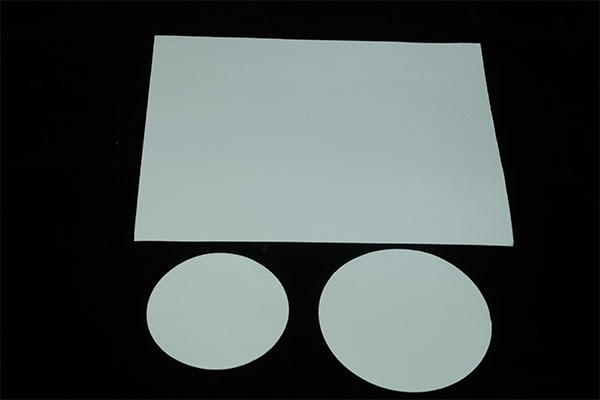
This customization capability broadens the scope of applications and makes the filters suitable for specialized testing scenarios. For instance, labs handling large volumes of water may prefer larger sheets, while smaller circles are ideal for standard TSS setups.
Customization Options
| Parameter | Options Available |
|---|---|
| Shape | Circle, sheet |
| Size | Standard (47 mm) and custom dimensions |
| Sample Availability | Free sample provision for testing |
This adaptability ensures that Whatman GF/C users get the precise tools they need without compromising on quality or consistency.
Why should users consider free sample testing?
Choosing the right filter paper is critical, especially when conducting high-stakes environmental analyses. The availability of free samples makes it easier for users to evaluate the product's compatibility with their specific applications.
Free sample testing allows users to ensure that the filter paper meets their operational requirements without the commitment of a bulk purchase.
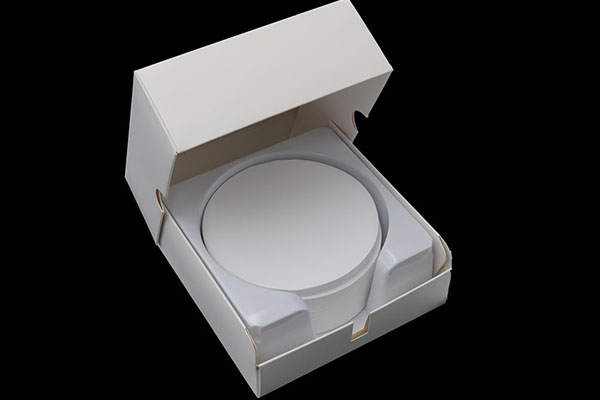
Sample testing provides peace of mind, especially when exploring options for replacing high-cost international brands. It is also an effective way to test custom-sized filters in real-world conditions.
Key Benefits of Free Samples
- Risk-free evaluation: Assess filter performance before committing to a purchase.
- Customized sample testing: Verify the suitability of specific shapes or dimensions.
- Cost-effectiveness: Avoid investing in products that may not meet requirements.
Offering free samples showcases a commitment to customer satisfaction and ensures that labs can confidently select the best filter for their needs.
Conclusion
Whatman GF/C filter paper has established itself as a trusted solution for TSS testing in potable and waste water applications. Its binder-free composition, customizable options, and availability of free samples make it a standout choice for laboratories seeking precision and flexibility in filtration tasks.
[^1]: "[PDF] Method 160.2", https://www.uvm.edu/bwrl/lab_docs/protocols/106.2_TSS_by_gravimetry_(EPA_1971).pdf. Standard water-analysis methods define total suspended solids as the portion of solids retained by a filter and measured gravimetrically after drying, supporting the article’s use of TSS as a filtration-based water-quality parameter. Evidence role: definition; source type: government. Supports: TSS in water is a recognized water-quality measurement determined through filtration and gravimetric analysis.. Scope note: This supports the analytical concept of TSS, not the performance of any particular filter brand.
[^2]: "[PDF] Method 160.2", https://www.uvm.edu/bwrl/lab_docs/protocols/106.2_TSS_by_gravimetry_(EPA_1971).pdf. EPA suspended-solids procedures specify filter type, preparation, washing, drying, and weighing conditions, indicating that filter selection and handling materially affect TSS results. Evidence role: mechanism; source type: government. Supports: Choosing an appropriate filter paper is important for accurate TSS testing.. Scope note: The source supports the importance of filter selection in the method generally, not a comparative ranking of individual commercial filters.
[^3]: "Whatman™ Filter Paper Grade GF/C Microfiber Glass Filter, Binder ...", https://www.cytivalifesciences.com/en/us/products/items/whatman-filter-paper-grade-gf-c-microfiber-glass-filter-binder-free-p-09618. Manufacturer technical specifications identify Whatman Grade GF/C as a glass microfiber filter, documenting the product’s material classification. Evidence role: definition; source type: other. Supports: Whatman GF/C filter paper is a glass microfiber filter.. Scope note: Because this is a product-identification claim, the most direct evidence is manufacturer documentation rather than an independent evaluation.
[^4]: "[PDF] Whatman filtration Product guide", https://macro.lsu.edu/HowTo/Whatman-filtration-product-guide.pdf. Government and standard-method procedures for suspended-solids analysis commonly specify glass-fiber filters for water and wastewater samples, providing contextual support for the use of glass microfiber filters in TSS testing. Evidence role: general_support; source type: government. Supports: Glass microfiber filters such as GF/C are used for TSS testing in water and wastewater analysis.. Scope note: Such methods support the filter class and application area, but may not specifically document the prevalence of Whatman GF/C use or cover every potable-water context.
[^5]: "Whatman™ Filter Paper Grade GF/C Microfiber Glass Filter, Binder ...", https://www.cytivalifesciences.com/en/us/products/items/whatman-filter-paper-grade-gf-c-microfiber-glass-filter-binder-free-p-09618. Whatman GF/C product specifications describe the grade as a binder-free borosilicate glass microfiber filter, supporting the stated composition. Evidence role: definition; source type: other. Supports: Whatman GF/C has a binder-free glass microfiber composition.. Scope note: This verifies the manufacturer-stated composition but does not independently test contamination behavior or analytical performance.
[^6]: "[PDF] Method 160.2", https://www.uvm.edu/bwrl/lab_docs/protocols/106.2_TSS_by_gravimetry_(EPA_1971).pdf. Standard TSS methods emphasize controlled filtration, drying, desiccation, and weighing steps to obtain reproducible gravimetric results, supporting the general link between standardized glass-fiber filtration and consistent measurement. Evidence role: mechanism; source type: government. Supports: Glass-fiber filtration under standardized TSS procedures can support accurate and consistent suspended-solids measurements.. Scope note: This supports the method’s reproducibility when properly controlled, but it is not direct proof that Whatman GF/C always produces more accurate results than alternatives.
[^7]: "[PDF] TOTAL SUSPENDED SOLIDS (TSS) EPA Method 160.2 ...", https://19january2017snapshot.epa.gov/sites/production/files/2015-06/documents/160_2.pdf. Environmental monitoring guidance and water-quality laboratory methods include suspended-solids analysis as a routine parameter for assessing water and wastewater conditions, supporting the relevance of TSS filtration in environmental laboratories. Evidence role: general_support; source type: government. Supports: TSS testing is a common environmental monitoring laboratory task.. Scope note: This supports the role of TSS testing in environmental monitoring, not the claim that a specific filter is among the most commonly used in all labs.
[^8]: "Environmental Express Washed and Dried Glass Fiber Filters, TSS ...", https://www.environmentalexpress.com/ee/s/product/environmental-express-washed-and-dried-glass-fiber-filters-tss-47-mm-100pk/01t4W00000FjUdBQAV. EPA suspended-solids procedures and laboratory protocols commonly describe using glass-fiber filters in standard filter-holder formats, including 47 mm configurations, supporting the relevance of this diameter in TSS setups. Evidence role: historical_context; source type: government. Supports: A 47 mm diameter is a standard or common filter size used in TSS filtration apparatus.. Scope note: This supports 47 mm as a common laboratory format, not the availability of every custom size from a supplier.
[^9]: "What Are Glass Microfiber Filters without Binder?", https://huaenv.com/what-are-glass-microfiber-filters-without-binder/. Laboratory filtration references describe binder-free glass microfiber filters as avoiding added binders or extractable materials that could interfere with analytical measurements, supporting the rationale for reduced contamination risk. Evidence role: mechanism; source type: institution. Supports: Binder-free filters can reduce the possibility of binder-derived contamination during analytical filtration.. Scope note: This supports the contamination-risk mechanism in principle; actual contamination depends on sample chemistry, filter pre-treatment, and laboratory handling.
[^10]: "Glass microfiber filters for laboratory analytical: Why are they ...", https://huaenv.com/glass-microfiber-filters-for-laboratory-analytical-why-are-they-indispensable/. Technical descriptions of glass microfiber filters report relatively rapid flow rates compared with many membrane filters, supporting the statement that such filters can operate efficiently in high-throughput filtration contexts. Evidence role: mechanism; source type: other. Supports: Binder-free glass microfiber filters can maintain efficient filtration at relatively high flow rates.. Scope note: This supports the general filtration-property claim; it does not establish performance under every TSS sample load or clogging condition.